
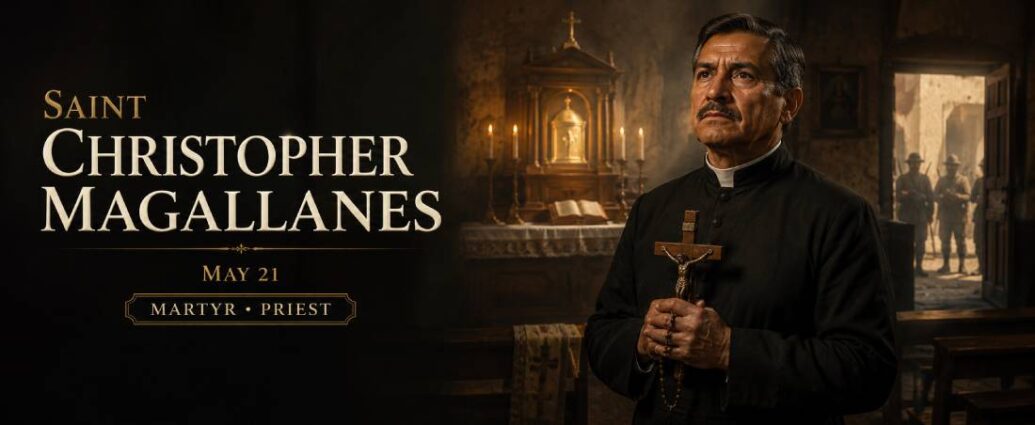
The history of the Catholic Church is filled with saints who remained faithful to Jesus Christ even in times of violent persecution. Among these heroic witnesses stands Saint Christopher Magallanes, a Mexican priest whose deep prayer life, pastoral charity, and unwavering devotion to the Eucharist strengthened countless Catholics during one of the darkest periods in Mexico’s religious history.
Saint Christopher Magallanes is remembered not only as a martyr, but also as a humble shepherd of souls whose spiritual life sustained his courage in the face of suffering and death. During the anti-Catholic persecution of the Cristero era, he continued to minister to the faithful, celebrate the sacraments, form seminarians, and encourage believers to remain faithful to Christ despite fear and violence.
What made Saint Christopher extraordinary was not political ambition or public power. His strength came from prayer, trust in God, sacrificial love, and deep union with Jesus Christ in the Eucharist. His life offers modern Catholics a profound example of courage rooted in holiness.
Today, his witness continues to inspire Christians around the world to remain faithful in prayer, steadfast in suffering, and courageous in proclaiming the Gospel.
Early Life
Saint Christopher Magallanes was born on July 30, 1869, in Totatiche, Jalisco, Mexico. He came from a humble farming family and grew up in a deeply Catholic environment where faith shaped daily life. From an early age, Christopher learned the value of hard work, prayer, sacrifice, and trust in God.
As a young boy, he helped his family in the fields while also developing a love for learning and the Church. Those who knew him described him as disciplined, prayerful, and compassionate. Even before entering the seminary, he demonstrated a serious spiritual character and concern for others.
Despite financial hardship, Christopher pursued studies for the priesthood. His perseverance reflected both personal determination and a genuine desire to serve Christ and His Church.
He eventually entered the seminary in Guadalajara, where he distinguished himself through academic diligence, humility, and devotion to prayer.
Conversion and Priestly Calling
Christopher Magallanes sensed God’s call to the priesthood at a young age. His vocation was shaped not by dramatic visions, but through quiet fidelity, prayer, and love for the Church.
Ordained a priest in 1899, Father Christopher returned to minister in rural communities where many people lacked access to spiritual care and education. He became known as a devoted pastor who cared deeply for both the spiritual and physical needs of his people.
One of his great concerns was the formation of future priests. Understanding the importance of faithful clergy for the life of the Church, he established seminaries and helped educate young men discerning vocations.
His ministry unfolded during increasing hostility toward the Catholic Church in Mexico. Anti-clerical laws restricted religious freedom, persecuted priests, and sought to weaken Catholic life throughout the country.
Yet Father Christopher refused to abandon his flock. He remained steadfast in his priestly duties because he believed souls needed the sacraments and the hope of Christ more than ever.
The Prayer Life of Saint Christopher Magallanes
The spiritual strength of Saint Christopher Magallanes flowed directly from his deep prayer life. His courage during persecution did not appear suddenly at the moment of martyrdom. It had been formed through years of prayer, Eucharistic devotion, sacrifice, and daily fidelity to God.
A Priest Deeply Rooted in Prayer
Saint Christopher understood that a priest cannot guide souls without first remaining close to Christ. Prayer was not merely part of his schedule—it shaped his entire life.
He spent regular time in personal prayer and meditation, seeking God’s guidance for his ministry and strength for difficult circumstances. Even amid political instability and danger, he remained faithful to daily spiritual practices.
His prayer life gave him interior peace during uncertainty. While many feared persecution, Christopher trusted that God remained present even in suffering.
Love for the Eucharist
The Eucharist stood at the center of Saint Christopher’s spirituality. As a priest, he recognized the Holy Mass as the greatest treasure of the Church and the source of grace for believers.
During periods when public worship became dangerous, he continued celebrating Mass for the faithful whenever possible. He knew Catholics needed spiritual nourishment and sacramental life to endure persecution.
His reverence at the altar deeply affected those around him. Witnesses remembered him as a priest who celebrated the liturgy with devotion, humility, and profound faith.
For Christopher, the Eucharist was not simply a religious duty. It was an encounter with Jesus Christ Himself.
Trust in God During Persecution
One of the most inspiring aspects of Saint Christopher’s prayer life was his calm trust in God during persecution.
The Mexican government’s anti-Catholic policies created fear throughout the country. Priests were arrested, churches were restricted, and public expressions of faith became dangerous.
Despite these threats, Christopher did not allow fear to dominate his soul. Prayer anchored him in hope.
Historical accounts describe him as peaceful and spiritually composed even when danger increased around him. He encouraged others not to respond with hatred, but with fidelity and trust in God’s providence.
Prayer and Pastoral Charity
Christopher’s prayer life naturally overflowed into pastoral service. He cared deeply for the poor, the marginalized, and the spiritually abandoned.
He visited the sick, instructed children in the faith, heard confessions, and strengthened discouraged Catholics. His ministry reflected the compassionate heart of Christ.
The more deeply he prayed, the more generously he served.
Spiritual Practices and Devotions
Saint Christopher Magallanes practiced a spirituality marked by simplicity, discipline, and sacrificial love.
Fidelity to Daily Prayer
Even amid constant pressure and danger, Christopher maintained regular habits of prayer. He understood that consistency in spiritual life builds strength for future trials.
His example reminds Catholics that holiness is often formed through ordinary daily faithfulness rather than dramatic moments.
Sacrifice and Self-Denial
Like many holy priests, Christopher embraced sacrifice as part of Christian discipleship. The hardships of ministry, persecution, and uncertainty became opportunities to unite himself more closely with Christ crucified.
His willingness to suffer for the Gospel reflected genuine spiritual maturity and love for God.
Devotion to the Sacred Heart of Jesus
Mexican Catholic spirituality during Christopher’s lifetime strongly emphasized devotion to the Sacred Heart of Jesus. This devotion centered on Christ’s mercy, love, and sacrifice for humanity.
Christopher encouraged believers to remain close to the Sacred Heart during difficult times. Trust in Christ’s love sustained many persecuted Catholics during the Cristero era.
Formation of Future Priests
One of Christopher’s most important spiritual contributions was his dedication to priestly formation.
Even during persecution, he secretly helped prepare seminarians for the priesthood. He recognized that the Church’s future depended upon faithful shepherds rooted in prayer and holiness.
This mission required courage, sacrifice, and trust in God’s providence.
Trials, Sacrifices, and Faith
The final years of Saint Christopher Magallanes’ life unfolded during intense religious persecution in Mexico.
Government authorities targeted priests and attempted to suppress Catholic worship. Christopher knew his ministry placed his life at risk, yet he refused to abandon his people.
In 1927, he was arrested without evidence of rebellion or violence. Although falsely accused of supporting armed resistance, historical records indicate that Christopher primarily focused on spiritual ministry and pastoral care.
During imprisonment, he remained peaceful and prayerful.
On May 25, 1927, Saint Christopher Magallanes was executed alongside fellow priest Father Agustin Caloca.
Before his death, Christopher reportedly forgave his persecutors and encouraged peace. One of his most remembered statements reflects remarkable Christian charity:
“I die innocent, and ask God that my blood may serve to unite my Mexican brethren.”
These words reveal the depth of his spiritual life. Even facing death, he desired reconciliation rather than revenge.
His martyrdom became a powerful testimony of faith, forgiveness, and fidelity to Christ.
Legacy in the Catholic Church
Saint Christopher Magallanes remains one of the most beloved martyrs of Mexico.
He was canonized in 2000 by Pope John Paul II as one of the Martyrs of the Cristero War. His witness continues to inspire Catholics throughout the world, especially priests and those suffering for religious freedom.
His life reminds the Church that holiness is not limited to extraordinary miracles or public recognition. True sanctity is often found in daily faithfulness, courageous prayer, and sacrificial love.
In Mexico and beyond, Christians honor Saint Christopher as a model of priestly devotion, Eucharistic faith, and steadfast perseverance.
What Catholics Can Learn Today
The witness of Saint Christopher Magallanes speaks powerfully to modern believers.
Prayer Sustains Courage
Christopher teaches that courage is born from prayer. His strength during persecution did not come from politics or human confidence, but from deep union with Christ.
Modern Catholics facing fear, uncertainty, or opposition can find hope in his example.
The Eucharist Must Remain Central
Saint Christopher’s love for the Eucharist reminds believers that the Mass is the heart of Catholic life.
Even when access to worship became dangerous, he risked everything to bring the sacraments to the faithful.
Forgiveness Is True Christian Strength
Perhaps the most remarkable aspect of Christopher’s martyrdom was his spirit of forgiveness.
He refused hatred and entrusted justice to God. His response reflects the Gospel command to love even one’s enemies.
Holiness Is Built Daily
Christopher’s sanctity developed through ordinary fidelity—daily prayer, pastoral care, sacrifice, and trust in God.
His life encourages Catholics not to underestimate the spiritual power of consistent prayer and faithful obedience.
Conclusion
Saint Christopher Magallanes stands as a radiant example of priestly holiness, courage, and prayerful fidelity. During one of the Church’s most painful periods in Mexico, he remained steadfast in serving Christ and caring for souls.
His life demonstrates that true strength comes not from worldly power, but from deep union with God through prayer, the Eucharist, sacrifice, and trust in divine providence.
For Catholics today, Saint Christopher offers a timely reminder that faithfulness often requires courage. Yet he also shows that those who remain close to Christ will never face suffering alone.
May the witness of Saint Christopher Magallanes inspire believers everywhere to deepen their prayer life, remain faithful during trials, and live with unwavering trust in Jesus Christ.