
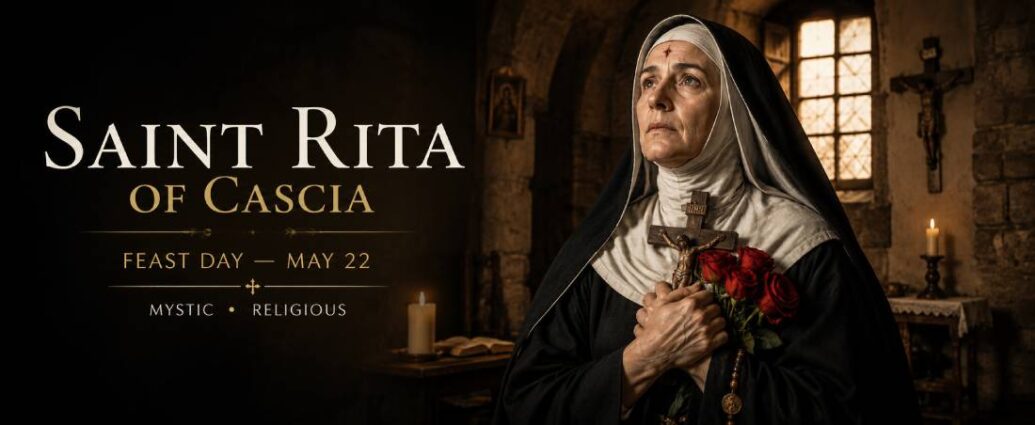
Throughout the history of the Catholic Church, certain saints have become powerful symbols of hope for people carrying heavy crosses. Among them, few are as beloved as Saint Rita of Cascia, known throughout the world as the Patron Saint of Impossible Causes.
Behind her reputation for miraculous intercession was a woman whose life was deeply rooted in prayer, suffering, forgiveness, and complete surrender to Jesus Christ. Saint Rita did not live an easy or peaceful life. She endured an unhappy marriage, domestic violence, the tragic loss of her husband, the death of her sons, and years of hidden sacrifice in religious life. Yet through every trial, she remained faithful to God.
What made Saint Rita extraordinary was not worldly success or recognition. Her holiness came through perseverance in prayer and trust in Christ crucified. She learned to transform suffering into love and hardship into holiness.
Today, Catholics facing family struggles, grief, broken relationships, or seemingly impossible situations continue to turn to Saint Rita for intercession. Her life reminds believers that God’s grace can bring peace and healing even in the darkest moments.
Early Life
Saint Rita was born as Margherita Lotti around 1381 in Roccaporena near Cascia, Italy. Her parents, Antonio and Amata Lotti, were known for their deep Catholic faith and charitable spirit. They raised Rita in a home centered on prayer, honesty, and devotion to God.
From childhood, Rita showed signs of spiritual maturity and a desire for religious life. Historical traditions describe her as gentle, obedient, compassionate, and deeply devoted to Christ. She loved spending time in prayer and desired to enter a convent while still young.
However, according to the customs of the time, her parents arranged a marriage for her instead. Though this was not her personal desire, Rita accepted their decision with humility and obedience.
This moment would become one of the earliest examples of the surrender that marked her entire spiritual life.
Marriage, Suffering, and Spiritual Transformation
Rita married Paolo Mancini, a man described in Catholic tradition as harsh-tempered and involved in local conflicts. Their marriage proved difficult and emotionally painful for many years.
Yet Rita responded not with bitterness, but with patience, prayer, and charity. She continually prayed for her husband’s conversion and sought peace within her family.
Her example reveals one of the most important dimensions of her spirituality: she believed prayer could transform hearts.
Over time, Paolo reportedly changed through Rita’s faithful witness and became more peaceful and loving. This transformation deeply reflected the power of grace working through persistent prayer and forgiveness.
However, tragedy soon struck the family. Paolo was eventually murdered amid ongoing local feuds. Rita’s suffering intensified when her two sons desired revenge for their father’s death.
Fearing for their souls, Rita prayed that God would prevent them from committing mortal sin. Not long afterward, both sons died from illness.
These devastating losses could have destroyed her faith. Instead, Rita brought her grief before Christ in prayer. Her trust in God during unimaginable sorrow became one of the clearest signs of her holiness.
The Prayer Life of Saint Rita of Cascia
The heart of Saint Rita’s sanctity was her profound prayer life. Everything she endured was united to Christ through contemplation, sacrifice, and trust in God.
A Deep Love for Jesus Crucified
Saint Rita’s spirituality centered intensely on the Passion of Christ. She meditated often on the sufferings of Jesus and sought to unite her own pain to His sacrifice on the Cross.
Rather than viewing suffering as meaningless, Rita believed it could become spiritually fruitful when offered with love and faith.
Her devotion to Christ crucified shaped her patience, forgiveness, humility, and endurance.
One of the most famous moments in her life reflects this spirituality deeply. According to longstanding Catholic tradition, while praying before a crucifix, Rita asked to share in Christ’s suffering. She then received a wound on her forehead resembling a thorn from Christ’s crown.
This wound reportedly remained for years and became a sign of her mystical union with the suffering Christ.
A Life of Constant Prayer
Saint Rita cultivated a disciplined and faithful prayer life both as a wife and later as a religious sister.
She prayed daily, attended Mass whenever possible, meditated on Scripture, and spent long periods in contemplation. Her spirituality was not dramatic or attention-seeking. Instead, it was quiet, steady, and deeply rooted in trust.
Prayer became her refuge during family conflict, grief, loneliness, and uncertainty.
Rather than allowing suffering to harden her heart, Rita allowed prayer to soften it.
Eucharistic Devotion
The Eucharist occupied a central place in Saint Rita’s spiritual life. She understood Holy Communion as a source of strength, healing, and union with Christ.
As an Augustinian nun later in life, she participated faithfully in the liturgical life of the convent and spent extended time in prayer before the Blessed Sacrament.
Her devotion to the Eucharist strengthened her capacity for forgiveness and perseverance.
For Rita, Jesus present in the Eucharist was not abstract theology. He was her comfort, companion, and source of peace.
Prayer of Forgiveness
Perhaps the most remarkable aspect of Saint Rita’s spirituality was her radical forgiveness.
She forgave her husband for years of difficulty. She forgave his murderers. She prayed for reconciliation instead of revenge.
This forgiveness was not weakness. It flowed from deep prayer and genuine conformity to Christ.
Rita understood the words of Jesus:
“Love your enemies and pray for those who persecute you.” — Matthew 5:44
Her life became a living witness to the transforming power of mercy.
Spiritual Practices and Devotions
Saint Rita embraced spiritual disciplines that strengthened her union with God.
Fasting and Penance
Like many saints of her era, Rita practiced fasting and acts of penance. These sacrifices were expressions of repentance, self-discipline, and love for Christ.
She sought not comfort, but holiness.
Her sacrifices reflected the Augustinian spiritual tradition of conversion of heart and detachment from worldly desires.
Silence and Contemplation
Rita valued silence deeply. After entering religious life, she embraced the quiet rhythm of convent life with joy.
In silence, she encountered God more profoundly. Her contemplative prayer allowed her to endure suffering with serenity and spiritual maturity.
Devotion to the Passion of Christ
Meditation on Christ’s Passion remained central throughout Rita’s life. She frequently reflected on Jesus’ wounds, humility, and sacrificial love.
This devotion transformed how she approached suffering in her own life.
Religious Life and Final Years
After the deaths of her husband and sons, Rita desired to enter the Augustinian convent in Cascia. Initially, she was refused admission, partly because of the violent conflicts connected to her family.
According to Catholic tradition, reconciliation between the feuding families eventually opened the door for her acceptance into religious life.
As an Augustinian nun, Rita became known for humility, obedience, charity, and mystical prayer. She lived quietly, avoiding recognition while serving faithfully within the convent community.
In her final years, illness and physical suffering increased. Yet witnesses described her as peaceful and spiritually radiant.
A beloved tradition associated with Saint Rita involves a rose blooming during winter near the end of her life. This symbol eventually became connected with her intercession and the famous “Blessing of Roses” celebrated on her feast day.
Saint Rita died on May 22, 1457.
Legacy in the Catholic Church
Saint Rita’s influence in the Catholic Church has continued to grow for centuries.
She was canonized in 1900 by Pope Leo XIII and became one of the most beloved saints worldwide.
Millions of Catholics pray through her intercession for impossible situations, troubled marriages, family healing, illness, grief, and spiritual strength.
Churches, shrines, schools, and ministries dedicated to Saint Rita exist across the globe.
Her witness remains especially meaningful for people enduring hidden suffering and emotional pain.
What Catholics Can Learn Today
The life of Saint Rita of Cascia offers timeless spiritual lessons for modern Catholics.
Prayer Can Transform Suffering
Rita teaches believers that suffering does not need to destroy faith. Through prayer, suffering can become a path toward deeper union with Christ.
Forgiveness Is Possible Through Grace
In a world often filled with resentment and division, Rita’s example of forgiveness shines powerfully.
She reminds Catholics that true healing begins when hearts surrender bitterness to God.
Holiness Exists in Ordinary Life
Saint Rita was not born into extraordinary circumstances. Much of her life involved ordinary duties, hidden struggles, and family pain.
Her sanctity grew through daily fidelity, patience, and prayer.
Trust God in Impossible Situations
As the patron saint of impossible causes, Rita encourages believers never to lose hope.
Even when circumstances seem hopeless, God remains present and faithful.
Conclusion
Saint Rita of Cascia stands among the Church’s most inspiring examples of perseverance, forgiveness, and prayerful trust in God. Her life was marked by suffering, yet she never allowed pain to separate her from Christ.
Instead, prayer transformed her wounds into holiness.
Her devotion to Jesus crucified, her Eucharistic faith, and her spirit of forgiveness continue to inspire Catholics throughout the world. She reminds believers that even the most impossible situations can become places where God’s grace shines most clearly.
For anyone carrying grief, family struggles, disappointment, or spiritual trials, Saint Rita offers both comfort and hope.
May her example encourage all Christians to pray faithfully, forgive generously, and trust completely in the mercy and love of Jesus Christ.