
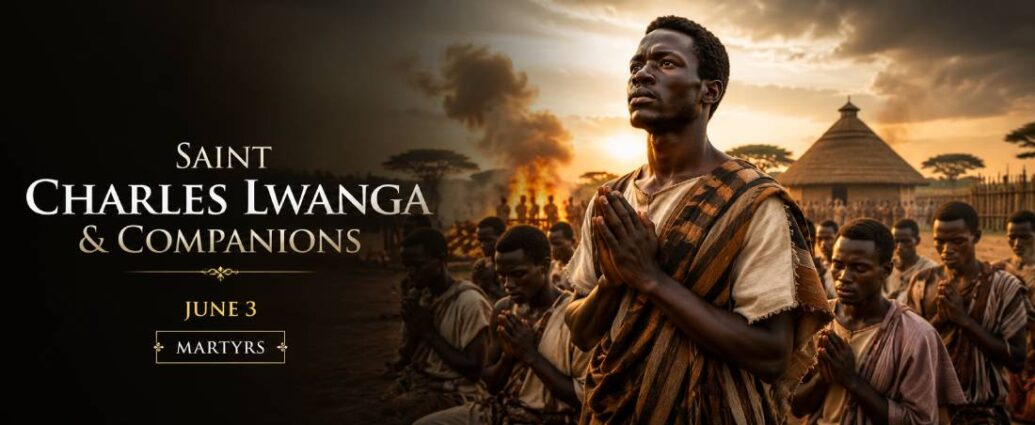
Among the most inspiring witnesses of Christian courage in modern Church history are Saint Charles Lwanga and the Ugandan Martyrs who gave their lives for Christ in the nineteenth century. Their story is not merely one of heroic death but of profound prayer, fidelity to Catholic truth, purity of heart, and unwavering love for God amid terrible persecution.
The martyrdom of Saint Charles Lwanga and his companions remains one of the most powerful testimonies of African Christianity. Their witness transformed the Catholic Church in Uganda and became a spiritual beacon for Catholics throughout the world. They were young men—many still teenagers—who chose holiness over fear, Christ over royal favor, and eternal life over earthly survival.
Their feast day, celebrated on June 3, commemorates not only their deaths but their remarkable spiritual discipline, Eucharistic devotion, mutual encouragement in prayer, and steadfast refusal to abandon Christian morality under pressure from King Mwanga II of Buganda.
For modern Catholics living in a world of compromise, moral confusion, and hostility toward faith, the witness of Saint Charles Lwanga and his companions offers an enduring lesson: holiness requires courage, prayer, sacrifice, and total trust in God.
Early Life and Historical Background
Saint Charles Lwanga was born around 1860 in the Kingdom of Buganda, located in present-day Uganda in East Africa. He belonged to the royal court of King Mwanga II, serving among the young pages responsible for duties within the palace.
During the nineteenth century, Christian missionaries—especially the Catholic missionaries known as the White Fathers—began evangelizing Uganda. The Gospel spread rapidly among the people, including many within the royal court itself. Young converts found deep meaning in Catholic teaching, especially in the message of Christ’s love, chastity, forgiveness, and eternal salvation.
However, tensions grew as King Mwanga increasingly viewed Christianity as a threat to his authority. He feared the influence of missionaries and resented the moral convictions of Christian converts, particularly their refusal to participate in immoral practices and their loyalty to a higher spiritual authority than the king himself.
Charles Lwanga emerged as a leader among the Christian pages after the martyrdom of Saint Joseph Mukasa Balikuddembe, who had openly defended the innocent and criticized the king’s violence. Charles inherited not only leadership responsibilities but also the spiritual care of the young Christian converts.
He secretly instructed catechumens in the Catholic faith, encouraged communal prayer, protected vulnerable boys from abuse, and prepared many for Baptism despite the growing danger surrounding them.
Calling and Spiritual Transformation
The conversion of Charles Lwanga was rooted deeply in the encounter with Christ through catechesis, prayer, and the witness of missionaries. Christianity in Uganda was not embraced superficially; it demanded courage from the beginning.
Charles developed a profound interior life centered on obedience to God. His faith matured quickly because it was tested immediately through suffering and persecution. Rather than hiding his beliefs, he became increasingly devoted to living the Gospel openly.
One of the most remarkable aspects of his spiritual transformation was his commitment to purity and moral integrity. The young Christians at court faced pressure to submit to immoral demands from the king. Charles encouraged them to remain faithful to Catholic teaching regarding chastity and human dignity.
This moral courage became inseparable from their prayer life. Their fidelity was not sustained merely by personal determination but through grace nourished by prayer, catechesis, and sacramental preparation.
As persecution intensified, Charles understood that martyrdom was becoming likely. Yet he continued instructing converts and preparing them spiritually for suffering.
The Prayer Life of Saint Charles Lwanga & Companions
The heart of the Ugandan Martyrs’ strength was prayer.
Historical accounts describe how Charles Lwanga gathered the young Christians together regularly for prayer, instruction, and encouragement. They prayed as a spiritual brotherhood united in Christ. In an environment filled with fear, suspicion, and violence, prayer became their refuge and source of supernatural courage.
Charles emphasized perseverance in faith and fidelity to Christ above all earthly power. He reportedly encouraged the catechumens to remain steadfast even if torture or death awaited them.
The companions devoted themselves to learning Catholic doctrine carefully. They memorized prayers, reflected on Scripture, and desired Baptism intensely. Some were baptized secretly shortly before their deaths.
Saint Charles himself baptized several catechumens when persecution escalated, recognizing the urgency of preparing souls for eternity. This act revealed his pastoral heart and deep reverence for the sacramental life of the Church.
Their prayer was not abstract spirituality. It was deeply incarnational and sacrificial. They prayed while imprisoned, while marching toward execution, and while facing death itself.
Witnesses recounted that many sang hymns and prayed aloud during their final hours.
The martyrs demonstrated extraordinary trust in Christ crucified. Their serenity astonished observers. Their courage came not from political rebellion but from contemplative union with God.
Devotions, Sacrifices, and Spiritual Practices
The spirituality of Saint Charles Lwanga and his companions reflected several central Catholic devotions and disciplines.
Devotion to Purity
One defining aspect of their witness was their commitment to chastity and moral purity. They resisted grave immorality despite intense pressure and deadly consequences.
Their martyrdom therefore became closely associated with Christian virtue, especially purity of heart. The Church honors them not only as martyrs for the faith but also as defenders of human dignity and holiness.
Catechesis and Instruction
Charles took seriously the responsibility of teaching others the faith. He understood that discipleship required formation, discipline, and truth.
Even under threat, he continued catechizing converts. This dedication reveals a missionary spirit grounded in love for souls.
Courage Through Communal Prayer
The Ugandan Martyrs strengthened one another spiritually. Their unity reflects the communal dimension of Catholic life. They suffered together, prayed together, and entered martyrdom together.
Their witness reminds Catholics that holiness flourishes within faithful Christian community.
Sacrificial Love
Charles willingly accepted death rather than abandon Christ or compromise Catholic teaching. This total self-giving reflected the words of Christ:
“Greater love has no man than this, that a man lay down his life for his friends.”
Their sacrifice became a seed of faith for Africa.
Trials, Suffering, and Faithfulness
In 1886, King Mwanga ordered the execution of Christian converts within his court.
Charles Lwanga and his companions were arrested and marched to Namugongo, the site chosen for their execution. Along the journey they endured suffering, humiliation, and threats. Yet they remained steadfast.
Several were burned alive on June 3, 1886.
Accounts from witnesses describe remarkable peace among the martyrs. Rather than cursing their persecutors, they forgave them and proclaimed their faith openly.
Saint Charles reportedly encouraged the others continually during imprisonment and execution preparations. His leadership became deeply pastoral, resembling the courage of the early Christian martyrs in ancient Rome.
The deaths of the Ugandan Martyrs shocked many but also inspired widespread conversions. Persecution failed to extinguish Christianity in Uganda. Instead, it strengthened the Church profoundly.
Their witness fulfilled the ancient Christian principle that “the blood of martyrs is the seed of Christians.”
Legacy in the Catholic Church
The influence of Saint Charles Lwanga and his companions on the global Church cannot be overstated.
They were beatified by Pope Benedict XV in 1920 and canonized by Pope Paul VI in 1964 during the Second Vatican Council. Their canonization represented a historic recognition of African sanctity within the universal Church.
Today, the Ugandan Martyrs are among the most beloved saints in Africa. Millions of pilgrims travel annually to Namugongo in Uganda to honor their witness.
They are especially venerated as patrons of African youth, courage, purity, and faithful Christian witness.
Their story also demonstrates the universality of holiness. Sanctity belongs to every culture and nation. The Church in Africa has become one of the most vibrant centers of Catholicism in the modern world, and the witness of these martyrs played a major role in that growth.
What Catholics Can Learn Today
The life of Saint Charles Lwanga speaks powerfully to contemporary Catholics.
Prayer Sustains Courage
The martyrs teach that authentic courage flows from prayer. Without deep union with God, perseverance becomes impossible during suffering.
Modern Catholics often face spiritual exhaustion, compromise, and moral pressure. Charles reminds believers that prayer forms the soul for fidelity.
Purity Is Worth Defending
The Ugandan Martyrs demonstrate that chastity and moral integrity are not outdated ideals but sacred virtues worth protecting even at great cost.
Their witness challenges today’s culture of relativism and moral confusion.
Holiness Requires Sacrifice
Christian discipleship always demands sacrifice. While most believers are not called to physical martyrdom, all Christians are called to daily martyrdom through obedience, self-denial, forgiveness, and fidelity.
Evangelization Requires Witness
Charles evangelized primarily through courageous example. His life revealed the transforming power of Christ more clearly than words alone.
Modern Catholics are likewise called to evangelize through holiness.
Conclusion
Saint Charles Lwanga and his companions remain radiant examples of fearless Catholic holiness. Their prayer life, purity, brotherhood, sacrificial love, and unwavering devotion to Christ transformed the Church in Africa and continue to inspire believers throughout the world.
They remind Catholics that sanctity is possible even amid persecution, corruption, and fear. Their witness reveals that authentic Christian courage is born not from human strength but from deep communion with God.
In an age searching desperately for truth and integrity, the Ugandan Martyrs stand as luminous witnesses to the power of prayer, chastity, sacrifice, and eternal hope in Christ.