
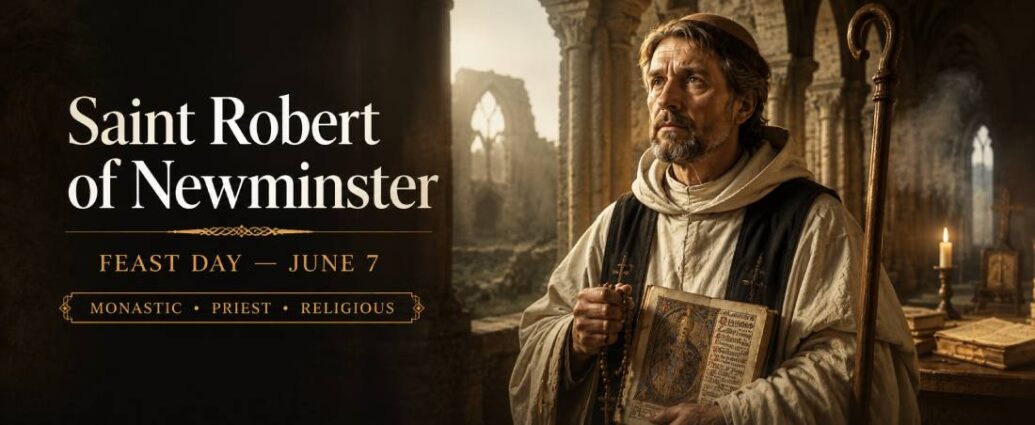
Throughout the history of the Catholic Church, some saints changed the world not through public fame or dramatic miracles, but through silence, obedience, and deep union with God. Saint Robert of Newminster belongs among these hidden yet powerful servants of Christ.
A monk of profound humility and contemplation, Saint Robert devoted his life to prayer, fasting, manual labor, and strict fidelity to the monastic life. Living during the flourishing of the Cistercian reform movement in 12th-century England, he became known for holiness, spiritual wisdom, charity, and miraculous gifts attributed to his intercession.
Unlike saints who preached before kings or traveled as missionaries, Robert’s path to sanctity unfolded largely within the quiet discipline of the monastery. Yet from this hidden life emerged immense spiritual influence. His holiness strengthened monastic renewal in England and inspired generations of religious seeking deeper intimacy with God.
For Catholics today, Saint Robert of Newminster offers a compelling witness to contemplative prayer, Eucharistic devotion, obedience, and the transforming power of hidden sacrifice. His life reminds believers that sanctity is often forged not in public recognition, but in perseverance, silence, and faithful love for Christ.
Early Life and Historical Background
Saint Robert of Newminster was born around the late 11th century in Gargrave, Yorkshire, England. Historical sources describe him as coming from a devout Christian background during a period of major religious reform throughout Europe.
The 12th century saw growing concern about laxity and worldliness in parts of religious life. In response, movements such as the Cistercians sought to restore stricter observance of monastic discipline according to the Rule of Saint Benedict. Their spirituality emphasized simplicity, poverty, manual labor, liturgical prayer, silence, and withdrawal from worldly distractions.
Robert was educated in Paris for a time, suggesting he possessed intellectual ability and theological formation. Yet despite opportunities for advancement, he felt drawn not toward prestige but toward deeper communion with God.
He was ordained a priest and eventually entered the Benedictine monastery at Whitby. Later, desiring a more austere life centered on prayer and penance, he joined the Cistercian reform movement.
Robert became one of the early monks associated with the famous abbey of Fountains Abbey in Yorkshire, one of the most influential Cistercian foundations in England.
The spirituality of the Cistercians deeply shaped him. Their emphasis on humility, silence, asceticism, and contemplative union with God resonated profoundly with Robert’s soul.
Calling and Spiritual Transformation
Saint Robert’s spiritual transformation unfolded gradually through monastic discipline and surrender to God’s will.
Unlike dramatic conversion stories associated with some saints, Robert’s holiness matured through fidelity to ordinary acts of obedience. The monastery became the place where his soul was purified through prayer, work, silence, and sacrifice.
Historical traditions consistently portray him as exceptionally gentle, humble, and charitable. Fellow monks admired not only his discipline but also his peace of soul and compassion toward others.
In 1138, Robert became the founding abbot of Newminster Abbey near Morpeth in Northumberland. Establishing a monastery during the medieval period involved tremendous hardship. Monks often lived in poverty while constructing buildings, cultivating land, and enduring harsh conditions.
Robert embraced these difficulties joyfully because he believed monastic life existed primarily to seek God above all things.
His leadership style reflected spiritual fatherhood rather than authoritarian control. He guided his monks through example, encouraging fidelity to prayer, humility, and love of Christ.
Under his direction, Newminster Abbey became known as a center of holiness and contemplative life.
The Prayer Life of Saint Robert of Newminster
The foundation of Saint Robert’s sanctity was his extraordinary prayer life.
As a Cistercian monk, his daily rhythm revolved around the Divine Office, meditation on Scripture, silent contemplation, and the Holy Eucharist. Medieval monastic spirituality viewed the entire day as ordered toward communion with God.
Robert spent long hours in prayer, often late into the night.
Accounts from his life emphasize his deep recollection and interior peace. He sought silence not as escape from responsibility but as a way to listen more attentively to God.
The Cistercian tradition strongly emphasized contemplative prayer rooted in simplicity and purity of heart. Rather than elaborate external displays, monks cultivated interior stillness and constant awareness of God’s presence.
Robert’s Eucharistic devotion formed the center of his spirituality. The Holy Mass was not merely part of his routine but the source of his strength and holiness. Medieval monastic communities celebrated the liturgy with profound reverence, and Robert encouraged careful fidelity in sacred worship.
His prayer was also deeply penitential.
Like many saints of his era, Robert practiced fasting and bodily discipline to detach himself from worldly comforts and unite himself more closely with the sufferings of Christ. Such penance was never motivated by self-hatred but by love — a desire to belong completely to God.
He also cultivated charity through prayer. Historical traditions describe him interceding fervently for the sick, the poor, and those burdened by suffering.
Miracles were eventually attributed to his prayers both during his lifetime and after his death.
Devotions, Sacrifices, and Spiritual Practices
Saint Robert lived with remarkable simplicity and discipline.
Cistercian spirituality intentionally rejected unnecessary luxury. Monasteries emphasized plain architecture, simple liturgy, manual labor, and poverty. Robert embraced this lifestyle wholeheartedly.
His sacrifices included:
- prolonged fasting
- sleepless vigils
- manual labor
- strict obedience
- silence
- voluntary poverty
- endurance of physical hardship
These practices were not ends in themselves but means of spiritual purification.
Robert understood that attachment to comfort could weaken the soul’s love for God. Through ascetic discipline, he sought greater freedom for contemplation and charity.
Manual labor played a major role in his spirituality. Medieval monks often worked fields, constructed buildings, copied manuscripts, and cared for practical necessities. Robert believed physical labor performed with humility could become a form of prayer.
He was also known for compassion toward the poor and travelers. Even within the strict structure of monastic life, hospitality remained an essential Christian duty.
Although explicit Marian writings connected to Robert are limited, the Cistercian tradition itself possessed strong devotion to the Blessed Virgin Mary. Cistercian monasteries frequently dedicated themselves to Our Lady, and Marian prayer shaped the spiritual atmosphere in which Robert lived.
His holiness reflected balance — contemplation united with charity, discipline united with gentleness.
Trials, Suffering, and Faithfulness
The life of Saint Robert was not free from hardship.
Founding and governing a monastery in medieval England required enormous endurance. Monks frequently faced poverty, food shortages, political uncertainty, illness, and exhausting labor.
Robert also experienced spiritual trials common to contemplative saints. Monastic life demanded perseverance through dryness, temptation, fatigue, and hidden interior struggles.
Yet he remained faithful.
Historical accounts describe him as calm, patient, and unwavering even during difficulties. His strength came not from natural resilience alone but from continual dependence on God.
The austerity of Cistercian life itself involved sacrifice. Monks slept little, fasted regularly, prayed throughout the night, and maintained strict discipline. Robert embraced these hardships willingly because he believed holiness required total surrender.
His humility also protected him from spiritual pride.
Though reports of miracles surrounded him, Robert remained focused on obedience and service rather than reputation. Fellow monks saw in him not ambition but genuine sanctity.
He died in 1159 after years of faithful leadership and contemplative service.
Soon after his death, devotion to him spread throughout northern England because many believed God had worked miracles through his intercession.
Legacy in the Catholic Church
Saint Robert of Newminster became one of the most beloved English Cistercian saints of the medieval period.
Though never as internationally famous as figures like Saint Bernard of Clairvaux, Robert embodied the same contemplative ideals that defined the Cistercian reform movement.
His monastery at Newminster produced additional religious foundations and contributed significantly to the spread of monastic renewal in England.
Pilgrims visited his tomb seeking healing and spiritual assistance. Medieval traditions recorded miracles associated with his intercession, strengthening popular devotion.
Robert’s example continues inspiring Catholics today, especially:
- contemplatives
- monks and religious
- priests
- those seeking silence and prayer
- Catholics desiring deeper spiritual discipline
His life demonstrates that hidden holiness can profoundly shape the Church.
In modern society, where noise and distraction dominate daily life, Saint Robert’s witness to silence and contemplation feels especially important.
What Catholics Can Learn Today
Saint Robert of Newminster offers many lessons for contemporary Catholics.
First, he reminds believers that holiness often grows quietly. Modern culture frequently celebrates visibility, achievement, and recognition. Robert’s sanctity developed largely in hidden prayer and humble obedience.
Second, his life teaches the importance of silence. Catholics today are constantly surrounded by distraction, technology, and noise. Robert shows that interior peace requires time alone with God.
Third, his example reveals the value of disciplined spiritual practices. Fasting, prayer, sacrifice, and simplicity help purify the heart and deepen love for Christ.
His devotion to the Eucharist also challenges Catholics to approach the Mass with greater reverence and gratitude.
Finally, Robert demonstrates that gentleness and strength can coexist. Though strict in discipline, he remained compassionate and charitable toward others.
His life encourages believers to seek God faithfully even when their efforts remain unseen by the world.
Conclusion
Saint Robert of Newminster lived a life hidden from worldly glory yet radiant with spiritual beauty.
Through prayer, silence, penance, Eucharistic devotion, and humble obedience, he became a powerful witness to contemplative holiness during one of the great reform movements of medieval Christianity.
His sanctity was not built upon fame or dramatic public achievements but upon daily fidelity to God.
For modern Catholics seeking deeper spiritual lives, Saint Robert offers a timeless reminder that true holiness grows through prayerful perseverance, sacrificial love, and quiet trust in Christ.
In every age, the Church needs saints who teach the world that intimacy with God is worth more than earthly success. Saint Robert of Newminster remains one of those hidden lights whose contemplative life continues guiding souls toward heaven.