
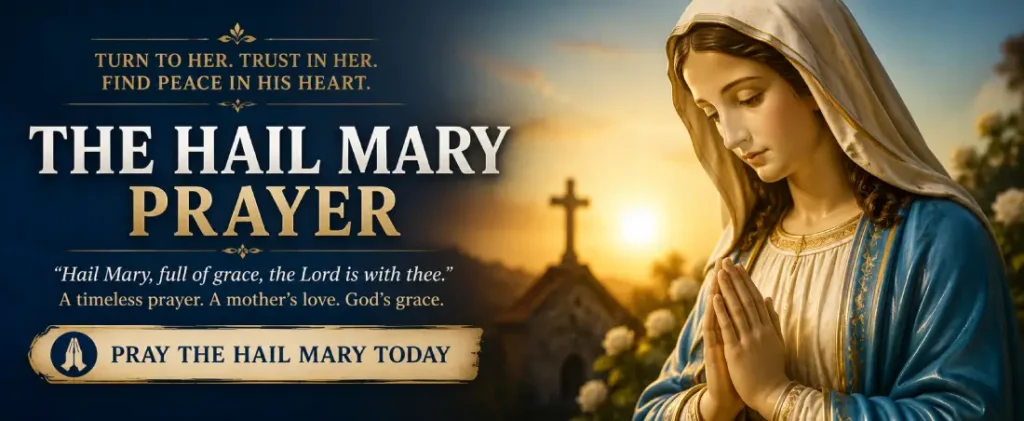
The Hail Mary is among the most recognized and frequently prayed prayers in the Catholic Church. For centuries, Catholics have turned to this beautiful prayer to honor the Blessed Virgin Mary, the Mother of God, and to seek her intercession before her Son, Jesus Christ. While often associated with the Rosary, the Hail Mary is also prayed independently during personal devotions, family prayer, Eucharistic Adoration, pilgrimages, and moments of joy or suffering.
The prayer's origins are deeply rooted in Sacred Scripture. The opening words come directly from the greeting of the Archangel Gabriel during the Annunciation: “Hail, full of grace, the Lord is with you” (Luke 1:28). The next section echoes the words spoken by Saint Elizabeth during the Visitation: “Blessed are you among women, and blessed is the fruit of your womb” (Luke 1:42). Over time, the Church added the petition asking Mary to pray for sinners “now and at the hour of our death,” emphasizing her maternal role in the communion of saints.
The Catechism of the Catholic Church teaches that Mary's unique cooperation in God's plan of salvation makes her a powerful intercessor for believers. Catholics do not worship Mary; rather, they honor her as the Mother of Jesus and ask her to pray for them, just as Christians ask one another for prayers.
The Hail Mary remains especially relevant today because it directs hearts toward Christ through the example of His Mother. In a world marked by uncertainty, anxiety, and distraction, this prayer offers peace, focus, and spiritual comfort. It reminds believers of God's grace, Mary's faith-filled obedience, and the promise of salvation through Jesus Christ.
Whether prayed individually, with family, or as part of the Rosary, the Hail Mary continues to strengthen faith, inspire trust in God, and unite Catholics around the world in a shared devotion that has endured for centuries.
The Prayer
Take a moment to become still and lift your heart to God.
Hail Mary, full of grace,
the Lord is with thee.
Blessed art thou among women,
and blessed is the fruit of thy womb, Jesus.
Holy Mary, Mother of God,
pray for us sinners,
now and at the hour of our death.
Amen.
Bible Foundation
Primary Bible Verse
"Hail, full of grace! The Lord is with you."
— Luke 1:28
Supporting Bible Verses
Luke 1:42
Luke 1:43
Luke 1:48
John 2:1-11
John 19:26-27
Revelation 12:1
How the Hail Mary Is Rooted in Sacred Scripture
The Hail Mary is one of the most biblically grounded prayers in Catholic tradition. Its first half consists almost entirely of words taken directly from Scripture.
The prayer begins with the Archangel Gabriel's greeting to Mary during the Annunciation: "Hail, full of grace, the Lord is with you" (Luke 1:28). This moment marks the beginning of the Incarnation, when God chose Mary to become the Mother of Jesus Christ.
The next section comes from Saint Elizabeth's inspired greeting during the Visitation: "Blessed are you among women, and blessed is the fruit of your womb" (Luke 1:42). Elizabeth, filled with the Holy Spirit, recognized Mary's unique role in salvation history and honored both Mary and the child she carried.
The name "Jesus" was later added by the Church to emphasize that the prayer ultimately centers on Christ. Every authentic Marian devotion leads believers to Jesus.
The second half of the prayer reflects Catholic understanding of the communion of saints. The title "Mother of God" affirms the Church's teaching from the Council of Ephesus (AD 431), which declared that Mary is truly the Mother of the Divine Person, Jesus Christ. Catholics ask Mary to "pray for us sinners" because Scripture encourages believers to pray for one another (James 5:16).
The prayer's final petition, asking Mary's prayers "now and at the hour of our death," reflects the Christian desire for perseverance and a holy death. Catholics trust that the Mother of Jesus continues to intercede for the faithful as a loving spiritual mother.
Thus, the Hail Mary is not merely a traditional prayer but a meditation on biblical truths: God's grace, Christ's Incarnation, Mary's faithfulness, and the power of intercessory prayer.
Reflection
The Hail Mary teaches Catholics profound lessons about humility, trust, and cooperation with God's will. Every time this prayer is spoken, believers are reminded of Mary's response to the angel: a complete surrender to God's plan despite uncertainty and sacrifice.
Mary's life demonstrates what it means to live by faith. She did not know every detail of God's plan, yet she trusted Him completely. Modern Christians face similar challenges. Many struggle with anxiety about the future, family concerns, health issues, financial burdens, or difficult decisions. The Hail Mary invites believers to place those concerns before God with the same confidence that Mary displayed.
The prayer also teaches the importance of grace. Gabriel addressed Mary as "full of grace," highlighting God's action in her life. This reminds Christians that holiness is not achieved through human effort alone but through cooperation with divine grace. God continually offers His grace to strengthen, guide, and transform His people.
Another powerful lesson comes from Mary's role as a spiritual mother. At the foot of the Cross, Jesus entrusted His followers to Mary's maternal care (John 19:26-27). Catholics therefore approach her with confidence, knowing that she lovingly intercedes for them before her Son.
The Hail Mary also encourages perseverance. The words "pray for us sinners, now and at the hour of our death" acknowledge humanity's ongoing need for God's mercy. The prayer reminds believers to remain vigilant in faith throughout their lives and to prepare for eternity.
In today's fast-paced world, the Hail Mary offers a moment of peace and recollection. Repeating its sacred words can calm anxious hearts, deepen meditation on the mysteries of Christ's life, and foster a greater awareness of God's presence. It serves as a spiritual anchor amid daily distractions.
Ultimately, the Hail Mary is a Christ-centered prayer. Although addressed to Mary, its focus is the Incarnation and the saving work of Jesus. Mary always points believers toward her Son, encouraging them to trust Him completely. Through this prayer, Catholics learn to imitate Mary's faith, rely on God's grace, seek heavenly intercession, and grow closer to Jesus Christ, who is the source of all salvation and hope.