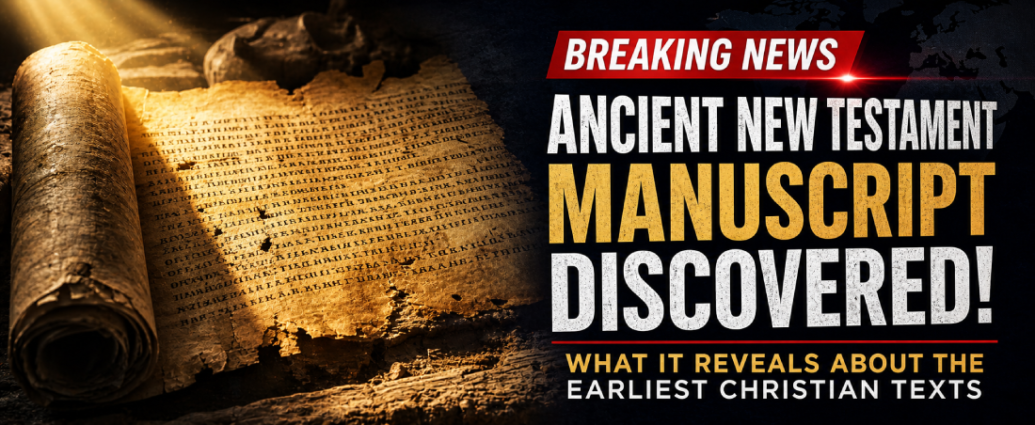
The recent recovery of 42 lost pages from an ancient New Testament manuscript reminds us of God’s providential care over His Word throughout the centuries. Using advanced multispectral imaging technology, researchers have unveiled text that was previously invisible to the naked eye, bringing to light Scripture that has been hidden for generations. This remarkable discovery affirms what the prophet Isaiah proclaimed: “The grass withers, the flower fades, but the word of our God stands forever” (Isaiah 40:8).
These technological advances allow scholars to peer beneath the surface of damaged or faded manuscripts, revealing precious words of Scripture that connect us directly to the early Church. The recovered pages join countless other manuscript discoveries that demonstrate the remarkable preservation of biblical texts across two millennia. This preservation itself is a testament to the Holy Spirit’s continued presence in the Church, guiding the faithful transmission of divine revelation from generation to generation.
As Catholics, we understand that Scripture and Sacred Tradition together form the deposit of faith entrusted to the Church. The recovery of these ancient pages enriches our understanding of how carefully the early Christians preserved and transmitted the Good News. Every word mattered to them because every word pointed toward Christ, the Word made flesh. Their reverence for Scripture challenges us to approach the Bible with similar devotion and care in our own lives.
The technological innovation that made this discovery possible also reminds us that human ingenuity, when ordered toward truth and goodness, participates in God’s creative work. The scientists and scholars who developed these imaging techniques used their God-given talents to serve something greater than themselves. This mirrors the pro-life principle that every human person possesses inherent dignity and unique gifts meant to contribute to the common good. Just as advanced technology can recover lost words of Scripture, our commitment to protecting life at every stage ensures that no human voice is silenced before sharing their unrepeatable contribution to our world.
The careful work of manuscript recovery parallels the patient, attentive care we must show toward the most vulnerable among us. Researchers spent countless hours examining fragments that others might have deemed worthless or beyond restoration. Similarly, our pro-life witness calls us to recognize the infinite worth of every human being, especially those whom society might overlook: the unborn child, the elderly, the disabled, and the dying. No life is too small, too damaged, or too hidden to matter infinitely to God.
These recovered pages likely contain familiar passages that the Church has preserved through other manuscript traditions, yet their discovery still enriches our understanding and strengthens our faith. In the same way, every human life, though created in the same image of God, brings something irreplaceable to our human family. We cannot know what gifts remain locked within a life cut short by abortion, what wisdom might come from an elderly person denied proper care, or what blessings might flow from a child with disabilities.
Let us pray: Heavenly Father, we thank You for preserving Your Word throughout the ages and for the gift of human ingenuity that continues to reveal its treasures. Help us to receive Your Scripture with open hearts and to live according to its teachings. Grant us reverence for all human life, that we may protect and cherish every person from conception to natural death. May we use our own gifts and talents, like those who recovered these ancient pages, in service of truth and the building of Your kingdom. Through Christ our Lord. Amen.
This discovery invites us to renewed engagement with Scripture and reminds us that God continues to speak to His people through His eternal Word.