
Can a Catholic Marriage Be Annulled? Understanding the Process, Canon Law, and Truth
When a Catholic faces civil divorce, the road ahead feels overwhelming. Can you still receive the Sacraments? What does the Church actually require if you wish to heal or eventually remarry?
To answer directly: Yes, a Catholic marriage can be investigated for nullity, but an “annulment” is not a Catholic divorce. The Catholic Church does not have the power to dissolve a valid, consummated sacramental marriage. Instead, a Declaration of Nullity is a formal judicial finding by a diocesan tribunal that a valid sacramental marriage bond was never formed in the first place due to a fundamental defect at the exact moment of consent.
Furthermore, it is vital to clear up a widespread misconception: civil divorce alone does not cut a Catholic off from the Sacraments. A civilly divorced Catholic who does not enter an invalid second civil union remains in full sacramental standing, free to receive Holy Communion and Confession (St. John Paul II, Familiaris Consortio, 84; Catechism of the Catholic Church [CCC], 1650).
Understanding this process requires looking past secular misunderstandings and examining what Sacred Scripture, Canon Law, and Catholic doctrine actually teach.
What Is a Declaration of Nullity?
The Catechism of the Catholic Church defines the marital covenant as an intimate partnership of the whole of life, ordered by its nature to the good of the spouses and the procreation and education of offspring (CCC 1601).
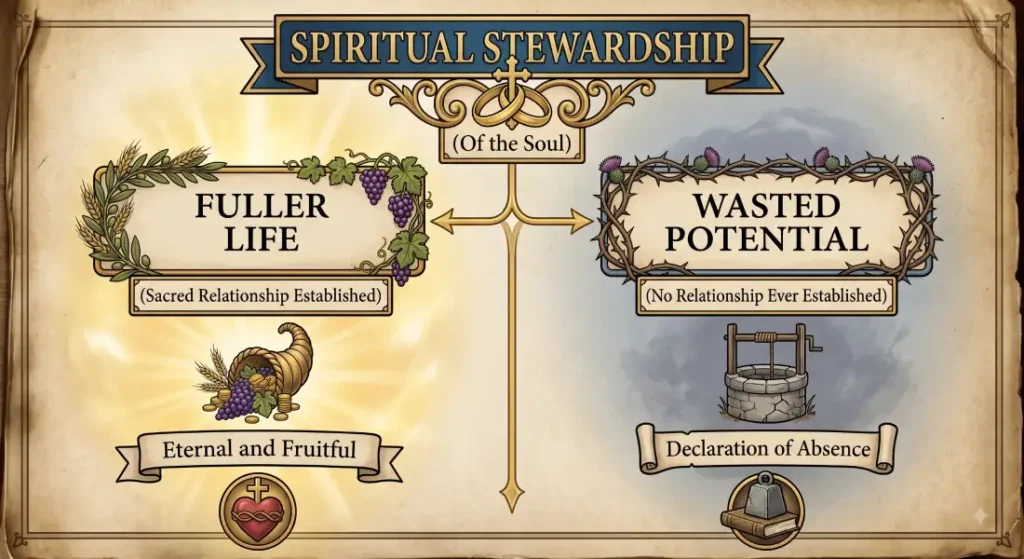
When two baptized persons enter marriage freely, giving true consent according to canonical form, God Himself seals the bond. However, if an essential element was missing at the time vows were exchanged, the spiritual bond that the Church recognizes as sacramental marriage never came into existence.
An annulment does not erase history, pretend a relationship never happened, or affect the legitimacy of children. It is simply an act of pastoral and judicial truth-telling.
Civil Divorce vs. Catholic Declaration of Nullity
To understand the canonical process, it helps to contrast civil legal actions with Church judicial proceedings:
| Comparison Feature | Civil Divorce | Declaration of Nullity (Annulment) |
| Investigating Authority | Secular State Court | Catholic Diocesan Tribunal |
| Legal Focus | Terminates civil marriage contract | Determines if a valid sacramental bond was formed |
| Timeline Evaluated | Marital breakdown during the union | Conditions present at the exact time of consent |
| Sacramental Impact | Affects civil legal status only | Restores canonical freedom to contract marriage |
| Status of Children | Governs civil custody and support | Has zero impact on legitimacy (CIC Can. 1137) |
The Biblical Foundation of Indissolubility
Catholic teaching on marriage rests firmly upon Sacred Scripture and the direct words of Jesus Christ.
“Therefore a man leaves his father and his mother and cleaves to his wife, and they become one flesh.” — Genesis 2:24 (RSV-CE)
Marriage was established by God at the dawn of creation as a natural covenant. Christ later elevated this union between baptized persons to the dignity of a Sacrament, restoring it to its original permanence.
“So they are no longer two but one flesh. What therefore God has joined together, let not man put asunder.” — Matthew 19:6 (RSV-CE)
Because marriage is a divine covenant, no human authority—not even a Pope or a civil court—has the power to dissolve a valid, consummated sacramental marriage (Code of Canon Law [CIC], Can. 1141).
Understanding Matthew 19:9 (Porneia)
Critics often point to Matthew 19:9, where Christ states: “Whoever divorces his wife, except for unchastity, and marries another, commits adultery.”
In Protestant traditions, the phrase “except for unchastity” is often interpreted as permitting divorce and remarriage in cases of marital infidelity. However, the Catholic Church—guided by ancient Greek exegesis, St. Jerome, St. Augustine, and the Council of Trent (Session XXIV)—teaches that the Greek word used here (porneia) refers to unlawful, incestuous, or null unions contracted within forbidden degrees of kinship.
Christ’s teaching on absolute indissolubility stands without exception. While grave circumstances (such as abuse or abandonment) may force spouses to physically separate for safety (separatio a thoro et mensa / separation from bed and board), the underlying spiritual bond remains unbroken until death.
Canonical Grounds for a Declaration of Nullity
A marriage tribunal does not evaluate who was at fault for a marital breakdown. Instead, canonical judges examine whether a valid consent was exchanged on the wedding day. Under the 1983 Code of Canon Law, grounds for nullity generally fall into three main categories:
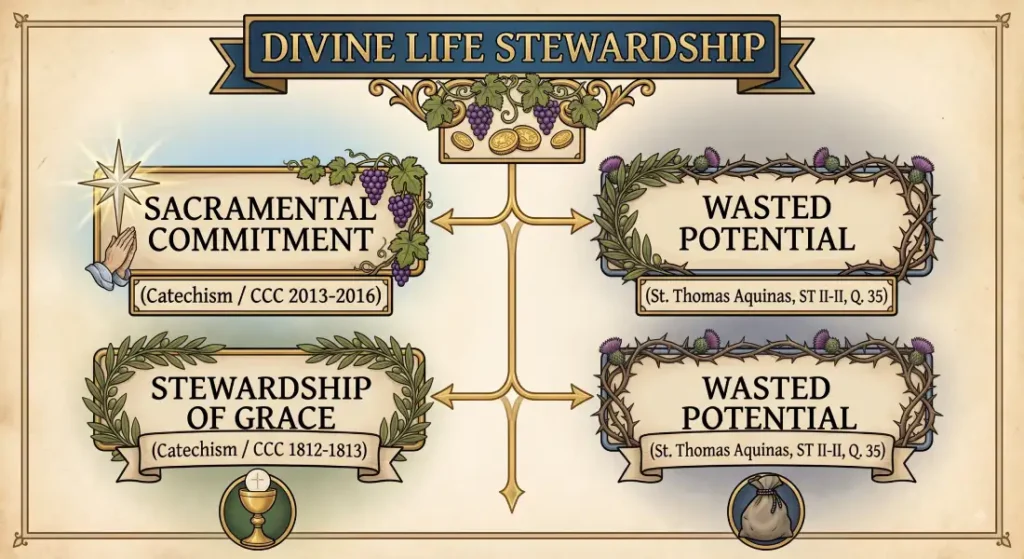
1. Defect or Vitiation of Consent (CIC Cans. 1095–1103)
Consent makes the marriage. If consent was severely flawed, no bond was formed. Grounds include:
- Lack of Psychological Capacity (Can. 1095): Severe emotional instability, addiction, or grave mental illness present at the time of vows that rendered a person incapable of assuming the essential obligations of marriage.
- Simulation of Consent (Can. 1101): Explicitly excluding an essential element of marriage at the altar—such as permanently excluding children, intention to remain faithful, or the permanence of marriage itself.
- Grave Ignorance or Deceit (Cans. 1096, 1098): Being deliberately deceived about a vital quality in a spouse (e.g., hidden criminality or sterility) that fundamentally disrupts marital partnership.
- Force or Grave Fear (Can. 1103): Entering marriage under external duress or pressure rather than completely free choice.
2. Canonical Diriment Impediments (CIC Cans. 1083–1094)
These are objective legal barriers that prohibit a valid marriage, such as:
- An existing valid prior marriage bond (ligamen).
- Holy Orders or solemn religious vows.
- Consanguinity (close blood relationships).
3. Defect of Canonical Form (CIC Can. 1108)
Catholics are bound to marry according to canonical form—before a authorized priest or deacon and two witnesses. If a Catholic marries in a purely civil ceremony or outside the Church without a formal dispensation from their bishop, the marriage is invalid due to defect of form. These administrative cases are typically resolved quickly.
Step-by-Step: Navigating the Tribunal Process
The annulment process is structured to guarantee justice, equity, and spiritual care for both parties (1 Corinthians 14:40).
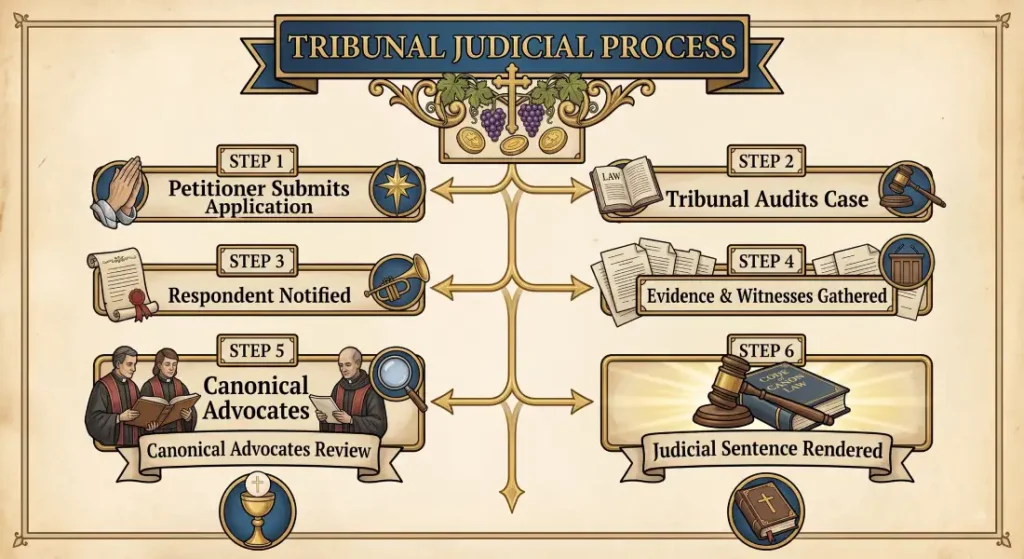
Step 1: Submission of Petition (Libellus)
The process begins at the local parish level. You will meet with your parish priest or a trained lay auditor to prepare a written testimony detailing the background of the courtship, the wedding, and the marriage history. You will attach necessary legal and ecclesial documents (marriage certificate, baptismal certificates, civil divorce decree).
Step 2: Formal Citation and Joinder of Issues
The tribunal contacts your former spouse (the Respondent), informing them of the petition and giving them the opportunity to participate. While the Respondent’s participation is encouraged to ensure complete fairness, the case can still proceed if they choose not to participate.
Step 3: Gathering Evidence and Witness Testimony
In accordance with biblical principles requiring independent evidence (Matthew 18:16), the tribunal collects testimonies from objective witnesses (family members, friends) who knew the couple before and during the marriage. Medical or psychological records may also be reviewed if mental capacity is in question.
Step 4: Examination by Advocates and Defender of the Bond
A appointed Defender of the Bond presents arguments in favor of the marriage’s validity, ensuring the sanctity of the sacrament is protected. Your Canonical Advocate presents arguments supporting your petition.
Step 5: Judicial Sentence
A panel of qualified canonical judges (or a single judge under specific canonical rules) reviews the entire case file. If they find moral certainty that the marriage was invalid from the beginning, they issue a decree declaring nullity.
Following Pope Francis’s apostolic letter Mitis Iudex Dominus Iesus, tribunal processes have been streamlined to reduce administrative delays and eliminate high court fees, ensuring financial hardship never prevents anyone from seeking justice.
Moving Forward in Pastoral Grace
Receiving an annulment is not a mark of shame or a legal technicality; it is an encounter with divine truth (John 8:32).
If the tribunal grants a Declaration of Nullity, both parties—once any pastoral restrictions or counseling requirements are satisfied—are canonically free to enter a valid sacramental marriage in the Catholic Church.
If the tribunal finds that the marriage was valid, the Church affirms that the original bond remains intact. In such cases, the Church provides ongoing pastoral accompaniment, guiding individuals to live faithful, holy lives in grace while remaining in full sacramental communion through regular reception of Confession and Holy Communion.
As St. Paul writes, “God is faithful, and he will not let you be tempted beyond your strength” (1 Corinthians 10:13). Whatever your situation, Christ invites you to bring your burdens to Him, trusting that the Church walks beside you with truth, compassion, and divine mercy.
Frequently Asked Questions
No. A Declaration of Nullity has absolutely no effect on the legitimacy of children. Canon law explicitly protects the status of children born of a marriage that was entered into in good faith (Code of Canon Law, Can. 1137). Civil legal rights, custody, and legitimacy remain completely unaffected.
Yes. A Catholic who is civilly divorced may receive Holy Communion provided they are in a state of grace and have not entered a new civil marriage or cohabiting relationship outside the Church (CCC 1650). Civil divorce alone does not exclude someone from the Sacraments.
Following Pope Francis’s reforms in Mitis Iudex Dominus Iesus, tribunal procedures are offered free of charge or at minimal administrative cost covered by the diocese. No individual is ever denied a tribunal review due to an inability to pay.
Mutual agreement to divorce is not a canonical ground for nullity. Tribunals do not examine why a marriage failed years later, but whether a valid sacramental bond was established at the time vows were exchanged based on specific canonical grounds (e.g., defect of consent, grave lack of discretion, or psychological incapacity).
Continue Your Faith Journey
Catholic Prayer for Husband Addicted to Porn: A Spiritual Warfare & Relational Healing Guide
Discover how Catholic spiritual warfare, Eucharistic grace, and deprecatory deliverance prayers can help free a husband from pornography addiction. Learn to combine…
Catholic Prayer for Adult Child Who Left the Faith: Doctrinal & Intercessory Action Plan
Discover how Catholic parents can overcome grief and guilt when an adult child leaves the Church. Anchored in Scripture, Church teaching, and…
Does Watching Live Stream Mass Fulfill Your Sunday Obligation? A Catholic Theological Guide
Discover whether watching Mass online satisfies your weekly Catholic duty. Learn what the Catechism of the Catholic Church, Canon Law, and Sacred…