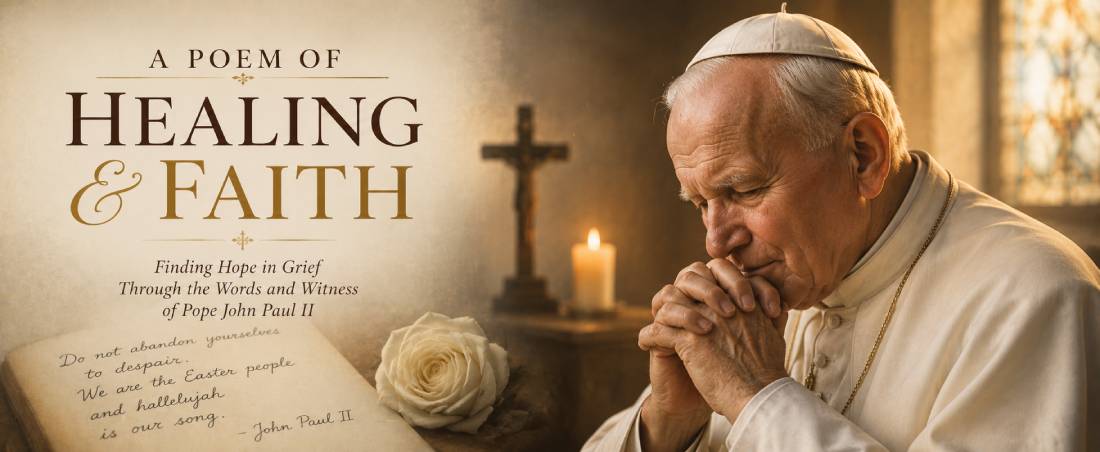
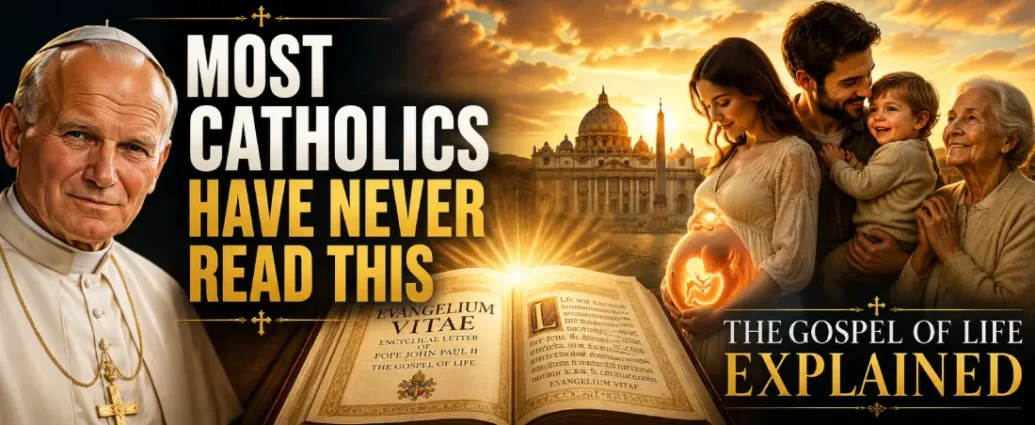
Evangelium Vitae Explained: The Church’s Complete Teaching on Human Life In 1995, Pope John Paul II gave the Church and the world a prophetic gift. Evangelium Vitae—the Gospel of Life—stands as one of the most comprehensive and urgent statements the Church has ever issued on the sanctity of human life. We’re living now in the world he warned us about. The culture of death has deepened its grip. Abortion, euthanasia, and the devaluing of the vulnerable have become normalized, even celebrated. But the Gospel of Life hasn’t changed. It can’t change. It’s written into the fabric of creation itself, into the very heart of God who is Love. Evangelium Vitae explained is more than an academic exercise. This encyclical is a clarion call to every Catholic, every person of goodwill, to recognize what’s at stake. We’re not debating policy preferences or personal opinions. We’re talking about the foundational truth that every human life—from the first moment of conception to natural death—bears the image of God and possesses inviolable dignity. Pope John Paul II didn’t write this document in a vacuum. He wrote it because he saw what we see: a world growing darker toward the weakest among us, a world that has lost its way. What follows is a plain-English guide to this landmark encyclical. We’ll walk through its core teachings on abortion, euthanasia, capital punishment, and the contrast between the culture of life and the culture of death. Each point draws directly from Scripture and the encyclical itself, showing how deeply rooted these truths are in the deposit of faith. This isn’t just theory. It’s the Gospel. And it demands our response.
Understanding the Gospel of Life Encyclical: Context and Foundation
Catholic Teaching on Abortion in Evangelium Vitae Explained
This is where Evangelium Vitae begins—with the eternal truth that God’s knowledge and love of each person precedes even biological existence. Pope John Paul II grounds the entire Gospel of Life in God’s personal, loving initiative toward every human being. We exist because we are willed, known, and loved by the Father.
The Culture of Life vs Culture of Death: Pope John Paul II’s Pro-Life Vision
The imago Dei—the image of God—is the cornerstone of human dignity. Every human life reflects the Creator himself, which means every life is sacred, unrepeatable, and worthy of protection. When we attack innocent human life, we’re not just harming another person. We’re assaulting the image of God.
Evangelium Vitae Summary: Building a Civilization of Love
Christ himself is the Gospel of Life. His entire mission was to restore, redeem, and magnify life—not just spiritual life, but the whole person. The culture of death steals, kills, destroys. Christ does the opposite. The choice before us couldn’t be clearer.
The Fifth Commandment is absolute and universal. Evangelium Vitae explains that this prohibition against killing the innocent is not culturally conditioned or historically limited—it’s a permanent, unchanging moral law inscribed on the human heart and revealed by God. No authority on earth can nullify it.
Job’s rhetorical question reveals the ancient understanding that all human beings share a common origin and equal dignity. The unborn child and the born adult are fashioned by the same Creator. There is no hierarchy of worth, no sliding scale of personhood. We are equals before God.
Pope John Paul II cites this Psalm to show that God’s providence extends to every stage of human development, even before birth. The unborn child is not potential life—he or she is a life with potential, already written in God’s book, already numbered among His beloved.
Abortion is a direct attack on God’s creative work. He is the one knitting the child together, fashioning each unrepeatable person in the hidden sanctuary of the womb. When we permit abortion, we interrupt the Creator’s hand. We declare ourselves sovereign over life and death.
John the Baptist, still in his mother’s womb, recognized the presence of Christ, still in Mary’s womb. Two unborn children. Two persons. The Gospel itself testifies to the personhood of the unborn, and Evangelium Vitae makes this connection explicit: the child in the womb is our neighbor, our brother, our sister.
Jesus reserves his harshest warnings for those who harm the little ones. While this verse addresses scandal, Pope John Paul II applies its logic to all the vulnerable, including the unborn who are the littlest and most defenseless among us. Their blood cries out.
Paul’s declaration of innocence challenges us. Can we say the same? In a culture where millions of children are aborted each year, where laws protect the killing of the innocent, we must ask ourselves: are we complicit by our silence, our apathy, our votes? Evangelium Vitae calls us to examine our consciences and act.
This is not optional. The command is clear: rescue, hold back, intervene. The unborn are being taken to death. Evangelium Vitae insists that every Catholic has a duty to defend them through prayer, witness, political action, and direct service. We cannot look away.
Pope John Paul II frames the entire encyclical around this choice. We stand at a crossroads. The culture of death offers autonomy, convenience, and the elimination of suffering through elimination of the sufferer. The culture of life offers the truth: that suffering can be redeemed, that inconvenience is not a justification for killing, that love requires sacrifice.
Each person is responsible for his own choices. Evangelium Vitae warns against societal structures of sin—laws and systems that facilitate and normalize killing. But ultimately, each of us will answer to God for whether we chose life or death, whether we protected the innocent or abandoned them.
The culture of death promises comfort, control, and autonomy. It delivers emptiness. Euthanasia promises dignity but delivers despair. Abortion promises freedom but delivers lifelong wounds. Pope John Paul II saw through these lies and called them what they are: the devil’s bargain.
True love—caritas—seeks the good of the other, even at great cost to oneself. The culture of life is grounded in this self-giving love. We don’t kill the inconvenient, the suffering, the unplanned. We embrace them. We serve them. We lay down our lives for them if necessary.
The culture of life is communal, not individualistic. We recognize that the pregnant mother facing a crisis needs our support, not our judgment. The elderly person facing decline needs our care, not our abandonment. Evangelium Vitae calls the whole Church to bear these burdens together.
The most vulnerable—orphans, widows, the unborn, the disabled, the dying—are the litmus test of our faith. If we ignore them, our religion is empty. Pope John Paul II calls us to concrete action: pregnancy centers, hospice care, adoption, foster care, accompaniment of the suffering.
Faith without works is dead. We can’t just say we’re pro-life. We must act. Evangelium Vitae insists that building a culture of life requires structural change—laws that protect the innocent, yes, but also social supports that make choosing life easier for struggling families.
The way we fight for life matters. Pope John Paul II calls us to witness with gentleness, patience, and love—never with violence, never with hatred. The culture of life is built on virtue, and our methods must reflect the dignity we’re defending.
This work is long. The victories are often small. The setbacks can be crushing. But Evangelium Vitae reminds us that God is faithful, that the Gospel of Life will ultimately triumph, and that our labor is never in vain. We don’t fight because we’re guaranteed earthly success. We fight because it’s true.
Every one of us was made for this moment. The defense of life, the building of the culture of life—these are not optional missions for specialists. They’re the calling of every baptized Catholic. God prepared these works for us before we were born. Will we walk in them?
Christ identifies himself with the least. The unborn child scheduled for abortion is Christ. The elderly woman pressured toward euthanasia is Christ. When we serve them, we serve Him. When we abandon them, we abandon Him. The stakes couldn’t be higher.
The culture of life is the culture of the Cross. It demands sacrifice. It asks us to give up convenience, comfort, even safety to protect others. This is the pattern Christ gave us—not self-preservation, but self-gift. Not autonomy, but love.
Nothing—not poverty, not disability, not illness, not unwantedness—can separate a human being from the love of God. Every life has infinite value because every life is held in that unbreakable embrace. Evangelium Vitae proclaims this hope against the lies of the culture of death.
The Gospel of Life doesn’t end with this world. It points toward the new creation where death itself will be defeated. Our work to protect life here and now participates in God’s ultimate plan—the restoration of all things, the final victory of life over death. Brothers and sisters, Evangelium Vitae explained is really just the Gospel explained. Pope John Paul II didn’t invent these teachings. He received them from the Apostles, who received them from Christ, who revealed the Father’s eternal plan. Every human life is sacred because every human life comes from God, bears His image, and is destined for eternal communion with Him. This truth hasn’t changed in thirty years, and it won’t change in thirty more. We live in dark times. The culture of death is powerful, well-funded, and legally protected. But we’ve been here before. The early Christians faced an empire that practiced infanticide and glorified death. They responded not with violence but with love—rescuing abandoned babies, caring for plague victims, witnessing to the Gospel of Life even unto martyrdom. And they won. Not through political power, but through the power of the Cross. That same calling is ours today. Pray. Fast. Give. Speak. Vote. Volunteer at pregnancy centers. Adopt. Foster. Accompany the dying. Support families. Live the Gospel of Life in every dimension of your existence. Evangelium Vitae isn’t just a document to study—it’s a roadmap for discipleship, a blueprint for building the civilization of love. The question is whether we’ll follow it. Let’s choose life. Let’s choose Christ. And let’s never, ever stop fighting for the least of these.
📖 You Might Also Like