
When “Normal” Dictates Human Worth: A Catholic Response to Selective Abortion and Down Syndrome
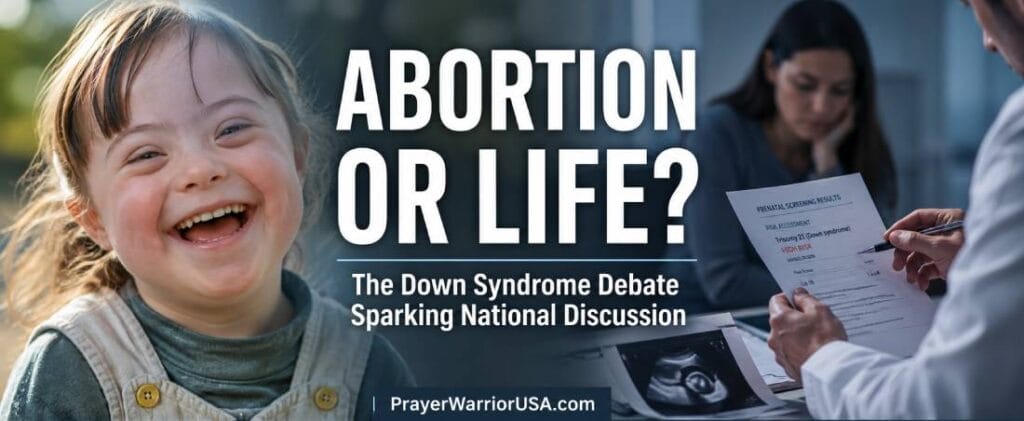
YouTuber Jesse Ridgway sparked widespread outrage after defending his choice to advocate for the abortion of his unborn child following a Down syndrome diagnosis, stating: “Of course I’m glad my dad didn’t f–ing terminate me, but I’m normal”. Beyond the immediate social media reaction, Ridgway’s comment reveals a profound cultural crisis: the arbitrary division of human beings into those worthy of life and those deemed disposable based on “normalcy”.
Catholic moral theology unequivocally rejects this logic. The Roman Catholic Church teaches that every human life possesses an intrinsic, inviolable dignity from the moment of conception (CCC 2270). A prenatal diagnosis of Trisomy 21 (Down syndrome) does not diminish a child’s personhood or moral worth. Examining this controversy through Sacred Scripture, Sacred Tradition, and the Magisterium demonstrates why selective abortion based on genetic difference is a grave violation of God’s moral law (CCC 2271).
The Cultural Crisis of Selective Abortion and the Myth of “Normal”
The logic behind selective abortion relies on utilitarianism, a philosophy that measures human value by cognitive ability, economic productivity, or physical independence. In clinical settings across the globe, this worldview manifests as systematic eugenic discrimination against unborn children with genetic variations.
In the United States, medical data reveals that between 60% and 67% of pregnancies with a confirmed prenatal diagnosis of Down syndrome end in abortion. In several European nations, such as Iceland and Denmark, that figure approaches 100%. This elimination of a vulnerable population occurs when society accepts “normalcy” as a prerequisite for survival. When healthcare systems default to offering termination upon receiving a diagnosis, medical care transforms into eugenic selection.
St. Thomas Aquinas addresses the root of human dignity in the Summa Theologiae, explaining that the image of God (imago Dei) resides in the spiritual nature of the human soul, specifically in the capacity for intellect and free will (ST I, q. 93, a. 4). Human dignity is not contingent upon genetic perfection, physical symmetry, or an IQ score. Because God directly creates each rational soul at conception, every unborn child possesses infinite worth regardless of chromosomal variations. To judge a child’s right to live based on genetic traits confuses accidental physical characteristics with essential human nature.
Magisterial Authority: What Catholic Teaching Declares on Prenatal Life
Catholic dogma regarding the inviolability of human life is definitive and unalterable. The Catechism of the Catholic Church states: “Human life must be respected and protected absolutely from the moment of conception. From the first moment of his existence, a human being must be recognized as having the rights of a person—among which is the inviolable right of every innocent being to life” (CCC 2270).
Direct abortion—willed either as an end or as a means—is a grave moral evil (CCC 2271). Procuring a direct abortion for a child with a genetic condition compounds the act with the sin of eugenic discrimination. In his landmark encyclical Evangelium Vitae (The Gospel of Life), Pope St. John Paul II exposed the moral corruption of this practice:
“The decision to eliminate a human being who has been diagnosed with a severe disability or disease is a manifest manifestation of a utilitarian culture… It claims to measure the value of a human life only within the parameters of ‘efficiency’ and ‘pleasure’, treating the person as a simple commodity” (Evangelium Vitae, 63).
The Magisterium affirms that no authority—whether parents, physicians, or civil governments—can ever legitimate the direct killing of an innocent human being (Evangelium Vitae, 57). Under Canon Law, the deliberate procurement of a completed abortion incurs an automatic excommunication (latae sententiae, CIC Can. 1398/1397 §2), underscoring the absolute moral gravity of the act.
Scriptural Foundations: God’s Design for Human Dignity
Sacred Scripture refutes the false premise that human value is conditional or earned. Divine revelation affirms that God’s relationship with the individual person precedes birth and transcends physical condition.
Through the prophet Jeremiah, God reveals: “Before I formed you in the womb I knew you, and before you were born I consecrated you” (Jeremiah 1:5). This divine foreknowledge encompasses every human child, including those with Down syndrome. God does not make mistakes in His creative design; every person is called into existence by name according to His divine Providence.
The Psalmist echoes this truth, contemplating God’s direct role in prenatal development: “For you created my inmost being; you knit me together in my mother’s womb. I praise you because I am fearfully and wonderfully made; your works are wonderful, I know that full well” (Psalm 139:13–14).
When society categorizes human beings into “valuable” and “disposable” based on physical capability, it commits the sin of partiality. St. James warns the faithful against judging human worth through superficial standards: “My brothers, show no partiality as you hold the faith in our Lord Jesus Christ, the Lord of glory” (James 2:1). Claiming faith in Christ while treating a child with Down syndrome as less valuable than a neurotypical child directly contradicts Gospel truth.
Pastoral Reality: Supporting Families and Resisting Eugenic Pressure
Condemning selective abortion requires a robust pastoral response to parents facing a difficult prenatal diagnosis. Expectant parents often encounter overwhelming pressure from medical staff who present abortion as the default option.
The Catholic Church acknowledges the fear and anxiety parents experience upon receiving an adverse diagnosis. True pastoral accompaniment does not yield to despair; it offers practical aid, parish solidarity, and Christian hope. Catholic healthcare providers, ethicists, and parish communities must surround these families with material assistance and spiritual support.
The following specialized Catholic and pro-life apostolates provide direct support, medical advocacy, and family networks for parents who receive an adverse prenatal diagnosis:
| Organization Name | Specialized Focus & Pastoral Support | Primary Contact / Access |
| Jerome Lejeune Foundation | Offers ethical healthcare, clinical research, and advocacy for individuals with genetic intellectual disabilities. Named after Venerable Jerome Lejeune, the Catholic scientist who discovered Trisomy 21. | lejeuneusa.org |
| Be Not Afraid (BNA) | A Catholic peer-based ministry offering comprehensive support services, birth planning, and emotional care to parents receiving an adverse prenatal diagnosis. | benotafraid.net |
| National Catholic Partnership on Disability (NCPD) | Promotes the full participation of persons with disabilities within the Church and society, providing resources for parish inclusion and family ministry. | ncpd.org |
| Lettercase / Prenatal Diagnosis Resources | Provides medically accurate information, resources, and practical family testimonies for expectant parents following a prenatal diagnosis. | lettercase.org |
A Call to Faithful Action and Spiritual Solidarity
Building an authentic Culture of Life requires Catholics to translate moral principles into concrete action and prayerful solidarity. Resisting eugenic mindsets demands four distinct commitments:
- Reject Eugenic Language: Refuse to use language that defines human value by “normalcy” or economic utility. Affirm in public and private discourse that every human being possesses equal, non-negotiable dignity.
- Provide Parish Support: Ensure local parish communities establish practical support networks—including financial relief, meal assistance, and respite care—for families raising children with special needs.
- Defend Conscience Rights: Support Catholic medical professionals and healthcare workers who refuse to participate in prenatal screening protocols designed to promote selective abortion.
- Engage in Intercessory Prayer: Pray regularly through the intercession of Our Lady of Guadalupe, Patroness of the Unborn, for the protection of unborn children, the conversion of healthcare providers, and the peace of expectant parents.
Welcoming children with Down syndrome as precious gifts reflects the love of Jesus Christ to a culture blinded by utility. In the eyes of God, there are no disposable lives—only beloved sons and daughters created in His image and destined for eternal life.
Frequently Asked Questions
The Catholic Church teaches that direct abortion is always a grave moral evil (CCC 2271). Selective abortion following a Down syndrome diagnosis adds the sin of eugenic discrimination, violating the absolute, non-negotiable right to life possessed by every human being from the moment of conception (CCC 2270, Evangelium Vitae, 63).
Yes, prenatal testing is morally permissible if it respects the life and integrity of the unborn child and aims at medical care, healing, or preparation (CCC 2274). However, testing is gravely immoral if conducted with the intention of procuring an abortion if a disability or genetic difference is detected (Evangelium Vitae, 63).
Catholic ministries such as Be Not Afraid and the Jerome Lejeune Foundation provide parent accompaniment, ethical medical guidance, birth planning, and peer support. Local parishes also offer spiritual care and material assistance to help families welcome and care for children with special needs.
Catholic theology bases human worth not on physical capability, health, or cognitive ability, but on creation in God’s image (imago Dei) and the presence of an immortal rational soul (ST I, q. 93). Every person possesses equal intrinsic dignity regardless of chromosomal differences or medical conditions.
Continue Your Faith Journey
Venerable Jérôme Lejeune, Pope Leo XIV, and the Inviolable Dignity of Human Life
Explore how Venerable Jérôme Lejeune's scientific witness and Catholic teaching defend the sacred dignity of human life against modern programmed death. Learn…
Dobbs Decision Anniversary: Why the Battle for Life Has Moved from the Courts to the Heart
On the Dobbs decision anniversary, the pro-life mission shifts from courtrooms to human hearts. Discover how Catholic teaching and Evangelium Vitae call…
What the Catholic Church Teaches About Surrogacy: Dignity, Marriage, and the Gift of Life
Explore what the Catholic Church teaches about surrogacy, human dignity, and the sacred marital covenant. Learn why the Magisterium protects children as…