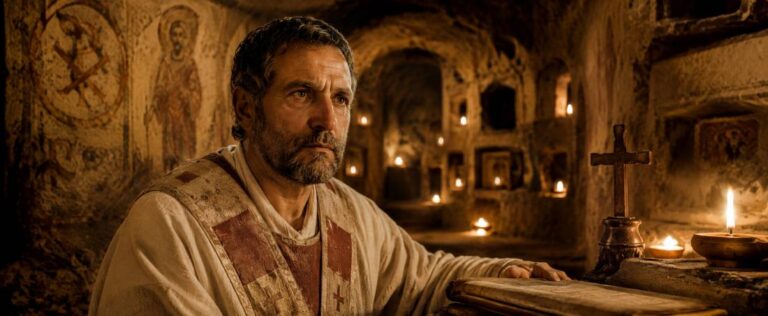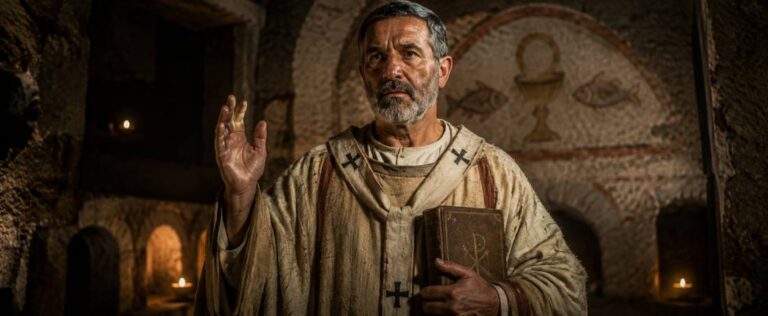
Pope Saint Clement I
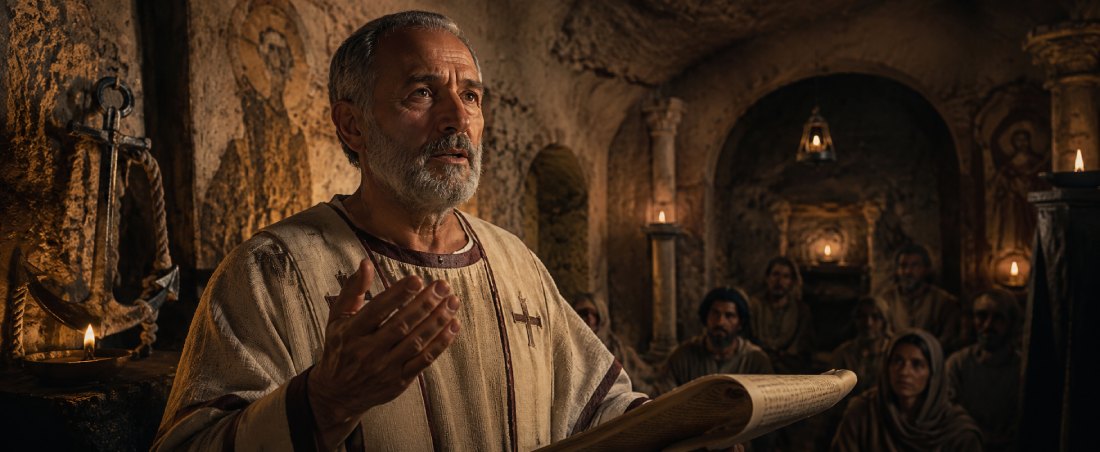
Among the earliest successors of Saint Peter, Saint Clement I stands as one of the most important voices of the primitive Church. Living during a time when Christianity was still persecuted and fragile, Pope Clement helped preserve unity, defend apostolic authority, and strengthen the spiritual identity of believers throughout the Roman world.
His writings remain among the oldest surviving Christian texts outside the New Testament, offering modern Catholics a remarkable glimpse into the faith, structure, and spiritual life of the early Church. As a martyr and saint, Clement continues to inspire Christians with his courage, humility, and unwavering devotion to Christ.
For Catholics today, Saint Clement I represents fidelity during suffering, obedience to apostolic teaching, and the sacred responsibility of preserving unity within the Church.
Early Life and Background
Very little is historically certain about the early life of Saint Clement I. Ancient Christian tradition holds that he was born in Rome during the first century and may have come from a noble or educated Roman family. Some early writers even speculated that he had connections to the imperial household, though historians cannot fully verify these claims.
What is more certain is that Clement belonged to the generation immediately following the Apostles. Early Church Fathers such as Saint Irenaeus and Tertullian described Clement as a disciple of the Apostles, particularly connected to Saint Peter and possibly Saint Paul.
His formation took place during a dangerous era for Christians. The Roman Empire frequently viewed Christianity with suspicion, and believers often faced imprisonment, torture, or execution. In this hostile environment, Clement developed profound spiritual discipline, pastoral wisdom, and deep loyalty to Christ and His Church.
He likely served as a priest or senior presbyter within the Roman Christian community before eventually being chosen to succeed Pope Saint Anacletus.
Election to the Papacy
Saint Clement I became Pope around AD 88 during one of the most formative periods in Church history. The Apostolic Age was drawing to a close. Many of the original Apostles had already been martyred, including Saints Peter and Paul in Rome.
The Church faced enormous uncertainty. Christians were scattered throughout the Roman Empire, local persecutions continued, and questions about authority and doctrine threatened unity among believers.
Clement’s election reflected the Church’s desire for stable and apostolic leadership. As someone closely linked to the Apostles themselves, he provided continuity between the teachings of Christ’s first disciples and the growing global Church.
During his papacy, Rome increasingly emerged as a center of Christian authority. One of the clearest examples of this was Clement’s intervention in the Church at Corinth, where internal disputes had caused division and disorder.
Papacy and Leadership
Defender of Church Unity
Saint Clement I is best remembered for writing the First Epistle to the Corinthians, often simply called 1 Clement. This remarkable letter is one of the oldest Christian writings outside the New Testament.
The Corinthian Church had fallen into serious conflict after some younger members rebelled against established presbyters. Clement responded with pastoral authority, urging humility, repentance, obedience, and reconciliation.
His letter emphasized several foundational Catholic principles:
- Apostolic succession
- Respect for Church authority
- Unity within the Body of Christ
- Order in worship and ministry
- Charity and humility among believers
The fact that the Church in Rome intervened in another Christian community demonstrates the growing recognition of Roman primacy even during the first century.
Apostolic Succession
Clement strongly defended the idea that Church leadership came through the Apostles and their legitimate successors. He explained that the Apostles appointed bishops and presbyters to continue Christ’s mission after their deaths.
This teaching became foundational for Catholic understanding of the episcopacy and papal succession. Clement’s writings provide some of the earliest historical evidence for the hierarchical structure of the Church.
Leadership During Persecution
The Roman Empire remained hostile toward Christians throughout Clement’s papacy. Although historical records are limited, many traditions connect his leadership to renewed persecution under Emperor Domitian.
Clement encouraged believers to remain faithful amid suffering. His writings consistently emphasize endurance, peace, obedience, and trust in God’s providence.
Rather than leading with political power, Clement governed through spiritual authority, pastoral compassion, and apostolic witness.
Prayer Life and Spirituality
The spirituality of Saint Clement I reflected the simplicity, holiness, and sacrificial spirit of the early Church. His surviving writings reveal a man deeply immersed in Scripture, prayer, and reverence for God.
Clement frequently emphasized humility as the foundation of Christian life. He warned against pride, envy, rebellion, and selfish ambition, encouraging believers instead to imitate Christ through obedience and charity.
His writings also reveal profound liturgical awareness. He spoke reverently about ordered worship, sacred ministry, and the importance of harmony within the Church community.
Although detailed records of his private devotional practices do not survive, early Christian spirituality centered around:
- Daily prayer
- Eucharistic worship
- Fasting
- Care for the poor
- Meditation on Scripture
- Readiness for martyrdom
Clement’s letter contains beautiful prayers that reflect deep trust in God’s mercy and providence. His spirituality was profoundly Christ-centered and ecclesial, rooted in unity with the Church founded by the Apostles.
For Catholics today, Saint Clement offers a timeless example of:
- Humble leadership
- Faithfulness under pressure
- Love for Church unity
- Reverence for apostolic tradition
- Courage during persecution
Challenges and Trials
Saint Clement I governed the Church during an unstable and dangerous period. Christianity remained illegal within the Roman Empire, and believers often lived under threat of arrest or execution.
One of his greatest pastoral trials involved the divisions in Corinth. Clement recognized that internal conflict could damage the witness of the Church just as severely as external persecution.
He addressed these tensions not with harsh condemnation but with fatherly correction grounded in Scripture, apostolic authority, and charity.
Ancient tradition also holds that Clement was eventually arrested and exiled during imperial persecution. According to longstanding accounts, he was sent to forced labor in Crimea, where he continued preaching and ministering to prisoners and converts.
Tradition states that he was ultimately martyred by being tied to an anchor and thrown into the sea. While historians debate some details of the account, the Church has long honored him as a martyr who remained faithful to Christ until death.
Death and Legacy
Saint Clement I likely died around AD 97–99. Early Christians quickly venerated him as both a saint and martyr.
His influence on Catholic history is immense. His epistle to the Corinthians became so respected in some early Christian communities that it was publicly read during liturgical gatherings alongside Scriptural texts.
Clement’s teachings on apostolic succession, Church authority, and ecclesial unity profoundly shaped Catholic theology for centuries.
His witness also strengthened the authority of the Roman See during the Church’s earliest generations. Through his leadership, the papacy emerged not merely as an administrative office but as a spiritual ministry of unity and fidelity to apostolic truth.
Relics associated with Saint Clement were later transferred to Rome, where the magnificent Basilica of San Clemente became one of the city’s important pilgrimage churches.
Today, Saint Clement I remains honored as:
- One of the Apostolic Fathers
- An early defender of Church unity
- A witness to apostolic succession
- A martyr of the early Church
- A model of pastoral humility and courage
Lessons Catholics Can Learn Today
- Remain faithful to the Church even during difficult times
- Seek unity rather than division within Christian communities
- Practice humility instead of pride or ambition
- Defend truth with charity and patience
- Persevere through suffering with trust in Christ
- Respect apostolic teaching and sacred tradition
- Live courageously in hostile cultural environments
- Build spiritual leadership through service and holiness
Conclusion
Saint Clement I stands among the great pillars of the early Catholic Church. At a time when Christianity faced persecution, uncertainty, and internal conflict, he guided believers with wisdom rooted in apostolic faith and deep holiness.
His life reminds Catholics that true leadership is grounded not in power or prestige, but in humility, sacrifice, and fidelity to Christ. Through his courage, pastoral charity, and defense of Church unity, Clement helped preserve the faith during one of Christianity’s most fragile moments.
Today, his witness continues to call believers toward deeper prayer, greater obedience to Christ, and renewed love for the Catholic Church founded upon the Apostles. In a divided world, Saint Clement I remains a timeless example of unity, holiness, and steadfast faith.