Pope Saint Anicetus

Saint Anicetus stands among the early successors of Saint Peter who guided the Church during one of the most fragile and formative periods in Christian history. Living during a time when Christianity remained illegal in the Roman Empire, Saint Anicetus faithfully protected apostolic teaching while helping the Church grow in unity, holiness, and courage.
Though relatively little historical information survives about his personal life, the legacy of Saint Anicetus shines brightly through his defense of orthodoxy, his humility in leadership, and his commitment to preserving unity among believers. His papacy reminds Catholics today that fidelity to Christ and the apostolic faith often requires patience, wisdom, and unwavering courage.
Early Life and Background
Historical records concerning the early life of Saint Anicetus are limited, as was common for many second-century Christian leaders. Ancient sources, including the Liber Pontificalis, indicate that he likely came from Emesa in Syria, a region influenced by both Roman culture and Eastern traditions.
Raised during a time when Christians were frequently misunderstood and persecuted, Anicetus likely encountered the faith through the witness of courageous believers who preserved the teachings handed down from the Apostles. His spiritual formation would have centered on Scripture, prayer, fasting, the Eucharist, and the oral traditions safeguarded by the early Church.
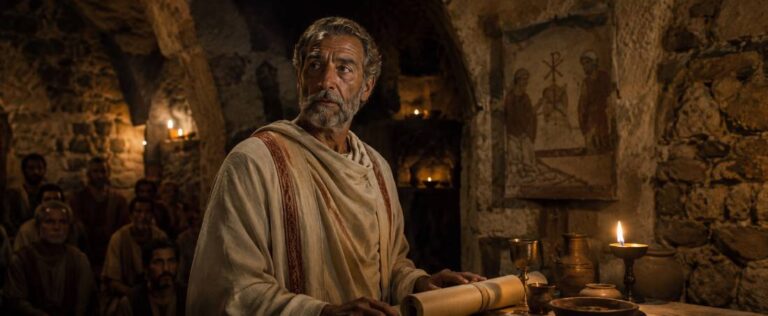
Before becoming Bishop of Rome, Anicetus probably served the Christian community through priestly ministry and pastoral leadership. The Church of his time was still organized in house churches, often gathering secretly to celebrate the Eucharist and proclaim the Gospel.
His deep commitment to apostolic teaching and his reputation for holiness prepared him to guide the Church during an era of doctrinal confusion and external threats.
Election to the Papacy
Saint Anicetus became Bishop of Rome around 155 AD, succeeding Pope Saint Pius I. The Christian Church at the time faced serious challenges both internally and externally.
The Roman Empire continued to view Christianity with suspicion. Christians refused to worship Roman gods or acknowledge the emperor as divine, which often led to persecution and martyrdom. At the same time, dangerous heresies threatened the purity of Christian doctrine.
One of the greatest doctrinal dangers during Anicetus’ time came from Gnosticism, a movement that distorted Christian teaching by claiming secret spiritual knowledge superior to apostolic revelation. Gnostic teachers denied key truths about Christ’s humanity, salvation, and creation.
Anicetus was chosen as pope because of his steadfast fidelity to apostolic teaching, his pastoral wisdom, and his ability to preserve unity in a rapidly expanding Church.
Papacy and Leadership
Defending the Apostolic Faith
Saint Anicetus played a vital role in defending orthodox Christianity against heretical movements. Early Christian writers such as Saint Irenaeus record that Anicetus opposed false teachers including Marcion and other Gnostic influences spreading throughout the Roman world.
His leadership helped preserve the authentic teachings received from the Apostles, especially concerning the true humanity and divinity of Jesus Christ.
At a time when written theological systems were still developing, apostolic succession served as a critical safeguard for Christian truth. Anicetus emphasized continuity with the Apostles and the authority of the Church founded by Christ.
The Easter Controversy and Saint Polycarp
One of the most historically significant moments of Anicetus’ papacy involved his meeting with Saint Polycarp.
The Church faced disagreements regarding the proper date for celebrating Easter. Christians in Asia Minor followed one tradition, while the Roman Church followed another.
Despite their disagreement, Anicetus and Polycarp maintained communion and mutual respect. According to Saint Irenaeus, Anicetus even allowed Polycarp to celebrate the Eucharist in Rome as a sign of unity.
This remarkable encounter demonstrated that charity and unity could prevail even amid differing liturgical customs. Saint Anicetus showed the heart of a true shepherd by prioritizing communion within the Church.
Pastoral Leadership in a Persecuted Church
The Christians under Anicetus lived under constant threat. Public worship could invite arrest, imprisonment, or death. Yet the pope encouraged believers to remain faithful to Christ through prayer, charity, and sacramental life.
His papacy strengthened the identity of the Roman Church as a center of apostolic witness and spiritual leadership. He helped guide a growing Christian population spread throughout the empire while maintaining fidelity to the Gospel.
Prayer Life and Spirituality
The spirituality of Saint Anicetus emerged from the deeply sacramental life of the early Church. Christians of his era centered their existence on the Eucharist, communal prayer, fasting, and readiness for martyrdom.
As pope, Anicetus likely lived with remarkable simplicity and discipline. Early Christian bishops often embraced ascetic practices, dedicating themselves to prayer, service to the poor, and pastoral care of persecuted believers.
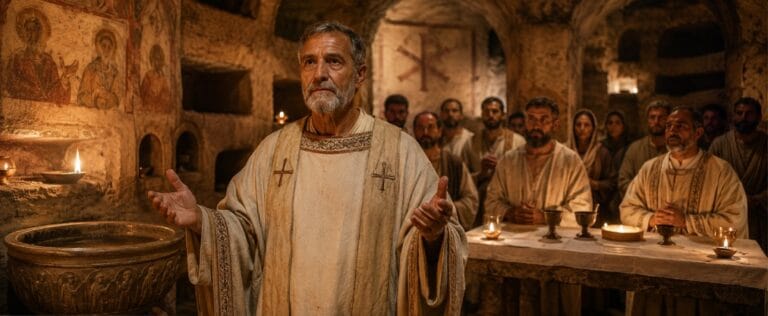
The Eucharist stood at the center of his spiritual life. During a period when Christians risked death simply by attending Mass, participation in the Holy Sacrifice represented profound courage and complete trust in Christ.
Saint Anicetus also embodied the spirituality of apostolic continuity. His faith was not based on innovation or personal ambition but on faithfully preserving what had been handed down from the Apostles.
Catholics today can draw inspiration from his example by:
- Remaining faithful to Church teaching
- Prioritizing unity within the Body of Christ
- Persevering during times of confusion or hostility
- Living sacramental lives rooted in prayer and holiness
- Defending truth with charity and humility
Challenges and Trials
Saint Anicetus led the Church during an era filled with uncertainty and danger.
Heresies and False Teachings
Gnosticism posed one of the greatest threats to Christianity in the second century. These movements distorted Christian doctrine and often rejected the goodness of creation and the Incarnation of Christ.
Anicetus firmly defended apostolic teaching while strengthening the authority of orthodox bishops throughout the Church.
Roman Persecution
Christianity remained illegal under Roman law. Although there was no empire-wide persecution specifically directed by the emperor during his entire reign, local persecutions frequently erupted.
Christians faced accusations of atheism, disloyalty to Rome, and social disorder. Many believers worshiped secretly in homes and catacombs to avoid detection.
As pope, Anicetus carried the immense burden of encouraging persecuted Christians while protecting the unity of the Church.
Maintaining Unity
The disagreement over Easter observance could have fractured relations between Eastern and Western Christians. Instead, Anicetus responded with patience, dialogue, and charity.
His example remains profoundly relevant in today’s Church, showing that unity does not require hostility or division when disagreements arise.
Death and Legacy
Saint Anicetus died around 166 AD in Rome after faithfully serving the Church for approximately eleven years. Some ancient traditions considered him a martyr, though historical evidence for martyrdom remains uncertain, and the Church generally does not formally classify him as a martyr pope.
He was buried near Saint Peter’s tomb, reflecting the deep apostolic continuity treasured by the early Roman Church.
Saint Anicetus was later honored as a saint due to his holiness, defense of orthodoxy, and faithful pastoral leadership during one of Christianity’s most vulnerable centuries.
His legacy endures through:
- His defense of apostolic tradition
- His witness to ecclesial unity
- His pastoral charity toward differing traditions
- His steadfastness amid persecution and doctrinal confusion
He remains an important figure in understanding how the early papacy developed as a center of unity and orthodoxy for Christians throughout the world.
Lessons Catholics Can Learn Today
- Remain faithful to apostolic teaching even when society rejects Christian values
- Defend truth with humility and charity
- Prioritize unity within the Church
- Persevere courageously during trials and uncertainty
- Center life on the Eucharist and prayer
- Respect legitimate traditions within the universal Church
- Lead others through holiness rather than power
Conclusion
Saint Anicetus lived during an age when Christianity faced persecution, doctrinal confusion, and constant uncertainty. Yet through wisdom, humility, and unwavering faith, he helped preserve the unity and apostolic integrity of the Church.
His papacy reminds Catholics that holiness often flourishes not in comfort, but in fidelity during difficult times. By defending truth without abandoning charity, Saint Anicetus became a model of pastoral leadership rooted in Christ.
In a world still marked by division and confusion, his witness calls believers to remain steadfast in prayer, faithful to the sacraments, and united within the Church founded by Jesus Christ. Through the intercession of Saint Anicetus, may Catholics today grow in courage, holiness, and deeper devotion to the Gospel.
Related Popes