Pope Saint Anterus
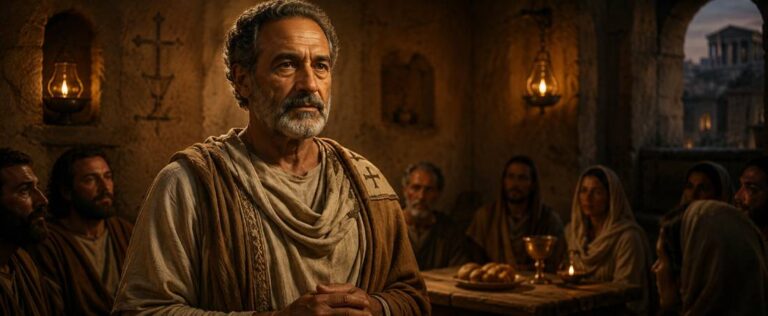
Among the shortest papacies in Catholic history, the reign of Pope Saint Anterus lasted only a few weeks. Yet despite the brevity of his pontificate, his witness continues to inspire Catholics nearly eighteen centuries later. Living during a dangerous era of Roman persecution, Saint Anterus became a symbol of fidelity, courage, and reverence for the martyrs who gave their lives for Christ.
The early Church faced constant threats from imperial authorities, political unrest, and internal uncertainty. In this fragile moment, Saint Anterus accepted the burden of leading the Catholic Church with humility and steadfast faith. Though history preserves only fragments of his life, those fragments reveal a shepherd deeply devoted to preserving the testimony of Christians who died for the Gospel.
Today, Catholics remember Saint Anterus not for earthly power or lengthy achievements, but for his quiet holiness, sacrificial leadership, and unwavering commitment to the truth of Christ.
Early Life and Background
Very little is historically certain about the early life of Saint Anterus. Ancient sources, including the Liber Pontificalis, suggest that he was of Greek origin and possibly born in Petilia Policastro in southern Italy, then part of the Roman Empire. His father’s name is traditionally given as Romulus.
Anterus lived during a time when Christians were often viewed with suspicion by Roman authorities. The Church remained relatively small and vulnerable, frequently forced to worship discreetly and endure waves of persecution. Christians who openly professed the faith risked imprisonment, exile, torture, or death.
Although details about his education and priestly formation have not survived, Anterus was almost certainly formed within the disciplined spiritual life of the early Roman Church. Early Christian clergy were expected to possess deep knowledge of apostolic teaching, strong moral character, and courage under persecution.
He likely served the Church in Rome for many years before his election as pope, gaining the trust of clergy and faithful alike through his devotion, wisdom, and fidelity to the Gospel.
Election to the Papacy
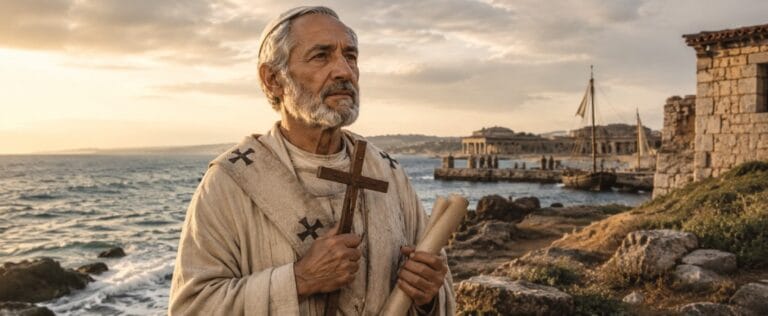
Saint Anterus was elected pope on November 21, 235 AD, following the resignation and exile of Pope Pontian. Pontian had been deported to the brutal Sardinian mines during the persecution initiated under Emperor Maximinus Thrax. Recognizing that the Church needed stable leadership, Pontian abdicated — one of the earliest known papal resignations in history.
The Church that Anterus inherited was suffering deeply. Roman authorities were targeting Christian leaders, and fear spread among believers. Political instability within the empire added further uncertainty, as Maximinus Thrax distrusted many groups associated with his political rivals, including Christians.
In this dangerous climate, Anterus was chosen to guide the Church through persecution and instability. His election demonstrated the Church’s determination to preserve apostolic succession and maintain unity even amid suffering.
Though his pontificate lasted only about forty days, early Christian tradition remembers him as a faithful and courageous successor to Saint Peter.
Papacy and Leadership
Defender of the Martyrs
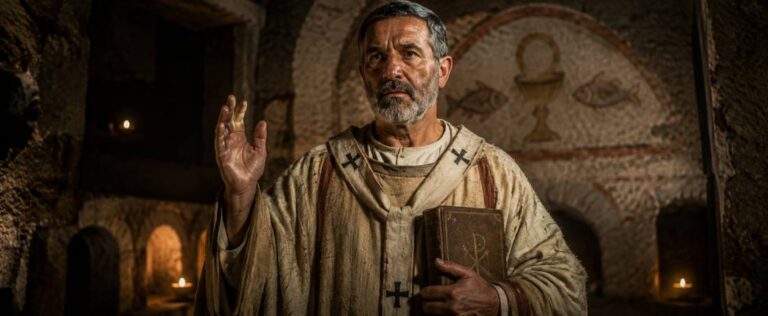
The most enduring tradition associated with Saint Anterus concerns his devotion to the memory of Christian martyrs. Ancient accounts state that he ordered official records of martyr testimonies and acts to be collected and preserved within the Roman Church archives.
At a time when Christians were being imprisoned and executed for their faith, this was both spiritually significant and politically dangerous. Preserving the stories of martyrs strengthened the faith of believers and honored those who remained faithful to Christ until death.
The early Church understood martyrdom not as defeat, but as victory through union with the suffering Christ. By safeguarding these testimonies, Saint Anterus helped preserve the spiritual memory of the persecuted Church.
Maintaining Unity During Crisis
Anterus inherited a wounded Church struggling under fear and uncertainty. Christians needed reassurance that Christ had not abandoned them. Although historical records of his governance are limited, his rapid acceptance by the Roman clergy indicates he was trusted as a stabilizing and holy figure.
His leadership reflected the pastoral priorities of the early papacy:
- preserving apostolic teaching
- strengthening persecuted believers
- maintaining sacramental life
- ensuring continuity of Church authority
Witness Through Humility
Unlike later popes associated with grand cathedrals or political influence, Saint Anterus led the Church during an era when bishops of Rome possessed little worldly power. The pope was primarily a spiritual father willing to risk imprisonment or death for the Gospel.
This simplicity and humility remain central to Anterus’ legacy. His papacy reminds Catholics that true Christian leadership is measured not by status, but by fidelity to Christ.
Prayer Life and Spirituality
The spirituality of Saint Anterus was shaped by the suffering yet deeply faithful atmosphere of the persecuted early Church. Christians gathered quietly for the Eucharist, prayed in homes and catacombs, and lived with constant awareness that discipleship could require martyrdom.
Saint Anterus likely cultivated a life centered on:
- daily prayer
- fasting
- Scripture meditation
- Eucharistic worship
- devotion to the memory of the martyrs
The early Church viewed the Eucharist as the very heart of Christian existence. Even during persecution, believers risked their lives to participate in the Holy Sacrifice of the Mass. As pope, Anterus would have encouraged Christians to remain united to Christ through the sacraments despite fear and suffering.
His reverence for martyrs also reflected a profoundly Catholic understanding of holiness. The martyrs were seen as living witnesses to the victory of Christ over death. Preserving their stories was an act of devotion, gratitude, and spiritual encouragement.
Saint Anterus offers modern Catholics an example of quiet fidelity. He did not seek recognition or earthly greatness. Instead, he served faithfully in dangerous times, trusting completely in God’s providence.
His life reminds believers today:
- prayer sustains courage
- holiness often develops in hidden suffering
- faithfulness matters more than public recognition
- Christ remains present even during persecution and uncertainty
Challenges and Trials
Roman Persecution
The greatest challenge facing Saint Anterus was the hostile political climate under Emperor Maximinus Thrax. The emperor distrusted Christian leaders and viewed the Church as potentially disloyal to imperial authority.
Although historical details of Anterus’ death remain uncertain, ancient tradition venerates him as a martyr. Some historians believe he may have suffered imprisonment or persecution connected to his role as bishop of Rome.
Fear Within the Christian Community
The exile and suffering of Pope Pontian deeply affected the Roman Church. Christians feared further arrests and violence. Many believers struggled emotionally and spiritually under the threat of persecution.
As pope, Anterus had to encourage courage without recklessness and perseverance without despair.
The Burden of Leadership
Leading the Church during the third century required extraordinary spiritual strength. Bishops and clergy were frequent targets of Roman authorities. Accepting election as pope often meant accepting the possibility of martyrdom.
Saint Anterus embraced this responsibility with humility and trust in Christ.
Death and Legacy
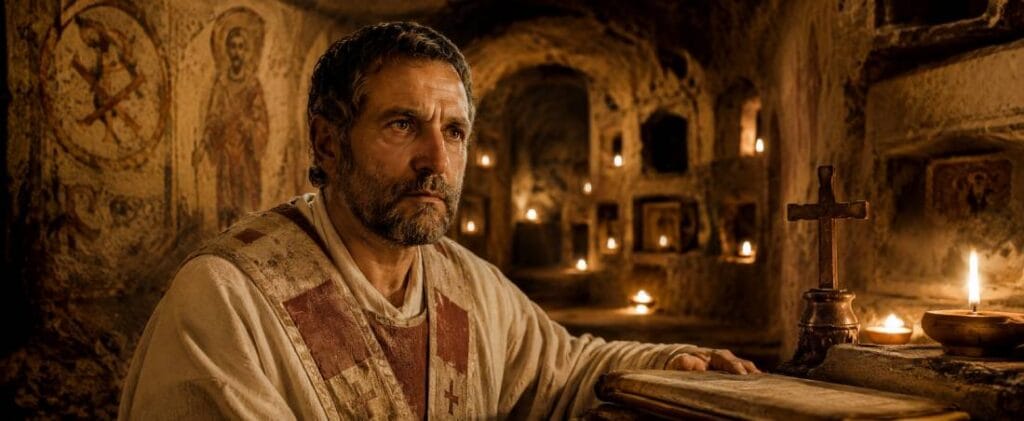
Saint Anterus died on January 3, 236 AD, after a remarkably short pontificate lasting approximately six weeks. He was buried in the Papal Crypt of the Catacomb of Saint Callixtus in Rome, one of the most important burial places of the early popes.
Archaeological discoveries later confirmed his burial location, including fragments of a Greek inscription bearing his name. These findings strengthened historical confidence in the ancient traditions surrounding his life and papacy.
The Church honors Saint Anterus as a martyr and saint. Though he did not reign long enough to produce extensive writings or major institutional reforms, his witness left a lasting spiritual impact.
His legacy includes:
- honoring the sacrifice of Christian martyrs
- preserving Church memory during persecution
- demonstrating faithful leadership in dangerous times
- strengthening continuity in the early papacy
Saint Anterus also reminds Catholics that holiness is not measured by the length of one’s service but by the depth of one’s fidelity to Christ.
Lessons Catholics Can Learn Today
- Remain faithful to Christ even during hardship and uncertainty
- Preserve and honor the witness of saints and martyrs
- Understand that true leadership requires humility and sacrifice
- Trust God even when the future seems unclear
- Stay rooted in prayer and the sacraments during difficult times
- Recognize that even short acts of faithful service can leave a lasting legacy
- Defend and preserve the truth of the Catholic faith courageously
Conclusion
Pope Saint Anterus stands as a quiet but powerful witness from the persecuted early Church. Though his papacy lasted only a short time, his devotion to the martyrs, courage during persecution, and faithful service to Christ continue to inspire Catholics around the world.
In an age often distracted by power and recognition, Saint Anterus reminds believers that holiness is found in fidelity, humility, and perseverance. His life calls Catholics to cherish the Eucharist, honor the saints who came before us, and remain steadfast in faith no matter the trials we face.
As the Church continues its journey through the centuries, the witness of Saint Anterus endures as a testimony that even the briefest life offered fully to Christ can shape history and strengthen souls for generations.
Related Popes