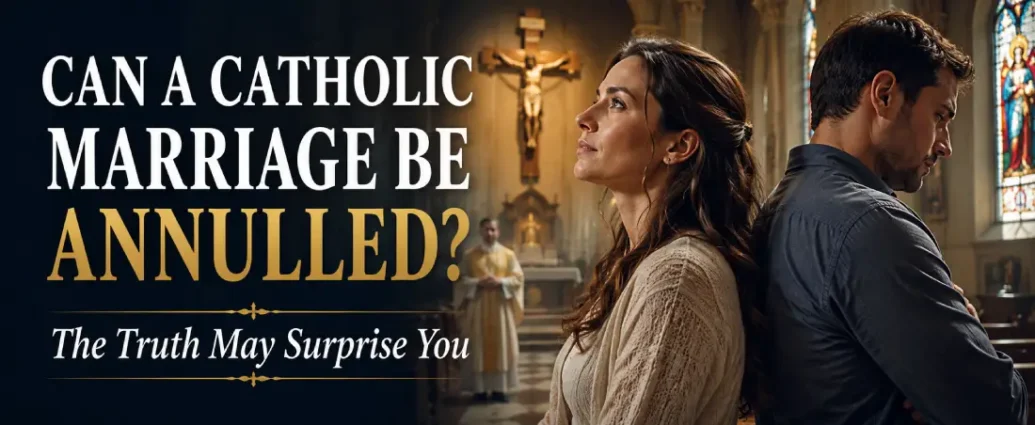
The question comes up more often than you might think. A marriage ends in civil divorce, and someone who still loves the Church and wants to remain faithful starts wondering what happens next. Can they ever receive the sacraments again? Could they remarry in the Church someday? The confusion around Catholic marriage annulment runs deep, partly because the word itself is misleading. Here’s what the Church actually teaches: an annulment isn’t a Catholic divorce. It’s not the Church’s way of ending a marriage or pretending it never happened. A declaration of nullity is the Church’s careful, prayerful investigation into whether a valid sacramental marriage ever existed in the first place. The Catechism teaches that marriage is a covenant by which a man and a woman establish between themselves a partnership of the whole of life, ordered by its nature to the good of the spouses and the procreation and education of offspring (CCC 1601). But if something essential was missing from the beginning, the bond the Church recognizes as sacramental marriage might never have come into being. This isn’t about finding loopholes or technicalities. It’s about truth. The annulment process Catholic Church offers is an act of pastoral care, a way to help people discern the reality of their situation before God. It acknowledges that real pain and real history exist, but it also insists that we can’t rewrite what is true just because it hurts.
What Catholic Marriage Annulment Really Means
The Biblical Foundation for Declaration of Nullity
Marriage in God’s plan has existed from the very beginning of creation. When the Church investigates a marriage through the declaration of nullity process, she’s asking whether this particular union truly reflected that divinely ordained covenant.
Catholic Annulment Requirements Under Canon Law
Christ elevated marriage to the dignity of a sacrament and restored it to its original permanence. Catholic annulment requirements flow from this truth. The Church can’t dissolve what God has joined, but she can investigate whether God actually joined this particular couple in sacramental marriage.
Walking Through the Annulment Process Catholic Church
A sacramental marriage is meant to be a living icon of Christ’s love for His Church. When that sacred sign was never validly established, the Church can declare that truth through the annulment process.
What Happens After a Declaration of Nullity
The Church’s care in examining marriages isn’t about making things easier or lowering standards. It’s about honoring marriage by protecting its truth and helping people live in grace.
The declaration of nullity process exists to establish truth. When a tribunal investigates a marriage, they’re seeking to understand what was really present at the time of consent. Truth might be painful, but it’s also the only foundation for genuine freedom and healing.
Canon law marriage tribunals rely on truthful testimony from both parties and witnesses. The process requires honesty, even when that honesty is difficult or embarrassing.
God hates divorce because He loves covenant faithfulness. But the Catholic annulment process doesn’t create divorce or approve of it. The civil divorce has already happened. The Church is simply investigating whether a sacramental bond existed.
Christ’s teaching on the indissolubility of marriage stands. But notice that even He acknowledged situations where something was fundamentally wrong. The Church’s annulment process explores whether the marriage was validly contracted according to divine and canon law.
Canon law isn’t arbitrary. It flows from divine law and exists to help the Church guard the truth of the sacraments. Catholic annulment requirements protect both the sanctity of marriage and the good of individual souls.
The structured nature of the annulment process Catholic Church provides ensures fairness and thoroughness. Both parties have the right to present their testimony and evidence.
Petitioners must examine their own actions and intentions honestly. The tribunal will investigate grounds such as lack of consent, lack of capacity for marriage, defect of form, or impediments that existed at the time of the wedding.
The requirement for witness testimony reflects biblical principles of establishing truth. The Church doesn’t rely on one person’s account alone when making such important determinations.
Sometimes people carry guilt or shame about seeking an annulment. But God knows the full truth of every situation. The declaration of nullity process seeks to align human judgment with divine truth.
The first step is simply asking. Contact your parish priest or the diocesan tribunal to begin. The process might feel intimidating, but the Church walks with you through it.
The annulment process can feel like carrying a heavy burden. But Christ invites you to bring that weight to Him. The Church’s pastoral care throughout this journey reflects His compassion.
You’ll likely need to provide documentation, such as a marriage certificate, baptismal certificates, and the civil divorce decree. You’ll also write a detailed testimony explaining your marriage history and the reasons you believe it may not have been valid.
The tribunal judges aren’t there to trick you or catch you in lies. They’re seeking the truth with sincerity, commissioned by the Church to make a just determination.
The annulment process Catholic Church provides takes time, sometimes many months or even more than a year. Patience is essential. This isn’t bureaucracy for its own sake but careful discernment.
If your petition is granted, it means the tribunal has determined that a valid sacramental marriage did not exist. If it’s denied, it means the Church has found that a valid bond was established and remains.
A declaration of nullity doesn’t erase the past or pretend it didn’t happen. But it can open the door to a new beginning. If you’re free to marry, you can enter into marriage in the Church if you choose.
Whatever the outcome, the process itself can be healing. Many people report that the careful examination of their marriage helped them understand themselves better and grow spiritually.
God’s mercy is always available. Whether you receive a declaration of nullity or not, the Lord’s faithfulness remains. He walks with you through every season.
The Church’s annulment process flows from love, not legalism. It’s the Church’s way of helping you live in truth and grace.
Nothing can separate you from God’s love. The end of a marriage, the pain of divorce, the uncertainty of the annulment process—none of it places you beyond the reach of divine mercy.
As you walk through this process, remember that God comforts us not just for our own sake but so we can comfort others. Your journey through the annulment process might one day help someone else who’s confused and hurting. Finding Peace in the Truth The Catholic marriage annulment process isn’t easy. It requires honesty, patience, and trust in the Church’s wisdom. But it’s rooted in something essential: the conviction that truth matters, that marriage is sacred, and that God’s grace can meet us even in our most painful moments. If you’re wondering whether your marriage might be invalid, or if you’ve been avoiding the question because it feels too complicated or painful, I’d encourage you to take that first step. Talk to your priest. Contact the tribunal. You don’t have to have all the answers right now. You just have to be willing to seek the truth and trust that the Church, in her wisdom and her care, will walk with you. The declaration of nullity isn’t about shame or failure. It’s about freedom—the freedom that comes from knowing the truth and living in accordance with it. And whatever the outcome, Christ is with you. His mercy is bigger than any mistake, His love stronger than any sorrow. Trust Him, trust the Church, and take it one step at a time.
📖 You Might Also Like