
Carlo Acutis, Patron Saint of the Internet: Catholic Guide to Digital Holiness
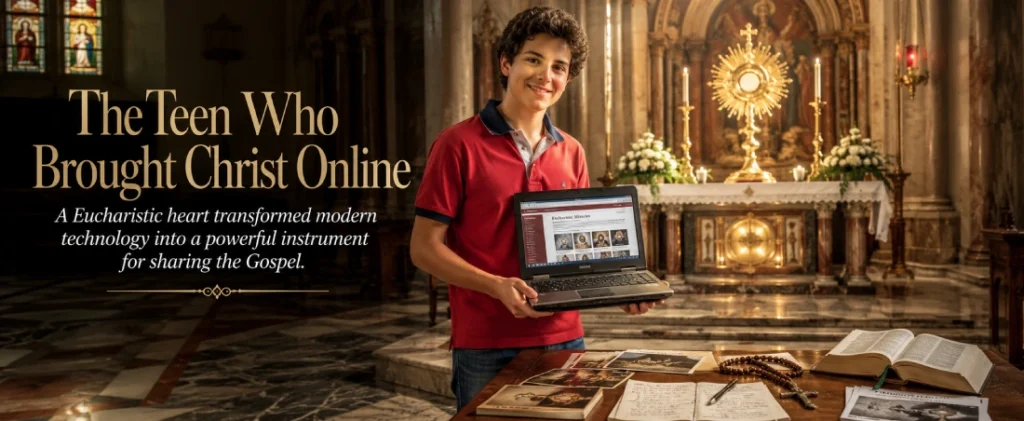
With the canonization of Carlo Acutis, the Catholic Church offers the faithful a patron for the digital age. Born in London and raised in Milan, this young programmer documented worldwide Eucharistic miracles online before dying of leukemia in 2006 at age fifteen.
His life establishes that holiness and modern technology not only coexist, but that digital platforms represent a critical mission field for the Catholic Church.
| Key Fact | Detail |
| Name | Saint Carlo Acutis |
| Lifespan | May 3, 1991 – October 12, 2006 |
| Feast Day | October 12 |
| Key Patronages | Internet, youth, computer programmers, digital evangelists |
| Primary Project | The Eucharistic Miracles of the World Website |
| Core Devotion | The Holy Eucharist (“My highway to Heaven”) |
The Lay Vocation in the Digital Commons
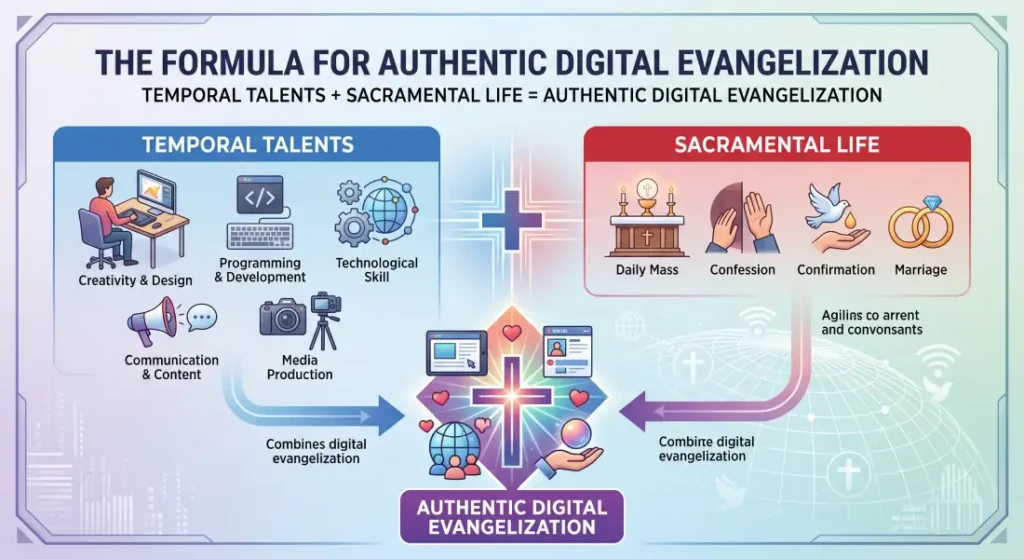
The Catholic Church teaches that the laity carry an indispensable role in transforming the world from within. According to the Catechism of the Catholic Church, “the laity, by their very vocation, seek the kingdom of God by engaging in temporal affairs and by ordering them according to the plan of God” (CCC 898; cf. Lumen Gentium, 31).
Carlo Acutis lived this secular vocation by dedicating his technological gifts to God’s glory. Rather than viewing computer code, graphic design, or software architecture as worldly distractions, he treated them as instruments of grace.
St. Thomas Aquinas articulated the classical axiom gratia non tollit naturam, sed perficit—”grace does not destroy nature, but perfects it” (Summa Theologiae, I, q. 1, a. 8, ad 2). Carlo exemplified this principle by building his supernatural apostolic mission upon his natural aptitude for computing.
Evangelization and the Great Commission Online
Christ’s final command to the Apostles remains unchanged across centuries:
“Go therefore and make disciples of all nations, baptizing them in the name of the Father and of the Son and of the Holy Spirit, teaching them to observe all that I have commanded you; and lo, I am with you always, to the close of the age.” (Matthew 28:19–20, RSV-CE)
Carlo recognized that modern culture gathers in digital forums. To evangelize the nations in the twenty-first century, the Church must maintain a clear, faithful presence where people spend their time.
“So, whether you eat or drink, or whatever you do, do all to the glory of God.”
— 1 Corinthians 10:31 (RSV-CE)
Digital evangelization is not mere religious content creation or algorithmic performance. It is the proclamation of the Gospel designed to draw souls into the physical sacramental life of the Church.
Navigating Digital Pitfalls: The Magisterium and Media Temperance
The digital world holds both immense apostolic potential and grave moral hazards. Pope Francis addressed this reality directly:
“The digital environment is not a parallel or purely virtual world, but is part of the daily experience of many people, especially the young… It is also one of loneliness, manipulation, exploitation and violence, up to the extreme case of the ‘dark web’.” (Christus Vivit, 86–90)
To maintain spiritual freedom online, Catholics must practice intentional digital ascetics. The Magisterium provides clear moral guardrails regarding social communications:
- Practice Temperance: Users must exercise discipline and self-restraint regarding media consumption (CCC 2496).
- Protect the Common Good: Communications media must always serve truth, justice, and human dignity (CCC 2493).
- Preserve Purity of Heart: Christians must maintain the classical practice of custody of the eyes (custodia oculorum) against unwholesome digital influences (CCC 2512).
Carlo famously restricted his video game play to one hour per week. He recognized that unchecked screen time fosters distraction, sloth, and moral compromise.
The Eucharistic Foundation of Carlo Acutis’s Ministry
Carlo’s technological accomplishments were fueled entirely by his interior life. Without daily contact with the sacraments, digital work risks becoming an exercise in personal vanity.
Pillars of Carlo Acutis’s Interior Life
- Daily Reception of the Holy Eucharist: Carlo called the Blessed Sacrament his “highway to Heaven.” He recognized the Real Presence—Body, Blood, Soul, and Divinity—as the definitive source of spiritual vitality (Council of Trent, Session XIII).
- Frequent Confession: Regular reception of the Sacrament of Penance preserved his interior purity and freedom from worldly attachments.
- Devotion to the Blessed Virgin Mary: Carlo prayed the Holy Rosary daily, calling Our Lady his primary confidante.
- Charity toward the Poor: He quietly used his allowance and resources to feed the homeless and assist local immigrants in Milan.
His catalog of Eucharistic miracles was not merely an informational website. It was an act of adoration designed to lead visitors toward the Real Presence of Jesus Christ.
Practical Rules for Catholic Digital Living
Catholic families and content creators can apply Carlo Acutis’s model through concrete daily habits:
1. Establish Structured Screen Boundaries
- Set clear daily limits for recreational screen time and social media browsing.
- Keep screens and charging stations outside of bedrooms overnight.
- Designate device-free family meals and prayer times.
2. Practice Digital Custody of the Eyes
- Unfollow accounts and delete applications that prompt vanity, envy, or unchaste thoughts.
- Avoid participating in toxic online debates, slander, and gossip (detraction).
- Install accountability software across personal devices.
3. Consecrate Your Digital Footprint
- Share content that communicates beauty, goodness, and authentic Catholic doctrine.
- Use personal platforms to defend Church teaching with pastoral clarity and charity.
- Pray a brief Morning Offering over your computer, phone, and daily online interactions.
Intercessory Prayers to Saint Carlo Acutis
Saint Carlo Acutis, you made the Holy Eucharist the center of your life and used
technology to lead souls to Christ. Intercede for our youth, our families, and our
digital creators. Obtain for us the virtue of temperance, purity of mind and heart,
and the zeal to proclaim the Gospel across all modern frontiers. Amen.
- For Young Catholics: Pray for young people facing digital addiction, anxiety, and secular pressures, that they remain rooted in Christ.
- For Digital Missionaries: Pray for Catholic podcasters, writers, designers, and programmers, that their work points souls directly to the sacraments.
- For Families: Pray for parents seeking wisdom to form their children in faith and virtue amid a hyper-connected culture.
Frequently Asked Questions
Carlo Acutis is called the patron saint of the internet because he was a self-taught programmer who used website design to evangelize. He built a global digital exhibition of Eucharistic miracles, demonstrating how modern technology can serve the Gospel.
Carlo Acutis researched, designed, and built an online catalog documenting historical Eucharistic miracles approved by the Catholic Church across the world. His virtual exhibition has been translated into dozens of languages and displayed across parishes globally.
The Catholic Church teaches that media tools are gifts for the common good, but users must practice temperance and self-discipline (CCC 2496). Catholics are called to avoid digital occasions of sin, preserve custody of the eyes, and prioritize real-world sacramental community.
Carlo Acutis balanced technology by strictly limiting his personal screen time to one hour per week and grounding his daily routine in the sacraments. He attended daily Mass, prayed the Rosary, went to regular Confession, and practiced direct charity toward the poor.
Continue Your Faith Journey

Why Do Catholics Abstain From Meat on Fridays?
Discover why Catholics abstain from meat on Fridays through Canon Law, Sacred Scripture, and apostolic tradition. Learn the rules for Lent and…
Why Do Catholics Have Statues? Church Teaching, Scripture, and Sacred Art
Do Catholics worship statues? Explore the biblical foundation, Church councils, and theological distinctions between latria and dulia that explain why sacred images…
Purgatory: Catholic Teaching, Scripture, and Tradition Explained
Explore the authentic Catholic teaching on purgatory through Sacred Scripture, Church Fathers, and the Catechism. Learn the theological basis for purification and…