
Catholic Faith Renewal and America’s 250th Anniversary: A Call to Spiritual Awakening
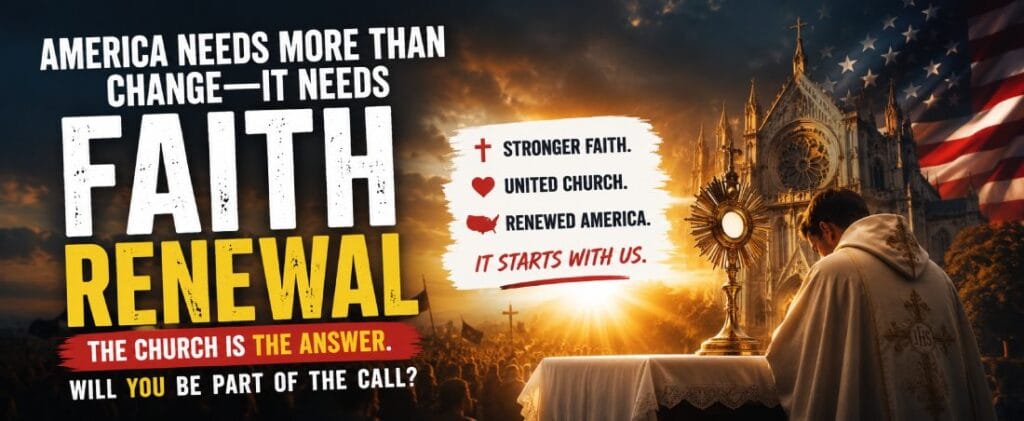
As the United States approaches the 250th anniversary of its founding, Most Reverend Mark E. Brennan, Bishop Emeritus of Wheeling-Charleston, issued a profound pastoral challenge: America’s core crisis is not political or economic—it is fundamentally spiritual.
Real national healing requires an urgent return to divine truth, repentance, and a renewal of Catholic faith across our land.
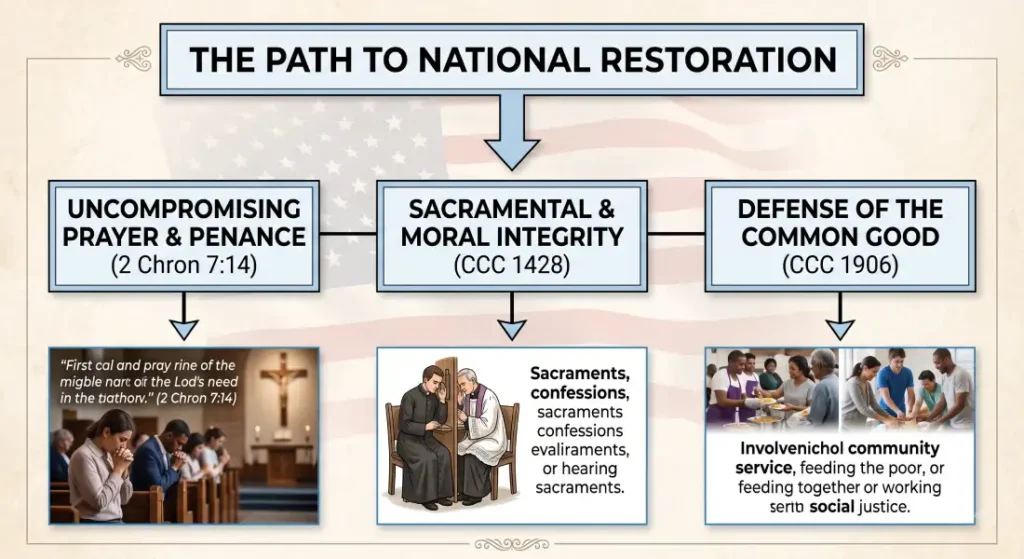
The Necessity of Interior Conversion and Penance
Pastoral renewal cannot rely on political strategies or cultural messaging. Scripture reminds us that national restoration begins with humble repentance:
“If my people who are called by my name humble themselves, and pray and seek my face, and turn from their wicked ways, then I will hear from heaven, and will forgive their sin and heal their land.”
— 2 Chronicles 7:14 (RSV-CE)
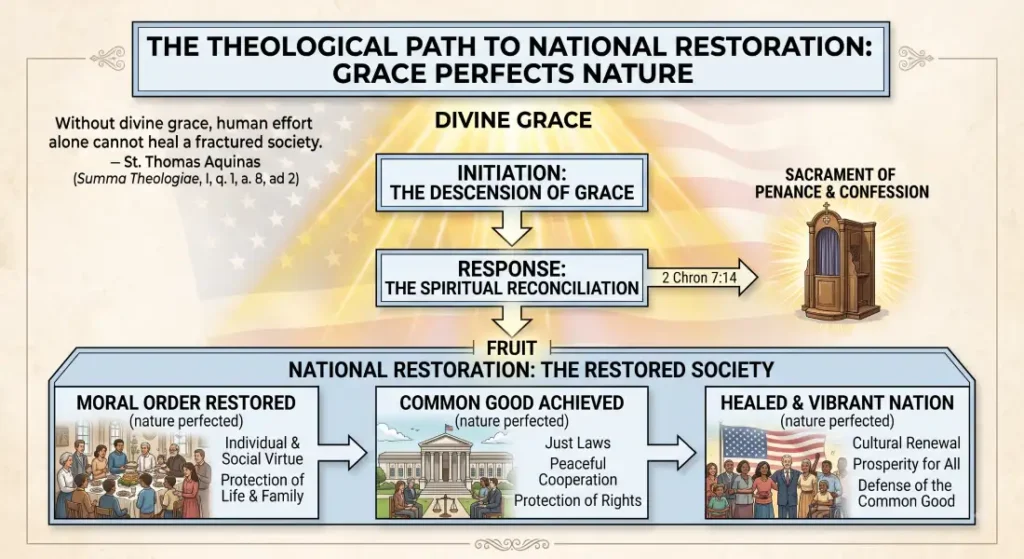
As the Catechism of the Catholic Church teaches, Christ’s call to conversion is an ongoing obligation for the entire Church (CCC 1428). Interior repentance must precede outward civic reform (CCC 1430).
St. Thomas Aquinas affirms that grace perfects nature (Summa Theologiae, I, q. 1, a. 8, ad 2). Without divine grace, human effort alone cannot heal a fractured society.
Engaging in Spiritual Warfare
Believers face spiritual realities that transcend political discourse. St. Paul outlines the nature of this struggle:
“For our contention is not against who is made of flesh and blood, but against principalities and powers, against those who have mastery of the world in these dark days, against the spirits of evil in the high places.”
— Ephesians 6:12
Authentic renewal demands engaging in spiritual warfare through traditional Catholic practices:
- Eucharistic Adoration: Spending dedicated time before the Blessed Sacrament in intercession for our nation.
- The Holy Rosary: Pleading for Our Lady’s intercession to protect families and preserve religious liberty.
- Penance and Fasting: Offering physical sacrifices in reparation for sins against human dignity and the natural law.
Restoring the Inviolable Dignity of the Human Person
At the heart of America’s spiritual crisis is a rejection of the imago Dei—the truth that every human being is created in the image and likeness of God (Genesis 1:27).
When a culture adopts a utilitarian mindset, human worth becomes contingent on productivity, convenience, or political status.
Catholic doctrine insists that human dignity is absolute and unalterable (CCC 1700):
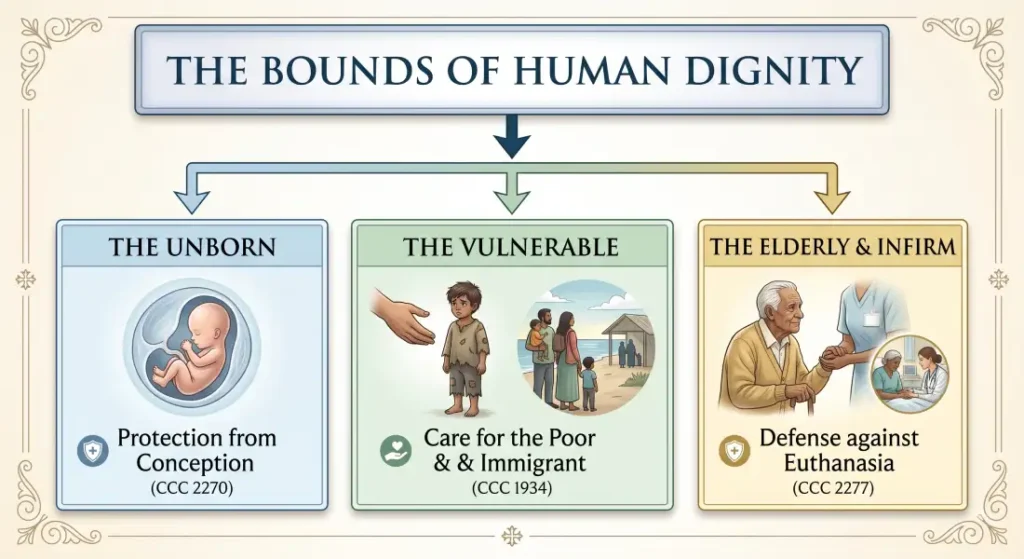
As Pope St. John Paul II declared in Evangelium Vitae (1995), a society that tolerates the destruction of human life at its most vulnerable stages undermines its own moral and democratic foundations.
The Common Good and Authentic Christian Unity
The renewal championed by Bishop Brennan emphasizes the promotion of the common good—”the sum total of social conditions which allow people, either as groups or as individuals, to reach their fulfillment more fully and more easily” (CCC 1906; Gaudium et Spes, 26).
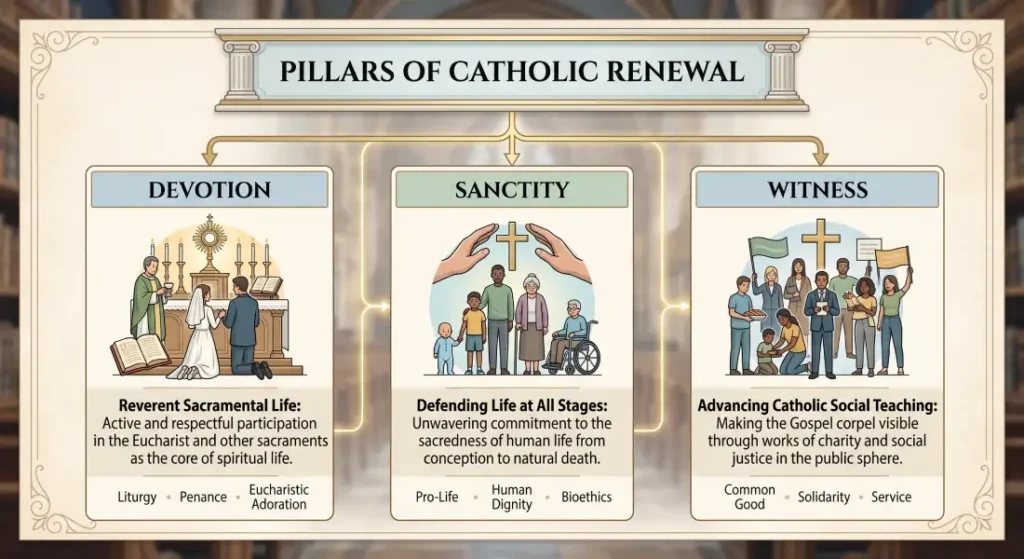
While Catholics collaborate with all people of good will on shared moral issues, authentic Christian unity cannot compromise divine truth (Mortalium Animos, 10).
While non-Catholic Christians share a real, though imperfect, communion with the Church through Baptism (Unitatis Redintegratio, 3), fullness of truth and salvation resides in the Catholic Church (Lumen Gentium, 8).
Action Plan: Pillars of Catholic Renewal
To translate spiritual renewal into daily practice, Catholics are called to embrace concrete spiritual and civic actions:
| Pillar of Renewal | Magisterial Anchor | Actionable Step |
| Prayer & Reparation | CCC 1428 / 2 Chronicles 7:14 | Commit to a weekly Holy Hour and Friday abstinence for national repentance. |
| Defense of Life | Evangelium Vitae / CCC 2258 | Support pregnancy resource centers and resist all anti-life legislation. |
| Family & Marriage | Casti Connubii / CCC 1601 | Strengthen domestic churches through daily family Rosary and regular Confession. |
| Civic Responsibility | Rerum Novarum / CCC 1913 | Vote and engage in public policy guided by a correctly formed Catholic conscience. |
The Call to Catholic Action
America’s 250th anniversary offers the faithful an opportunity to lead a spiritual transformation. National healing will not come from legislative victories alone, but from transformed hearts ordering their lives toward God.
By grounding our lives in the Holy Eucharist, standing firm in Catholic moral teaching, and defending human dignity, we offer our nation the true witness it desperately needs.
Frequently Asked Questions
Bishop Mark Brennan calls for national spiritual renewal through deep repentance, sustained prayer, and a renewed commitment to human dignity. He emphasizes that true restoration requires turning away from sin and grounding society in God’s moral law rather than relying solely on political solutions.
The Catechism teaches that interior conversion is necessary for moral and social healing (CCC 1428–1430). National renewal begins when individual souls seek God’s mercy through the Sacrament of Reconciliation, penance, and living in accord with the Gospel (CCC 1456).
According to CCC 1906, the common good is the sum total of social conditions allowing individuals and groups to reach fulfillment. It requires respect for the human person, social well-being and development, and the establishment of a peaceful, just civic order (CCC 1907–1909).
Human dignity is rooted in the imago Dei—being created in God’s image (CCC 1700). A nation cannot experience genuine moral renewal while failing to protect human life from conception to natural death, as human rights depend on God rather than state authority (Evangelium Vitae, 19).
Continue Your Faith Journey
Why Do Catholics Have Statues? Church Teaching, Scripture, and Sacred Art
Do Catholics worship statues? Explore the biblical foundation, Church councils, and theological distinctions between latria and dulia that explain why sacred images…
Purgatory: Catholic Teaching, Scripture, and Tradition Explained
Explore the authentic Catholic teaching on purgatory through Sacred Scripture, Church Fathers, and the Catechism. Learn the theological basis for purification and…
Catholic Prayer for Toxic Family Conflict: A Faithful Guide to Boundaries, Healing, and Charity
Navigating family conflict, estrangement, and narcissistic behavior requires balancing Christian charity with prudent boundaries. Discover how Catholic doctrine, Sacred Scripture, and daily…