
Mock Gender Reveal Abortion Video: A Catholic Call to Prayer, Truth, and Sacramental Healing
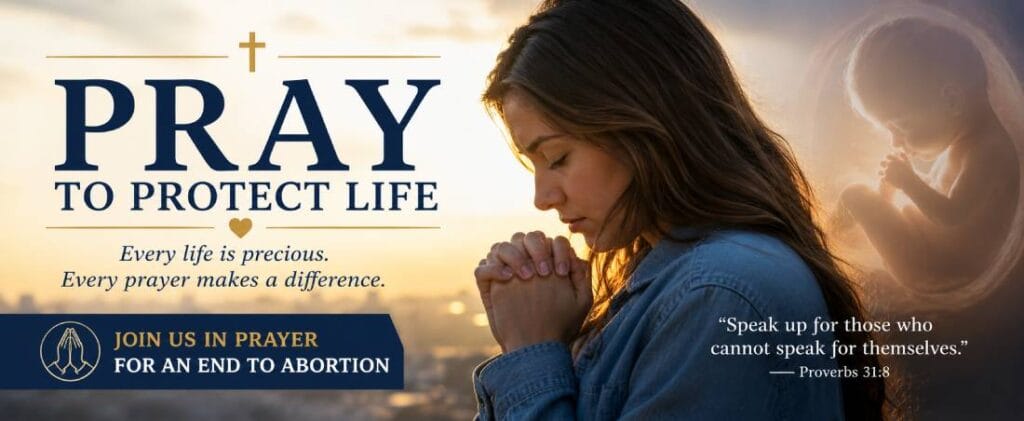
A viral video surfaced on Mother’s Day capturing a woman publicly consuming an abortion pill while attendees cheered, shouted “kill it!”, and celebrated what they termed an “abortion party.” By replacing a traditional gender reveal gathering—designed to welcome new life—with the intentional destruction of an unborn child, this event exposes a grave moral crisis. Beyond individual scandal, this incident highlights a cultural shift that seeks to normalize and publicly celebrate the destruction of unborn human life.
To respond effectively, Catholics must move beyond brief social media outrage. We are called to evaluate this moment through the lens of Sacred Scripture, Sacred Tradition, and the authentic Magisterium of the Catholic Church. By grounding our response in dogmatic truth, canonical reality, pastoral charity, and Eucharistic reparation, the faithful can confront cultural darkness with the transformative light of the Gospel of Life.
The Disturbing Reality: A Cultural Inversion of Motherhood
Gender reveal celebrations traditionally honor the anticipation of a new child, affirming the biblical truth that children are a heritage from the Lord (Psalm 127:3). Parents gather loved ones to share in the joy of discovering whether they will welcome a son or a daughter. These gatherings acknowledge the sacred responsibility of parenthood and the natural beauty of human generation.
This viral footage represents a public distortion of that natural joy. Choosing Mother’s Day to execute and broadcast this act adds a poignant layer of mockery toward the God-given vocation of motherhood. Where there should be reverence for an innocent human life bearing the Imago Dei—the image and likeness of God (CCC 1700)—there is instead public callousness and cheering over the termination of a child.
The Catechism of the Catholic Church explicitly states that human life must be respected and protected absolutely from the moment of conception (CCC 2270). From the first moment of existence, a human being must be recognized as having the rights of a person, supreme among which is the inviolable right of every innocent being to life. Direct abortion, willed either as an end or a means, is gravely contrary to the moral law (CCC 2271). When a culture transitions from reluctantly tolerating abortion to festively celebrating it, the Church Militant is called to stand as an uncompromising beacon of truth and divine mercy.
Clarifying the Moral and Canonical Reality of Abortion
To evaluate this incident accurately, Catholics must understand both the grave moral nature of abortion and its canonical consequences under Church law. In his landmark encyclical Evangelium Vitae, Pope St. John Paul II reaffirmed that direct abortion constitutes the deliberate and direct killing of an innocent human being (n. 57). It is a grave mortal sin that severely severs a soul’s communion with Almighty God.
Furthermore, the Church applies her strict canonical discipline to underline the supreme gravity of this act. Under Canon Law, a person who successfully procures a completed abortion incurs a latae sententiae (automatic) excommunication (CIC Can. 1397 §2). This canonical penalty is not an expression of vindictiveness, but a medicinal penalty designed to awaken the sinner’s conscience to the extreme gravity of the offense, urging them toward repentance and reconciliation with the Mystical Body of Christ.
In discussing such public offenses, we must also maintain precision regarding the divine nature. Popular commentary often suggests that human sin “breaks the heart of God.” However, Catholic dogmatic theology teaches the principle of Divine Impassibility: God in His divine nature is unchangeable, perfect, and incapable of suffering emotional damage or passions (Summa Theologiae, I, q. 9, a. 1; CCC 213). Abortion does not injure God; rather, it constitutes a grave offense against divine law and a devastating self-inflicted wound upon human dignity. God’s infinite love remains whole, continuously inviting sinners back to His grace.
A Four-Fold Catholic Response to Culture
Faced with public displays of moral callousness, Catholic believers cannot remain passive observers. Authentic Christian witness requires a balanced, four-fold response grounded in truth, sacramental grace, practical support, and persistent prayer.
1. Proclaim Unwavering Truth with Clarity and Charity
First, Catholics must resist the temptation to grow desensitized to the reality of abortion. Frequency of sin in secular society must never dull our moral horror at its execution. Every individual abortion terminates a unique, unrepeatable human life possessing eternal value.
We must speak the truth boldly: abortion does not simply remove tissue; it ends a human life. Yet, as St. Paul instructs, we must speak truth in charity (Ephesians 4:15). Our proclamation must never devolve into ideological hatred. Instead, we must clearly articulate the sanctity of life, exposing the lies of the culture of death while offering the light of Catholic moral teaching to a confused world.
2. Offer Sacramental Mercy and Post-Abortion Healing
Second, our prayer for the woman in the video—and for all who participate in or encourage abortion—must target true conversion and sacramental restoration. Repentance in the Catholic tradition is not merely a subjective emotional experience; it requires the objective reception of God’s forgiveness through the Church.
We must pray that the Holy Spirit pierces hardened hearts with genuine contrition. For any Catholic involved in abortion, the path to healing lies through the Sacrament of Penance and Reconciliation (CCC 1456). In this sacrament, through the ministry of the priest, Christ grants complete absolution, lifts canonical censures, and restores the penitent to full communion with the Church (CCC 2272). As Pope St. John Paul II wrote directly to women who have undergone an abortion: “The Father of mercies is ready to give you his forgiveness and his peace in the Sacrament of Reconciliation” (Evangelium Vitae, n. 99).
3. Provide Tangible Support to Vulnerable Mothers
Third, our commitment to life must extend beyond words into concrete action. Many women feel driven to abortion due to fear, financial desperation, or isolation. The Catholic Church must stand as a sanctuary for mothers in crisis.
Following the directive of Evangelium Vitae (n. 88), Catholics are called to give energetic support to pregnancy resource centers, maternity homes, and practical outreach initiatives. By providing financial aid, medical assistance, housing, and emotional support, we eliminate the perceived necessity of abortion and demonstrate the Church’s authentic maternal care for both mother and child.
4. Engage in Eucharistic Reparation and True Spiritual Renewal
Fourth, the Catholic faithful across our nation must commit to fervent intercession and acts of reparation. Rather than relying on generic spiritual jargon, Catholics look to the ancient devotional practices of the Church: Eucharistic Adoration, the Holy Sacrifice of the Mass, the Holy Rosary, and fasting.
When considering biblical promises of healing, such as 2 Chronicles 7:14, Catholic theology offers a precise hermeneutic. The Old Testament covenant promises made to ancient Israel are fully fulfilled in Jesus Christ and His Mystical Body, the Catholic Church—the New Israel (CCC 781; Lumen Gentium, n. 9). National moral renewal is not achieved through a geopolitical covenant, but through the conversion of individual souls to Christ and the pervasive influence of Catholic virtue in public life (Evangelium Vitae, n. 87–98). By offering acts of reparation before the Blessed Sacrament, the intercessors of the Church Militant appeal to God’s mercy to transform hearts of stone into hearts of flesh.
Practical Action & Immediate Help Resources
For those seeking immediate assistance, post-abortion healing, or opportunities to offer spiritual reparation, the following resources provide direct pathways for engagement:
| Need / Intent | Resource / Organization | Immediate Action Step |
| Crisis Pregnancy Support | OptionLine / Local Pregnancy Centers | Call or text 1-800-712-4357 for 24/7 confidential help, pregnancy tests, and medical referrals. |
| Post-Abortion Sacramental Healing | Project Rachel Ministry / Rachel’s Vineyard | Visit HopeAfterAbortion.com to find local confidential priests, counseling, and healing retreats. |
| Spiritual Reparation & Intercession | Local Catholic Parish / Eucharistic Adoration | Offer a weekly Holy Hour or Rosary of Reparation for the protection of the unborn and cultural conversion. |
| Tangible Support for Mothers | Walking with Moms in Need (USCCB) | Visit WalkingWithMoms.com to help your local parish support pregnant and parenting mothers in necessity. |
Hope in the Victorious Cross of Christ
The shocking image of a party celebrating the destruction of an unborn child serves as a stark reminder of the spiritual battle of our age. Yet, Christians do not succumb to despair. Our response must combine righteous grief over sin with unwavering theological hope.
We know that divine grace is infinitely more powerful than human malice. Through our steadfast witness to truth, active charity toward mothers, and humble intercession before the Tabernacle, God can bring conversion to the most hardened hearts and restore a culture of life. Let this moment drive the faithful to deeper holiness, renewed prayer, and courageous defense of the most vulnerable among us.
Frequently Asked Questions
The Catholic Church teaches that human life must be respected and protected absolutely from the moment of conception (CCC 2270). Direct abortion is a grave mortal sin contrary to the moral law, as it constitutes the deliberate killing of an innocent human person bearing the image of God (CCC 2271).
Yes. While procuring an abortion carries an automatic excommunication under Canon Law (CIC Can. 1397 §2), full forgiveness, spiritual healing, and restoration to communion are granted through sincere repentance in the Sacrament of Penance (CCC 1456, 2272). God’s mercy is infinitely greater than any sin (Evangelium Vitae, n. 99).
Catholics are called to offer Eucharistic Adoration, Rosaries, and acts of reparation for offenses against life (CCC 2626–2649). Rather than reacting with hostility, the faithful must pray for the conversion of hardened hearts, speak moral truth with charity, and support crisis pregnancy ministries (Evangelium Vitae, n. 88).
Under Code of Canon Law (CIC Can. 1397 §2), a person who successfully procures an abortion incurs a latae sententiae (automatic) excommunication. This medicinal penalty highlights the crime’s extreme gravity and encourages the sinner to seek sacramental absolution and reconciliation through the Sacrament of Penance (CCC 2272).
Source: LifeSiteNews
Continue Your Faith Journey
Catholic Church Teaching on IVF: Doctrine, Dignity, and Moral Alternatives
Explore the Catholic Church's official teaching on IVF, rooted in the dignity of human life and marital union. Learn about licit alternatives…
What the Catholic Church Teaches About Surrogacy: Dignity, Marriage, and the Gift of Life
Explore what the Catholic Church teaches about surrogacy, human dignity, and the sacred marital covenant. Learn why the Magisterium protects children as…
Venerable Jérôme Lejeune, Pope Leo XIV, and the Inviolable Dignity of Human Life
Explore how Venerable Jérôme Lejeune's scientific witness and Catholic teaching defend the sacred dignity of human life against modern programmed death. Learn…