Pope Saint Urban I
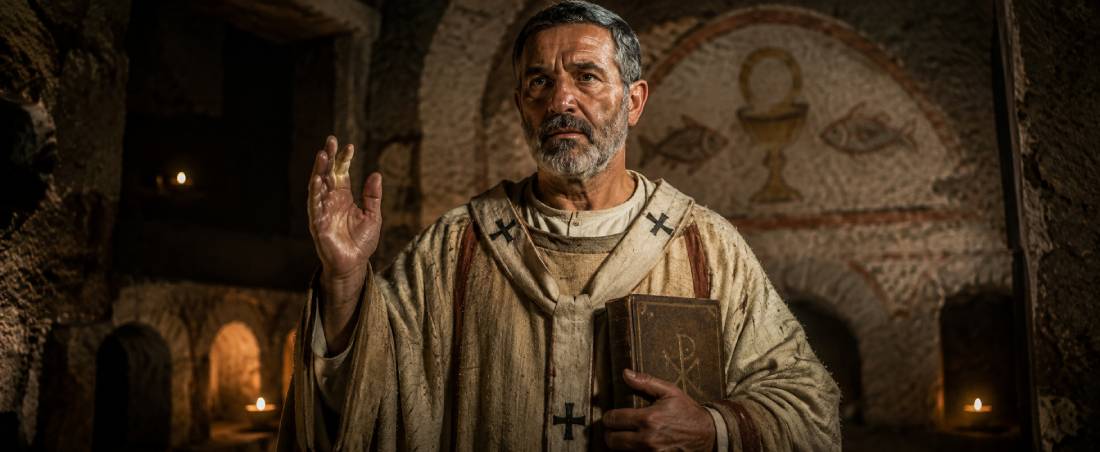
Saint Urban I served as Bishop of Rome during one of the formative periods of Christianity, guiding the Church between 222 and 230 AD. Though historical records from the third century remain limited, the memory of Saint Urban I endured because Catholics recognized in him the qualities of a faithful shepherd: calm leadership, spiritual courage, and devotion to preserving unity within the growing Christian community.
His papacy unfolded during a fragile moment in Church history. Christians still lived under the shadow of Roman hostility, yet periods of relative peace allowed the Church to organize more openly and deepen its sacramental life. Urban I became a symbol of pastoral stability during uncertain times. His witness reminds Catholics today that holiness often grows quietly through faithful service, prayer, and perseverance rather than public glory.
Early Life and Background
Very little survives concerning the early life of Saint Urban I. Ancient sources, including the Liber Pontificalis, preserve only fragments of information, and some later traditions blended historical facts with devotional storytelling. Historians generally agree that Urban was likely born somewhere within the Roman Empire and belonged to the Christian community in Rome before becoming pope.
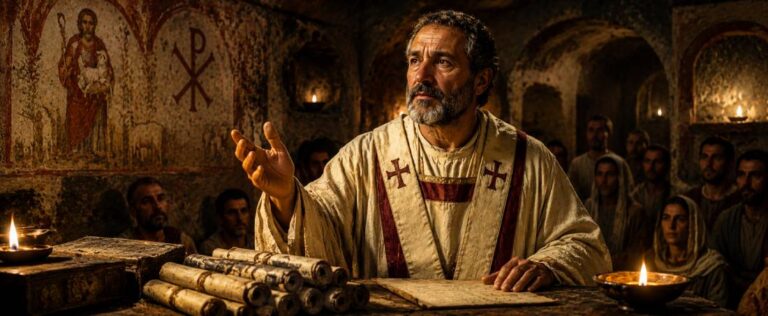
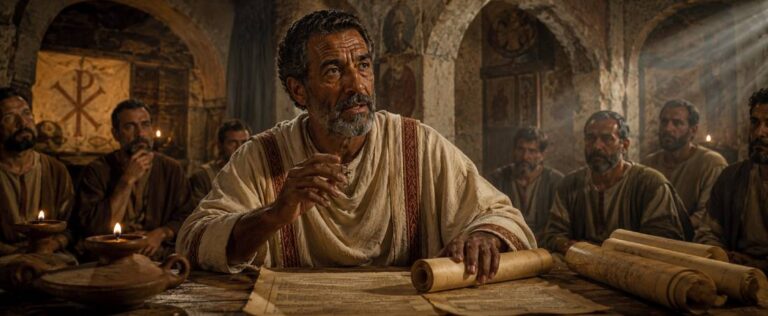
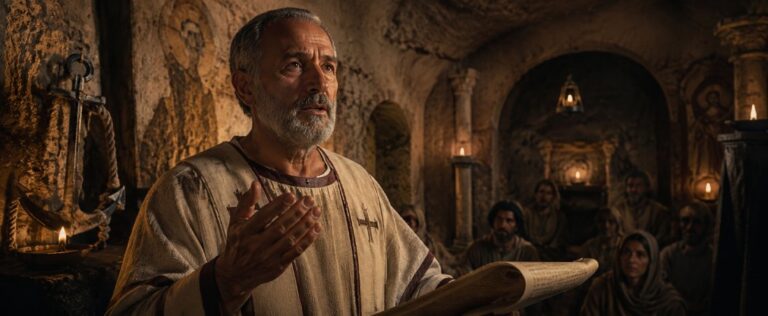
The third-century Church was still relatively small and often persecuted. Christians gathered in homes, catacombs, and discreet places of worship. Priests and bishops were expected not only to teach doctrine but also to risk imprisonment or death for the faith. Urban’s formation likely emerged within this atmosphere of sacrifice and deep communal prayer.
As a priest of the Roman Church, Urban would have become familiar with the liturgy, the administration of the sacraments, care for widows and the poor, and the preservation of apostolic teaching handed down from Saint Peter and the early bishops of Rome. His spiritual development was shaped by a Church that survived not through political power but through holiness, charity, and unwavering faith in Christ.
Election to the Papacy
Saint Urban I was elected pope around the year 222 AD following the death of Pope Callixtus I. His election occurred during the reign of Emperor Alexander Severus, whose administration was generally more tolerant toward Christians compared to earlier Roman emperors.
Although Christianity was not legalized, this temporary easing of persecution allowed the Church to strengthen its organization and expand quietly throughout the empire. Nevertheless, tensions still existed both outside and inside the Church.
One of the major internal challenges involved divisions connected to the antipope Hippolytus, who opposed previous papal leadership over questions of Church discipline and reconciliation of sinners. Urban inherited a Church still healing from these disputes. His election appears to have been accepted by the Roman Christian community as a continuation of apostolic leadership and stability.
At a time when bishops often faced martyrdom, the office of pope demanded profound courage. Urban accepted the responsibility of shepherding a vulnerable flock while preserving unity in doctrine and worship.
Papacy and Leadership
Shepherding the Roman Church
The papacy of Saint Urban I was marked more by pastoral governance than dramatic political events. Unlike some earlier popes who died during severe persecutions, Urban benefited from a comparatively peaceful environment under Alexander Severus. This allowed him to focus on strengthening the life of the Church internally.
Christian worship continued developing during his pontificate. The Roman Church increasingly organized liturgical practices, charitable ministries, and ecclesiastical administration. Tradition credits Urban with encouraging reverence in the use of sacred vessels and supporting the dignity of liturgical worship.
Defense of Unity
One of Urban’s most important responsibilities was maintaining unity among Christians. Divisions caused by theological disputes and disciplinary controversies threatened the stability of the early Church. Urban sought to preserve communion with bishops and clergy while defending apostolic teaching.
Though detailed writings from Urban himself do not survive, his enduring reputation as a faithful pastor suggests that he governed with prudence and spiritual balance. Early Christians remembered him not primarily as a political figure but as a guardian of peace and ecclesial order.
Growth of Christianity
During Urban’s reign, Christianity continued spreading through Roman society despite remaining illegal. Converts came from both poor and noble families. Christian communities became increasingly visible in urban centers.
Ancient traditions also associate Urban with several Roman martyrs and converts, though some stories were embellished in later centuries. Even so, these traditions reflect how later Catholics viewed him: a pope whose holiness inspired faithfulness among ordinary believers.
Prayer Life and Spirituality
The spirituality of Saint Urban I emerged from the deeply sacramental life of the early Church. Third-century Christians centered their existence on prayer, the Eucharist, fasting, Scripture, and fidelity to Christ amid uncertainty.
Urban likely celebrated the Eucharist in hidden or modest settings, often under the constant possibility of renewed persecution. The Mass was not merely ceremonial for these early believers; it was a profound encounter with the suffering and risen Christ. As pope, Urban would have encouraged Catholics to remain steadfast in worship even when public hostility threatened them.
His life reflected the pastoral spirituality of the ancient bishops of Rome:
- devotion to apostolic tradition
- protection of Church unity
- care for the poor
- perseverance in prayer
- courage under pressure
Though explicit Marian devotions from his era were less formally developed than in later centuries, the early Roman Church already held deep reverence for the Blessed Virgin Mary as Mother of Christ and model disciple. Urban’s spirituality would have been profoundly Christ-centered and sacramental.
Catholics today can learn from Saint Urban’s quiet holiness. He demonstrates that spiritual greatness is not always accompanied by dramatic miracles or famous writings. Sometimes holiness is revealed through steady leadership, hidden sacrifice, and faithful service to the people of God.
Challenges and Trials
Internal Divisions
One of the greatest difficulties during Urban’s papacy involved maintaining unity within the Church. The schism associated with Hippolytus had damaged relationships among Roman Christians. Questions surrounding repentance, Church authority, and discipline remained sensitive issues.
Urban responded not through political force but through pastoral patience and continuity with apostolic teaching. His leadership helped stabilize the Roman Church during a fragile era.
Threat of Persecution
Although Alexander Severus showed relative tolerance toward Christians, the Church remained vulnerable. Local persecutions could still erupt, and Christians possessed no legal protections.
Urban governed with the awareness that peace could disappear quickly. This uncertainty shaped the spirituality of the early Church, which lived constantly between hope and suffering.
Historical Confusion About Martyrdom
Some later traditions mistakenly described Saint Urban I as a martyr. However, most modern historians believe he likely died naturally rather than through execution. Confusion emerged because many early popes were martyrs, and devotional traditions sometimes merged historical memories over time.
Even without martyrdom, Urban’s witness remains heroic because he faithfully guided the Church during dangerous and unstable years.
Death and Legacy
Saint Urban I died in Rome around 230 AD after serving approximately eight years as pope. He was buried in the Catacomb of Callixtus, one of the most important Christian burial sites in ancient Rome.
Over time, devotion to Urban spread throughout the Western Church. He was honored as a saint because of his fidelity, pastoral leadership, and dedication to preserving the unity of the Christian community.
Though historical records concerning his pontificate remain limited, his legacy endured through the continuity of the papal office itself. Urban belonged to the generation of early bishops who helped preserve Christianity before the faith received legal recognition under Emperor Constantine decades later.
His memory also became associated in medieval Europe with vineyards and agricultural blessing traditions, especially in France and Germany, where Saint Urban was invoked by winegrowers.
For Catholics today, Saint Urban I stands as a reminder that the Church survived its earliest centuries through humble shepherds who guarded the faith with courage, prayer, and perseverance.
Lessons Catholics Can Learn Today
- Remain faithful to Christ even during uncertain times
- Protect unity within the Church rather than fueling division
- Practice steady and quiet holiness in daily life
- Value the Eucharist as the center of Christian existence
- Lead with humility, patience, and charity
- Trust God even when society becomes hostile to the faith
- Preserve apostolic tradition while serving others with compassion
Conclusion
Saint Urban I may not be among the most widely known popes in Catholic history, but his witness remains deeply important. He shepherded the Church during a vulnerable era when Christians still lived under threat and uncertainty. Through calm leadership, sacramental devotion, and pastoral faithfulness, he helped strengthen the foundations of the early Catholic Church.
His life reminds modern believers that holiness is often found in perseverance rather than public recognition. In an age marked by division and instability, Saint Urban I continues to inspire Catholics to remain rooted in prayer, unity, and trust in Christ.
May his example encourage the faithful to serve the Church with humility, protect the unity of the Body of Christ, and deepen their devotion to the Gospel entrusted to the apostles.