Pope Saint Clement I: Apostolic Father, Defender of Church Unity, and Martyr
| Key Fact | Historical / Theological Detail |
| Papal Succession | 4th Bishop of Rome (c. AD 88 – 99; successor to St. Anacletus) |
| Major Extant Work | First Epistle to the Corinthians (1 Clement, c. AD 96) |
| Patristic Classification | Apostolic Father; disciple of Saints Peter and Paul |
| Liturgical Feast Day | November 23 (Roman Rite) |
| Patronage & Attributes | Mariners, stonecutters; represented iconographically by an anchor |
| Relic Repository | Basilica of San Clemente al Laterano, Rome, Italy |
Apostolic Father and Successor of Saint Peter
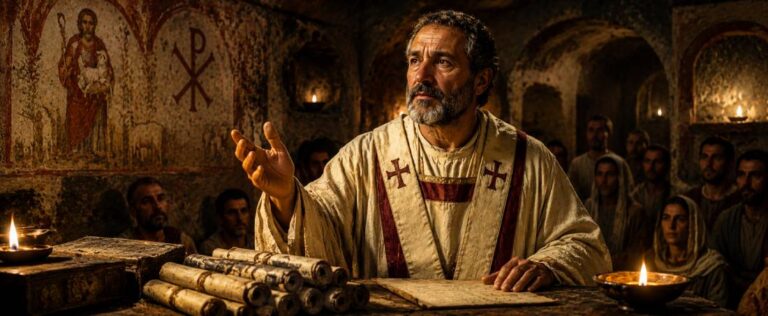
Pope Saint Clement I, who governed the Church as the fourth Bishop of Rome from approximately AD 88 to 99, stands as one of the most vital witnesses to primitive Catholic doctrine and ecclesiology. Living in an era when external persecution from the imperial Roman state was matched by internal challenges to ecclesial order, Clement exercised decisive pastoral authority to safeguard orthodoxy and unity.
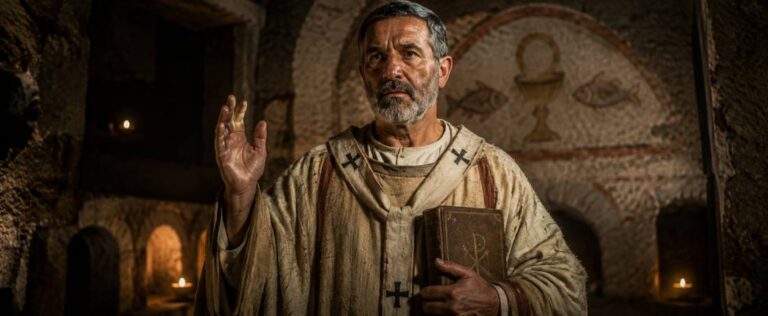
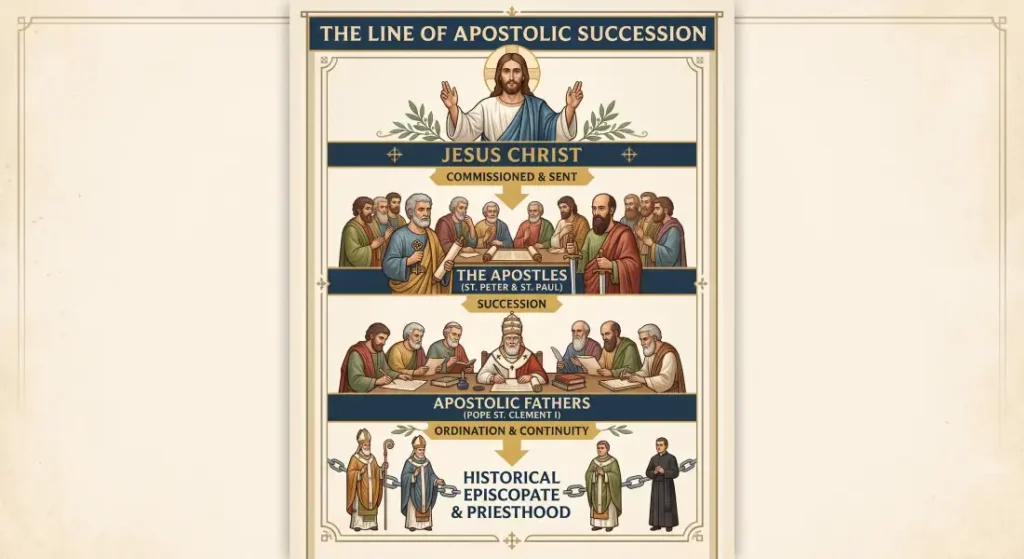
As an Apostolic Father—a generation of pastors who learned directly from the Apostles—Clement provides an unbroken link between the New Testament writers and the developing patristic tradition. His ministry demonstrates that the hierarchical structure of the Catholic Church is not a later medieval invention, but an apostolic institution established by Jesus Christ Himself.
Early Life and Apostolic Formation
While historical details regarding Clement’s birth remain sparse, early Christian tradition records that he was a Roman citizen, possibly born of noble lineage. Ancient writers identified him as a collaborator of the Apostles, with Saint Jerome and other early commentators linking him to the Clement mentioned by Saint Paul in his letter to the Philippians (Phil 4:3).
In his monumental work Against Heresies (Adversus Haereses, III.3.3), Saint Irenaeus of Lyons (c. AD 180) affirmed Clement’s direct apostolic formation:
“He had seen the blessed Apostles and had been conversant with them, might be said to have the preaching of the Apostles still echoing in his ears, and their traditions before his eyes.”
Formed in the crucible of first-century Rome, Clement witnessed the heroic martyrdoms of Saints Peter and Paul under Emperor Nero. Serving the Roman community as a respected presbyter, he was subsequently chosen to succeed Pope Saint Anacletus (also known as Cletus) on the Chair of Saint Peter.
The Exercise of Petrine Primacy: The Corinthian Sedition
The defining pastoral event of Clement’s pontificate occurred around AD 96, when the Church of Corinth descended into severe internal rebellion. A younger faction within the Corinthian community had illicitly ousted several validly appointed presbyters who had ministered blamelessly.
In response, Pope Clement authored the First Epistle to the Corinthians (commonly known as 1 Clement), intervening directly in the affairs of a distant Eastern church. This decisive action serves as one of the earliest extra-biblical demonstrations of the Bishop of Rome’s universal solicitude and primacy over the universal Church.
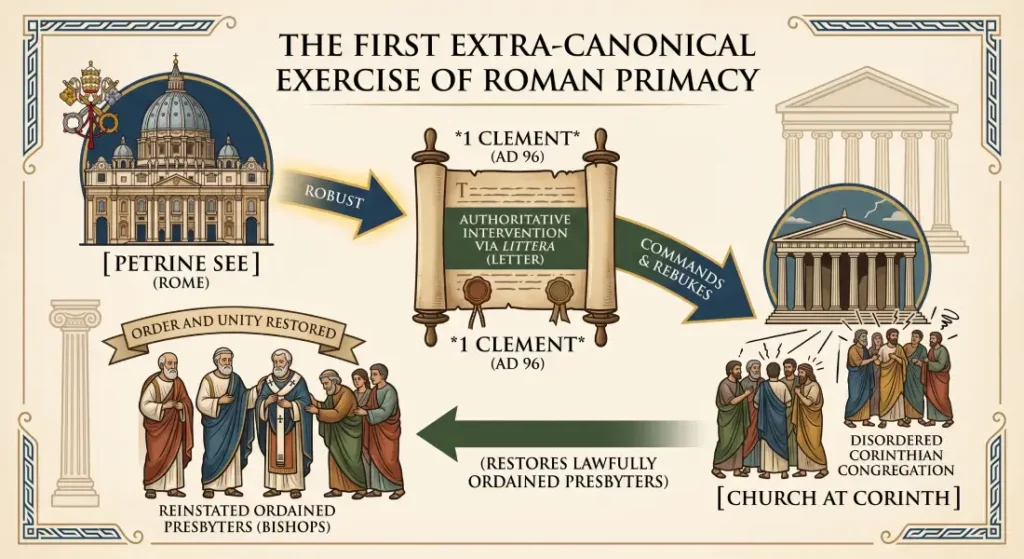
Rather than treating the Corinthian revolt as a local administrative dispute, Clement addressed it as a grave rupture of divine order. He warned the instigators of the spiritual peril of schism, writing with fatherly authority:
“If any disobey the words spoken by God through us, let them know that they will involve themselves in no small danger and transgression.” (1 Clement, 59:1)
Clement demanded the immediate reinstatement of the lawful presbyters, establishing that pastoral office derives from God through apostolic mandate, not from popular congregational vote.
The Dogmatic Foundation of Apostolic Succession
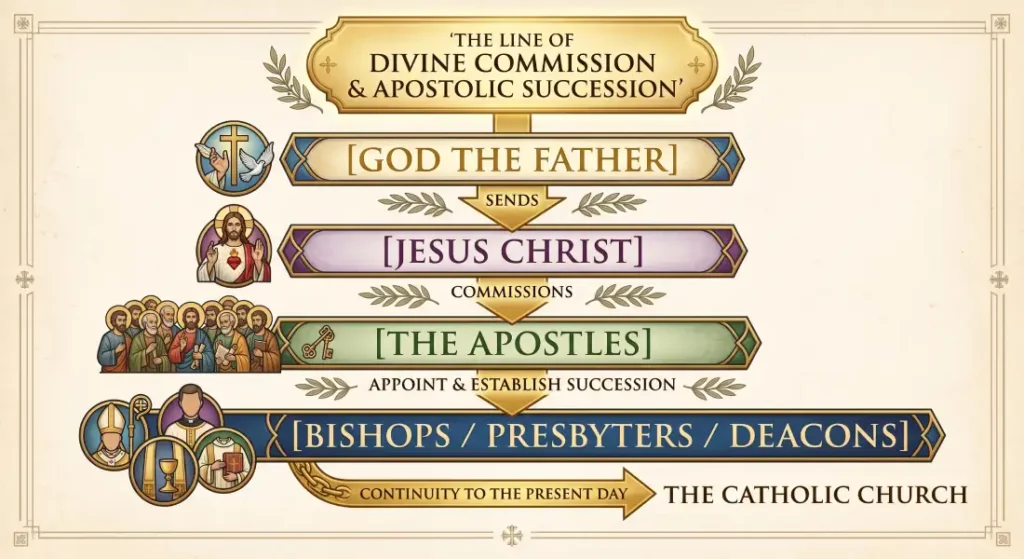
Chapter 42 and Chapter 44 of 1 Clement contain the earliest explicit theological exposition of Apostolic Succession outside the New Testament canon. Clement outlines the divine lineage of authority that underpins Catholic sacramental theology:
- Divine Commission: Christ was sent by God the Father, and the Apostles were commissioned by Christ.
- Ordination of Successors: Preaching throughout countries and cities, the Apostles appointed their first converts, testing them by the Holy Spirit, to be bishops and deacons for future believers.
- Provision for Continuity: The Apostles provided a permanent rule: when these ministers died, other approved men should succeed them in their sacred ministry.
As Clement articulated in 1 Clement 44:2:
“Our Apostles knew through our Lord Jesus Christ that there would be strife for the title of bishop. For this reason… they appointed the aforementioned persons and later made the provision that, should they fall asleep, other approved men should succeed to their ministry.”
This doctrine remains central to the Magisterium today. The Catechism of the Catholic Church (CCC 861–862) and the Second Vatican Council (Lumen Gentium, 20) cite this apostolic principle to demonstrate that bishops, by divine institution, take the place of the Apostles as pastors of the Church.
Liturgical Order and Sacred Hierarchy
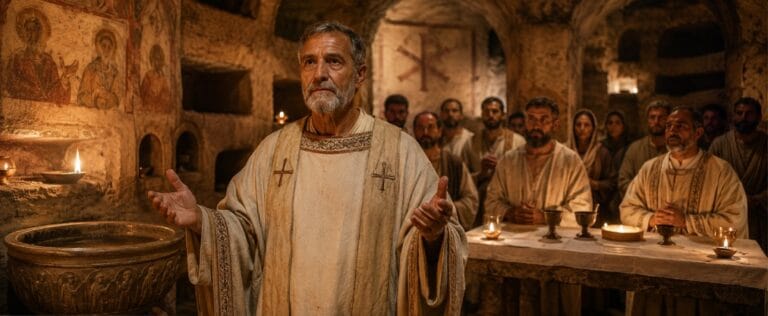
In addition to episcopal authority, Pope Saint Clement I emphasized that Christian liturgy must be conducted with precise order and reverent dignity, mirroring the divine order of creation.
Drawing an analogy from Old Covenant worship, Clement pointed out that God commanded sacrifices to be performed not at random or in disorder, but at fixed times and through specific ministers (1 Clement, 40:1–5). He was the first Christian writer to use the Greek word laikos (laity), distinguishing the role of the lay faithful from the sacramental functions reserved for the ordained hierarchy:
- The High Priest (Bishop): Assigned his proper liturgical duties.
- The Priests (Presbyters): Assigned their proper place in the sacred rites.
- The Levites (Deacons): Entrusted with their distinctive diaconal services.
- The Lay Faithful: Bound to lay ordinances, participating in orderly devotion.
This early witness demonstrates that the primitive Church did not practice an egalitarian, unstructured worship, but celebrated a formal, hierarchical liturgy rooted in sacred tradition (CCC 1140–1144).
Pastoral Fortitude, Exile, and Martyrdom
Pope Clement governed during a period marked by imperial hostility, notably under the despotic reign of Emperor Domitian. In his writings, Clement consistently urged believers to practice heroic patience, mutual charity, and steadfast fidelity to Christ amid civil persecution.
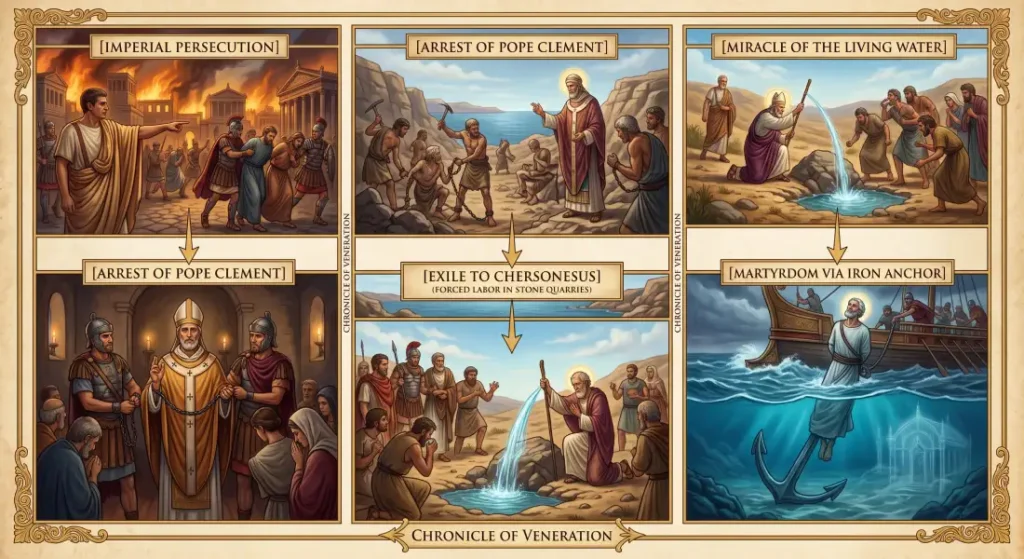
According to ancient patristic tradition recorded in the Passio Sancti Clementis, Clement was arrested by Roman authorities and exiled to the stone quarries of Chersonesus in the Crimean peninsula. While undergoing hard labor alongside hundreds of Christian convicts, Clement continued his pastoral mission, preaching the Gospel and converting pagans. Tradition recounts that through his prayer, a miraculous spring of water burst forth from a hill, sustaining the thirsty prisoners.
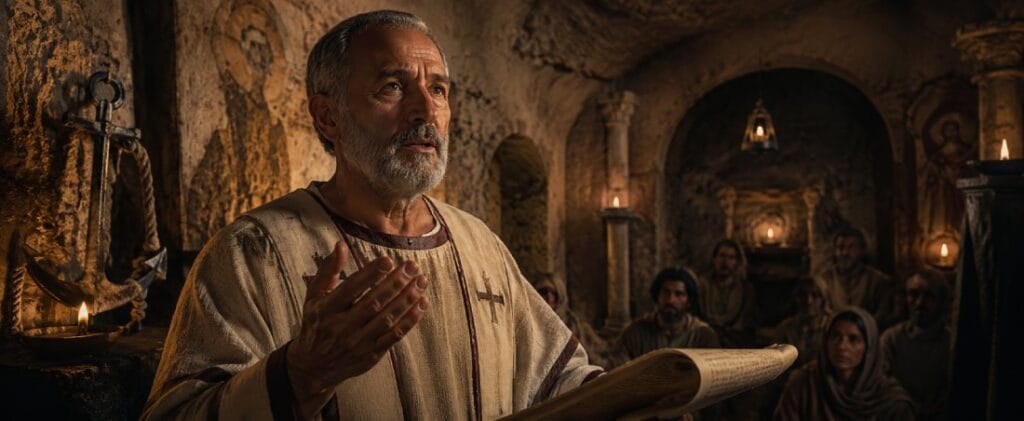
Enraged by Clement’s persistent evangelization, imperial officials condemned the Roman Pontiff to death. Around AD 99, Clement was bound to an iron anchor and cast into the depths of the Black Sea, sealing his papal ministry with the crown of martyrdom.
Enduring Legacy and Veneration
The veneration of Saint Clement spread swiftly throughout the universal Church. In the ninth century, the “Apostles to the Slavs,” Saints Cyril and Methodius, recovered relics identified as those of Saint Clement in Crimea and translated them to Rome.
- The Basilica of San Clemente: The relics were solemnly placed in the ancient Basilica of San Clemente al Laterano, a titular church in Rome that stands today over Clement’s original first-century Roman residence.
- The Roman Canon: Pope Saint Clement I is commemorated by name in the ancient Roman Canon (Eucharistic Prayer I) alongside Linus and Cletus, ensuring his name is voiced at altars across the world.
- Patronal Iconography: Because of the instrument of his execution, Saint Clement is venerated as the patron saint of mariners and stonecutters, represented in sacred art holding an anchor and the papal staff.
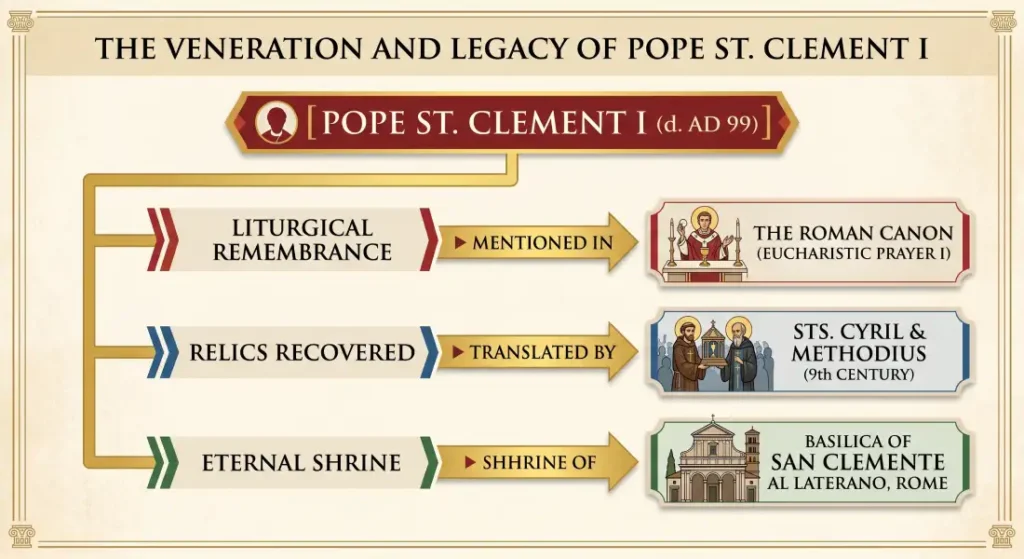
Through his writings and blood, Pope Saint Clement I demonstrated that true authority is rooted in sacrificial service, and that the Church’s visible unity rests upon the foundation of apostolic succession.
Frequently Asked Questions
Yes. Early Church Fathers such as Saint Irenaeus of Lyons and Tertullian confirm that Clement was a direct disciple of the Apostles. Saint Irenaeus explicitly wrote that Clement had the preaching of Saints Peter and Paul still echoing in his ears.
Pope Clement intervened around AD 96 because a rebellious faction of younger members in Corinth had unlawfully deposed several validly ordained presbyters. Clement authoritatively required their reinstatement, defending the divine structure of apostolic succession.
According to early Church tradition, during his imperial exile to Crimea, Clement was condemned to death for converting prisoners. He was bound to an iron anchor and thrown into the Black Sea, making the anchor his primary iconographic symbol of martyrdom.
No. While 1 Clement was read publicly in some early Christian assemblies for edification due to its apostolic authority, the Catholic Church definitively discerned under the guidance of the Holy Spirit that it is a patristic text, not part of the closed Canon of inspired Scripture.
Related Popes