Saint Peter the Apostle: Life, Papal Primacy, and Theological Legacy
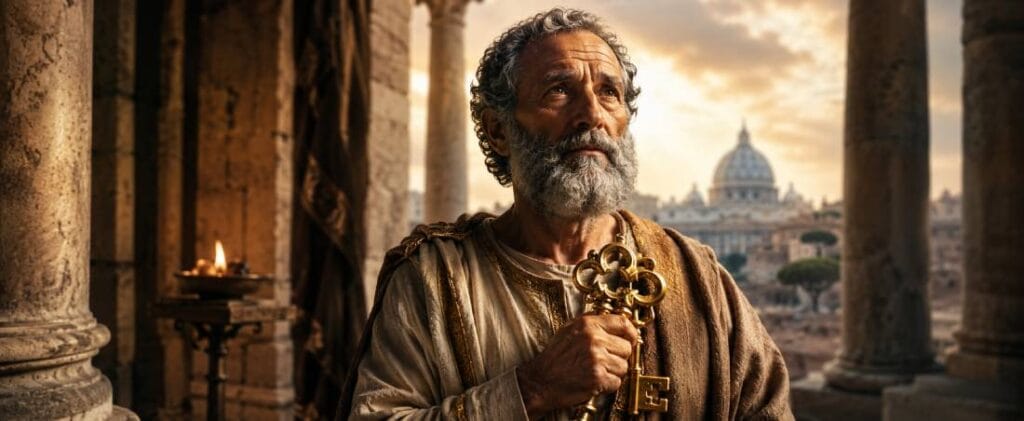
Chosen directly by Jesus Christ as the Prince of the Apostles, Saint Peter serves as the visible foundation of Catholic unity (CCC 881). From a Galilean fisherman named Simon Bar-Jonah to the first Bishop of Rome, Peter’s life reveals how divine grace perfects human nature.
For contemporary Catholics, Saint Peter provides the definitive model of apostolic authority, genuine repentance, and unyielding fidelity to Christ.
Key Events in the Life of Saint Peter
| Event | Biblical & Magisterial Reference | Theological Significance |
| Call by the Sea of Galilee | Matthew 4:18–20 | Immediate obedience to the divine vocation. |
| Confession of Faith at Caesarea Philippi | Matthew 16:16–19 | Establishment of the Petrine Primacy and Keys of the Kingdom (CCC 552). |
| Profession after the Eucharistic Discourse | John 6:68 | Affirmation of Christ’s divine authority and Eucharistic truth (CCC 1336). |
| Triple Restoration by the Risen Lord | John 21:15–17 | Direct conferral of supreme pastoral care over the universal Church (Pastor Aeternus). |
| Martyrdom in Rome | Patristic Tradition / Acts | Ultimate witness (martyria) establishing the See of Rome. |
Early Life and Divine Vocation
Saint Peter was born Simon in Bethsaida and later operated a fishing enterprise in Capernaum alongside his brother, Saint Andrew. Living in Galilee, Simon was rooted in Jewish tradition and hard manual labor.
When Jesus called Simon to leave his nets and become a “fisher of men,” Simon responded with immediate obedience. Christ later established Simon’s unique mission at Caesarea Philippi:
“You are Peter, and upon this rock I will build my Church, and the gates of the netherworld shall not prevail against it. I will give you the keys to the kingdom of heaven.” (Matthew 16:18–19)
Through this divine declaration, Christ renamed Simon Petros (“Rock”), signaling a direct change in identity and establishing the Petrine office (CCC 552).
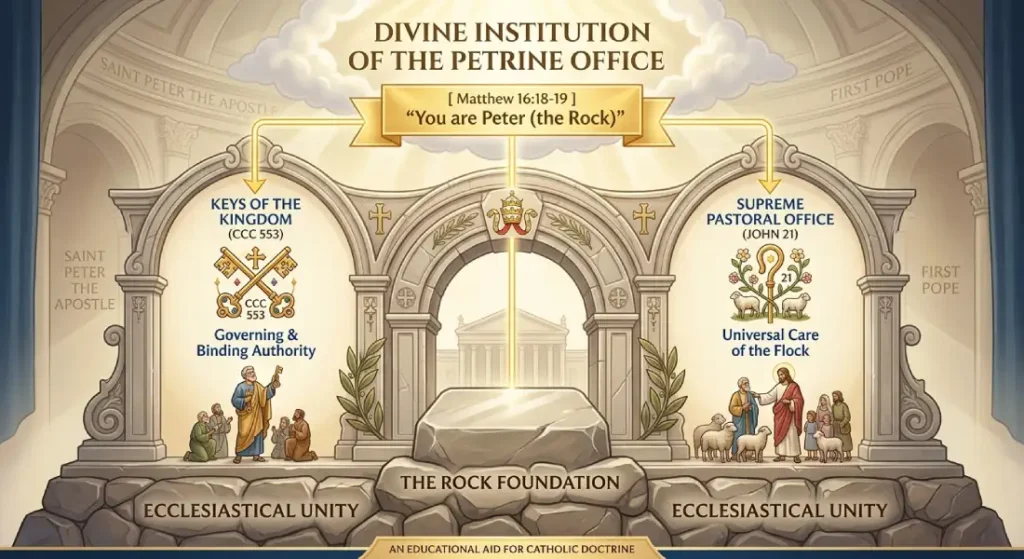
Divine Institution of the Papal Primacy
While human mechanisms for papal elections evolved over centuries into the conclave system, Saint Peter received his Petrine Office directly by divine institution from Jesus Christ Himself (CCC 880–882).
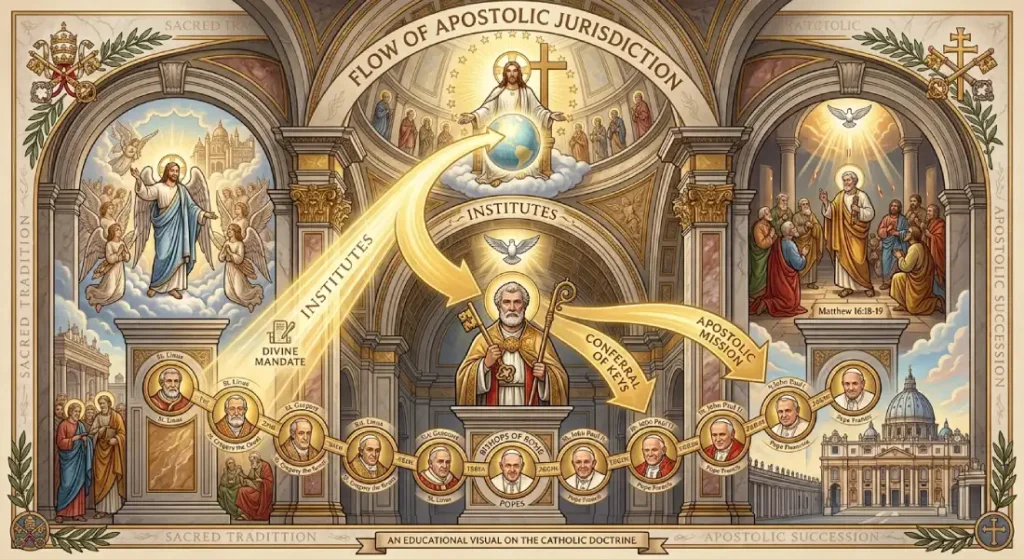
Christ constituted Peter as the permanent visible principle of unity, bestowing upon him the unique authority of the Keys (Matthew 16:19) and the explicit mandate to shepherd the entire flock (John 21:15–17). As the First Vatican Council declared in Pastor Aeternus:
- Supreme Jurisdiction: Peter was granted real jurisdiction, not merely a primacy of honor.
- Unbroken Continuity: The Petrine authority continues perpetually through the Bishops of Rome.
- Universal Shepherding: The Pope possesses full, supreme, and immediate power over the universal Church (CCC 882).
St. Thomas Aquinas affirms this necessary order, writing that “for the unity of the Church, it was necessary that there be one who presides over the whole Church” (Summa Theologiae, Supplement, q. 40, a. 6).
Leadership in the Early Church
Following the Ascension and the outpouring of the Holy Spirit at Pentecost, Peter immediately assumed visible leadership of the Apostolic College.
Preaching at Pentecost
Peter delivered the first public proclamation of the Kerygma in Jerusalem, resulting in the conversion of roughly 3,000 souls (Acts 2:41). His sermon linked the Old Testament prophecies directly to the Resurrection of Jesus Christ.
The Council of Jerusalem
During the first council of the Church in AD 49 (Acts 15), Peter exercised his Primacy by settling the dogmatic controversy regarding Gentile converts. He declared that salvation comes through the grace of the Lord Jesus without imposing Old Testament ritual ceremonial laws, preserving the unity of Jewish and Gentile believers.
Establishment of the Roman See
After ministering in Antioch, Peter established his final Apostolic See in Rome, the hub of the ancient world. By consecrating Rome with his ultimate sacrifice, Peter bound the Primacy of the Universal Church to the Bishop of Rome.
Eucharistic Faith and Spiritual Formation
Saint Peter’s faith was fundamentally Eucharistic and Christocentric. During the Bread of Life discourse in the Gospel of John, many followers deserted Christ because of His hard teaching on eating His flesh.
Peter stood as the mouthpiece of fidelity, making his historic profession:
“Lord, to whom shall we go? You have the words of eternal life.” (John 6:68; CCC 1336)
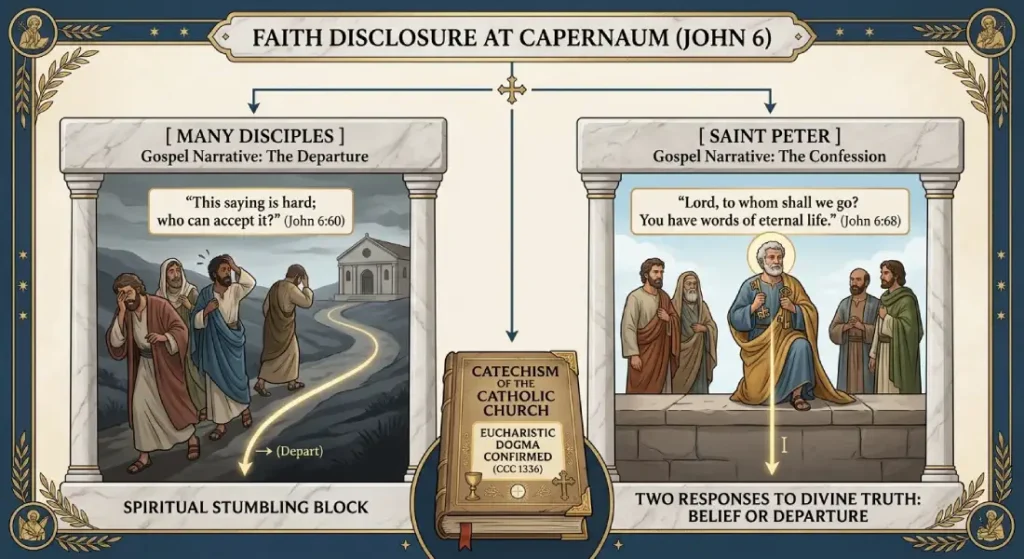
Furthermore, under the inspiration of the Holy Spirit, Peter authored two canonical epistles instructing the faithful on patience during persecution, baptismal regeneration, and personal sanctification (2 Peter 1:21).
Repentance and Sacramental Integrity
Peter’s journey exposes the distinction between human weakness and divine transformation. During the Passion, Peter denied knowing Christ three times in the high priest’s courtyard.
Unlike Judas, who fell into despair, Peter wept bitterly in deep contrition. His authentic repentance prepared him for his post-Resurrection restoration at the Sea of Tiberias, where Christ elicited a threefold profession of love (John 21:15–17) to mirror his threefold denial.
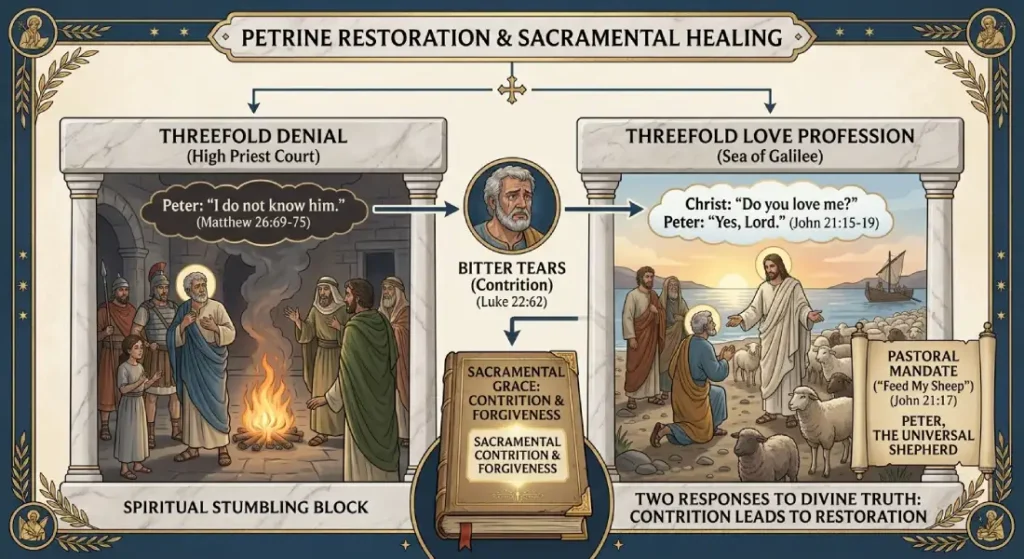
St. Augustine notes that Peter’s temporary stumble served as a divine lesson in humility for the shepherd of the entire Church (Sermo 295). Peter’s weakness transformed him into a merciful pastor who understood the necessity of divine grace.
Martyrdom and Lasting Legacy
Saint Peter spent his final years guiding the persecuted Church in Rome. During the reign of Emperor Nero (circa AD 64), he was arrested and condemned to death.
Patristic tradition confirms that Peter requested to be crucified upside down, deeming himself unworthy to die in the same physical posture as his Divine Master.
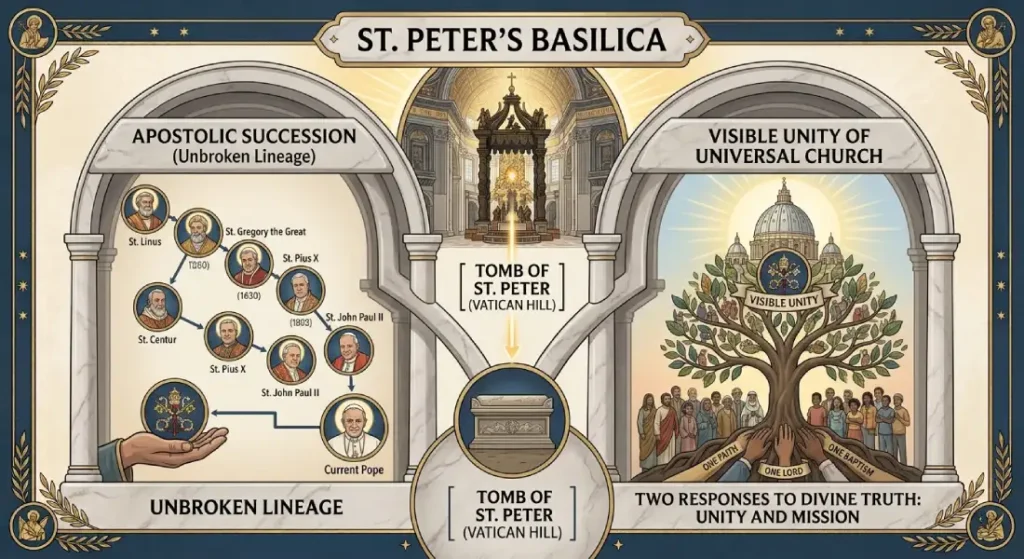
Peter was buried on Vatican Hill, where St. Peter’s Basilica stands today. Archaeological excavations directly beneath the high altar confirmed the presence of the historical apostle’s tomb, fulfilling Christ’s original promise.
Essential Virtues for Catholics Today
- Unwavering Fidelity: Remaining steadfast in the Church founded upon the Rock.
- Authentic Contrition: Turning immediately to God’s mercy after spiritual failure.
- Docility to Grace: Allowing the Holy Spirit to transform natural limitations into heroic sanctity.
Frequently Asked Questions
Jesus Christ personally singled out Simon, renaming him Peter (“Rock”) and granting him the “keys of the kingdom of heaven” with authority to bind and loose (Matthew 16:18–19). The Catholic Church recognizes this event as the divine institution of the Papal Office (CCC 881).
According to ancient Church tradition and early Christian historians, Saint Peter was martyred by crucifixion in Rome under Emperor Nero around AD 64. Out of deep humility, he requested to be crucified upside down, feeling unworthy to die in the exact manner of Christ.
The “keys” symbolize royal administrative authority derived from Eliakim’s office in Isaiah 22:22. In Matthew 16:19, Christ grants Peter unique authority to govern the Church, teach authoritatively on faith and morals, and exercise binding pastoral decisions (CCC 553).
Apostolic Succession is the unbroken line of spiritual authority passed from Saint Peter and the Apostles down to modern Catholic bishops and the Pope. Every Pope serves as the legitimate successor of Saint Peter as the Bishop of Rome (CCC 882).
Related Popes