Pope Leo XIV: Augustinian Spirituality, Papal Succession, and the Modern Church
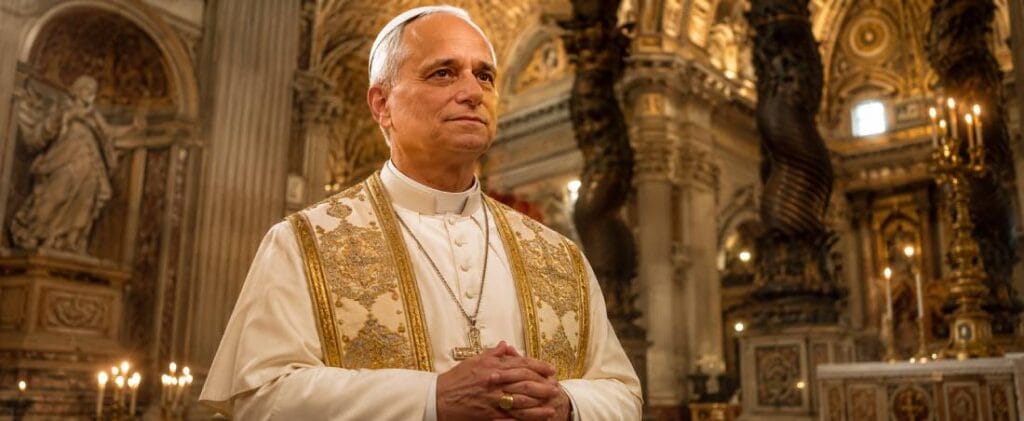
On May 8, 2025, Cardinal Robert Francis Prevost, OSA, was elected as the 267th Bishop of Rome, taking the papal name Leo XIV. Born in Chicago, Illinois, Pope Leo XIV entered history as the first American-born pontiff, the first friar from the Order of St. Augustine elevated to the papacy, and a naturalized citizen of Peru shaped by decades of missionary service.
His pontificate arrives at a critical juncture for the universal Church. Navigating global secularization, internal polarization, and technological transformation, Pope Leo XIV articulates a mission anchored in Eucharistic adoration, Augustinian interiority, and authentic Catholic social doctrine.
Key Milestones of Pope Leo XIV
- Birth & Formation: Born September 14, 1955, in Chicago; earned a B.S. in Mathematics from Villanova University (1977) and a Doctor of Canon Law (JCD) from the Pontifical University of Saint Thomas Aquinas (Angelicum) in Rome (1987).
- Religious Life & Mission: Solemnly professed in the Order of Saint Augustine (1981); ordained a priest in 1982. Served as a missionary priest, seminary rector, and judge in regional ecclesiastical courts in Peru across two decades.
- Governance Experience: Served two terms as Prior General of the Order of Saint Augustine (2001–2013); appointed Bishop of Chiclayo, Peru, by Pope Francis in 2015.
- Curial Elevation: Named Prefect of the Dicastery for Bishops and President of the Pontifical Commission for Latin America in 2023, created a cardinal in September 2023.
- Papal Election: Elected Supreme Pontiff on May 8, 2025, on the fourth ballot of the conclave.
Augustinian Interiority and the Life of Prayer
Pope Leo XIV’s theological and spiritual perspective is fundamentally rooted in the teachings of St. Augustine of Hippo. The Augustinian Tradition emphasizes that authentic Christian action in the world must proceed from interior conversion (conversio cordis) and continuous search for divine truth. As St. Augustine writes: “You have made us for Yourself, O Lord, and our heart is restless until it rests in You” (Confessions, I, 1).
In an age dominated by noise and digital fragmentation, Leo XIV calls Catholics back to the interior life. Active apostolates become spiritually empty if they are separated from personal contemplation and sacramental grace.
The Catechism of the Catholic Church underscores this principle, noting that prayer is a covenant relationship established by God within the human heart (CCC 2560). For Pope Leo XIV, interior prayer is not personal isolation; it is the essential prerequisite for genuine Christian charity and community life (Rule of St. Augustine, Chap. 1).
Synodality Grounded in the Deposit of Faith
A central dimension of Pope Leo XIV’s governance is pastoral accompaniment and synodality—walking together as the People of God (Lumen Gentium, 9). However, authentic synodality within Catholic ecclesiology is never a democratic reinterpretation of doctrine. It is a shared journey of fidelity to divine revelation.
Any authentic dialogue or synodal reflection must remain strictly subject to Sacred Tradition and the unchangeable Deposit of Faith (Depositum Fidei). As St. Thomas Aquinas teaches, the light of faith leads the human intellect to assent to divine truth based on the authority of God who reveals it (Summa Theologiae, II-II, q. 1, a. 1).
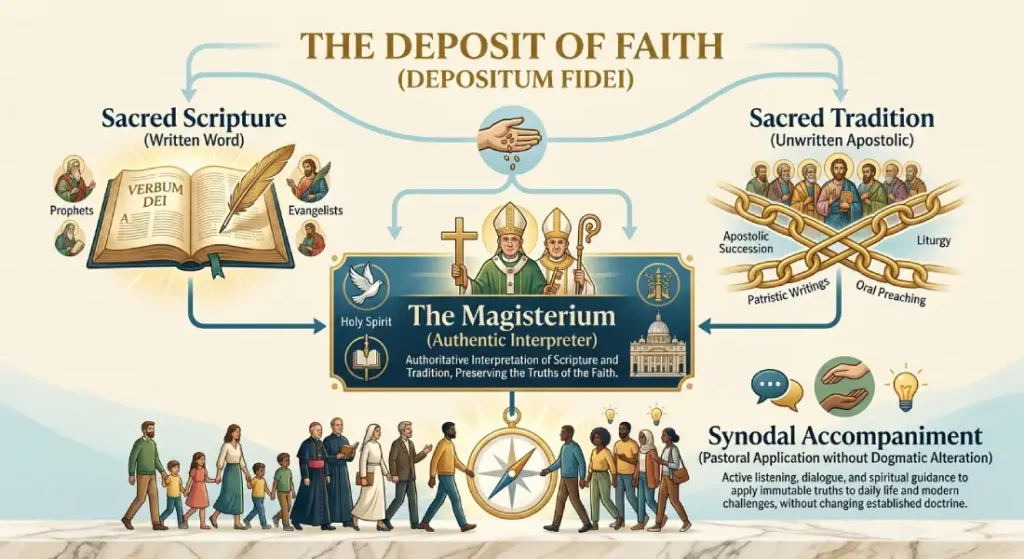
Pastoral accompaniment must always serve to guide souls toward moral conversion, conformity with Christ, and sacramental integrity (CCC 1692). Dialogue that compromises divine law ceases to be charitable; true pastoral care presents the fullness of truth in love (Eph 4:15).
Sacramental Integrity and Eucharistic Adoration
The center of Catholic spiritual life is the Most Holy Eucharist. The Council of Trent dogmatically defined that the Eucharist contains “truly, really, and substantially the body and blood, together with the soul and divinity, of our Lord Jesus Christ” (DS 1651; CCC 1374).
Pope Leo XIV stresses that structural Church renewal cannot occur through administrative reform alone. True Catholic revival springs from the altar and the tabernacle.
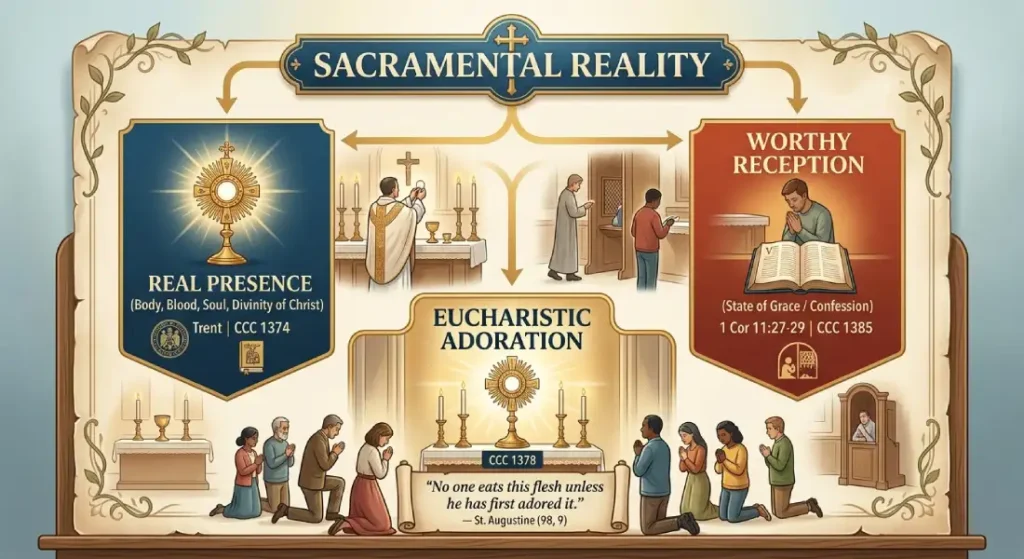
St. Augustine famously connected Eucharistic adoration directly to reception of the Sacrament: “No one eats this flesh unless he has first adored it” (Enarratio in Psalmos, 98, 9). Authentic Eucharistic devotion requires not only outward reverence but proper interior disposition.
This includes freedom from mortal sin through the Sacrament of Penance prior to receiving Holy Communion (CCC 1385; 1 Cor 11:27–29). The Holy Sacrifice of the Mass is the source and summit of the Christian life (Sacrosanctum Concilium, 10), providing the grace necessary to practice supernatural virtue in the modern world.
The Two Leos: Catholic Social Teaching across Centuries
By choosing the papal name Leo XIV, the pontiff explicitly connected his mission to Pope Leo XIII (1878–1903). Pope Leo XIII authored the historic encyclical Rerum Novarum (1891), which laid the foundation for modern Catholic social doctrine amidst the turmoil of the Industrial Revolution.
Pope Leo XIV applies these identical foundational principles—human dignity, solidarity, and subsidiarity—to the technological realities of the 21st century, including Artificial Intelligence, automation, and global labor shifts.
| Dimension | Pope Leo XIII (1878–1903) | Pope Leo XIV (2025–Present) |
| Historical Context | First & Second Industrial Revolutions | Digital Revolution & Artificial Intelligence |
| Primary Social Encyclical | Rerum Novarum (1891) | Magnifica Humanitas (Addressing Digital Ethics & AI) |
| Core Moral Concern | Exploitation of industrial workers, defense of fair wages & private property | Algorithmic reduction of human dignity, protection of human labor against total automation |
| Ecclesial Priority | Scholastic revival (Thomism), defense of Church independence | Augustinian interiority, global missionary discipleship, synodal unity |
| Doctrinal Anchor | Natural Law & Moral Order | Natural Law & Personalist Anthropology (CCC 1930) |
Catholic social teaching is not a political ideology; it flows directly from the Gospel and the dignity of the human person created in the image of God (Imago Dei, Gen 1:27; CCC 1929). As Pope Leo XIV emphasizes, caring for the poor, protecting workers, and defending human life from conception to natural death are unified moral duties rooted in divine law (Gaudium et Spes, 27).
Marian Devotion and Missionary Outreach
Pope Leo XIV’s long service as a missionary in Peru deeply formed his pastoral perspective. In Latin America, popular Marian piety plays a vital role in preserving Catholic identity across generations.
The Mother of God is the exemplar of perfect faith and obedience (Fiat, Lk 1:38). As the Second Vatican Council teaches, Mary’s maternal role toward humanity in no way obscures or diminishes the unique mediation of Christ, but rather shows its power (Lumen Gentium, 60).
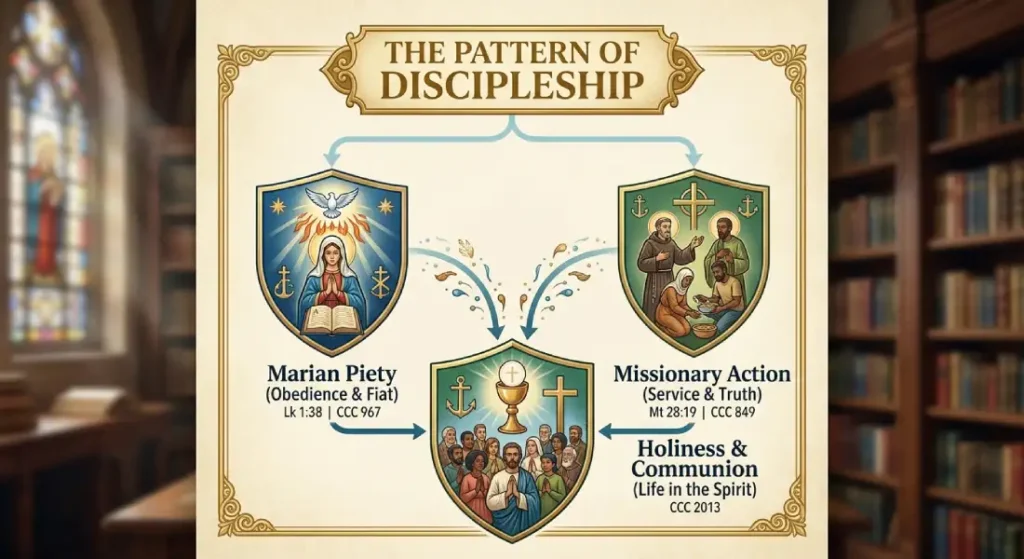
Pope Leo XIV urges the faithful to adopt Marian devotion as a daily habit, particularly through the prayer of the Holy Rosary. By contemplating the mysteries of Christ’s life alongside Mary, Catholics receive the spiritual strength required to perform daily works of mercy (CCC 2447).
Core Spiritual Lessons for the Faithful Today
- Prioritize Daily Eucharistic Adoration: Cultivate interior silence before the Blessed Sacrament to ground active work in divine grace (CCC 2709).
- Frequent the Sacrament of Reconciliation: Maintain a clean conscience through regular confession, preparing your soul for worthy reception of Holy Communion (CCC 1458).
- Immerse Yourself in Sacred Scripture: Read the Word of God daily, following St. Jerome’s principle that “ignorance of Scripture is ignorance of Christ” (CCC 133).
- Live Catholic Social Teaching: Defend the dignity of human life, support fair labor standards, and serve the poor in your local community (CCC 1939).
- Maintain Ecclesial Unity: Avoid divisive polarization by submitting your mind and heart to the unchangeable truths of the Magisterium (CCC 882).
The Call to Universal Holiness
The papacy of Pope Leo XIV serves as a steady call back to the essential foundations of the Catholic faith. The Church does not exist to adapt divine truth to the passing demands of secular culture; rather, she exists to transform the world through the power of the Gospel (Rom 12:2).
By combining Augustinian reflection, Eucharistic adoration, and active missionary service, Pope Leo XIV presents a path forward for Catholics worldwide. True spiritual renewal occurs whenever souls turn toward Christ, receive His grace through the Sacraments, and live out their universal call to holiness within the communion of the Church (Lumen Gentium, 39; CCC 2013).
Frequently Asked Questions
Cardinal Prevost chose the name Leo XIV to align his pontificate with Pope Leo XIII, author of Rerum Novarum (1891). While Leo XIII addressed industrialization, Pope Leo XIV applies Catholic social teaching to the digital era, focusing on human dignity, worker protections, and ethical artificial intelligence (CCC 1930).
Pope Leo XIV is a friar of the Order of Saint Augustine (OSA), making him the first Augustinian pope in history. His spirituality is profoundly shaped by St. Augustine’s writings, prioritizing interior prayer (Confessions), Eucharistic adoration, community life, and defense of divine grace against modern secularism (CCC 2560).
Pope Leo XIV views synodality as pastoral accompaniment that remains strictly subject to the unchangeable Deposit of Faith (Depositum Fidei). Citing St. Thomas Aquinas (Summa Theologiae, II-II, q. 1, a. 1), he emphasizes that synodal dialogue must guide souls toward moral conversion without compromising Church dogma (CCC 1692).
Pope Leo XIV teaches that the Eucharist is the real, substantial presence of Christ (Council of Trent, DS 1651; CCC 1374). Following St. Augustine (Enarratio in Psalmos, 98, 9), he stresses that Catholics must adore the Eucharist and prepare their souls through Sacramental Confession before receiving Communion in a state of grace (CCC 1385; 1 Cor 11:27–29).
Related Popes