Pope Saint Alexander I
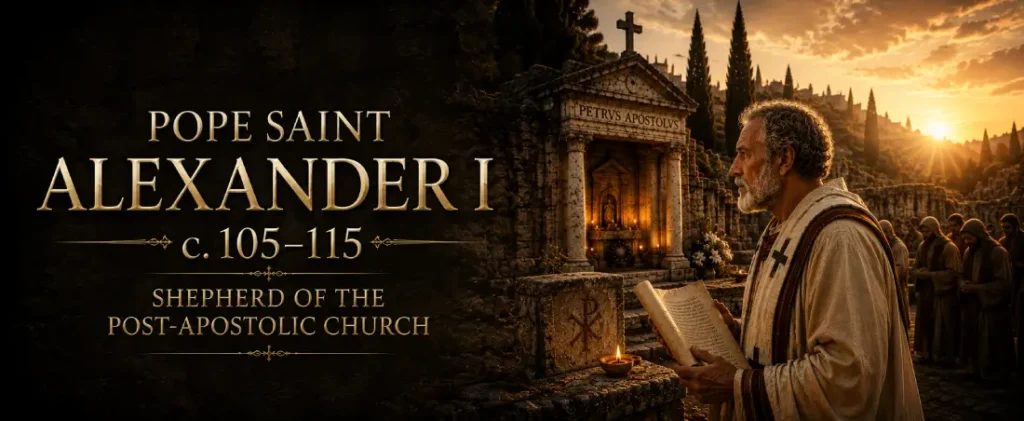
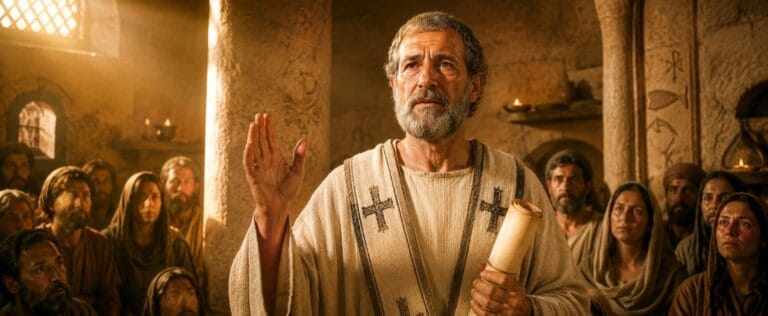
Saint Alexander I stands among the courageous shepherds who guided the Catholic Church during its fragile earliest years. Serving as Pope during the height of the Roman Empire, he led Christians through uncertainty, persecution, and spiritual testing with remarkable faith and perseverance.
Though historical records from the second century remain limited, the memory of Saint Alexander I has endured for nearly two thousand years because of his steadfast witness to Christ. Catholics remember him not merely as an administrator of the Church, but as a holy pastor who defended apostolic tradition, nurtured sacramental life, and ultimately gave his life for the Gospel.
His papacy reminds modern believers that the Church was built not through worldly power, but through prayer, sacrifice, and unwavering trust in Jesus Christ.
Early Life and Background
Very little historically certain information survives regarding the early life of Saint Alexander I, which is common for many popes of the Early Church period. Ancient traditions identify him as a Roman by birth, raised within the cultural and political atmosphere of the Roman Empire during the reigns of emperors hostile to Christianity.
Alexander likely encountered Christianity through the growing Christian communities established by the Apostles and their disciples. The Church at this time remained largely underground. Christians gathered quietly in homes for prayer, the celebration of the Eucharist, and instruction in apostolic teaching.
His spiritual formation would have centered on:
- Sacred Scripture
- Oral apostolic tradition
- Eucharistic worship
- Prayer and fasting
- Witnessing the courage of martyrs
As a priest and Church leader before becoming Pope, Alexander gained a reputation for fidelity, humility, and devotion. The early Christian clergy carried immense responsibility because bishops and priests often risked imprisonment or death simply for preaching Christ publicly.
The spirituality of the early Church profoundly shaped Alexander’s character. Christians of this era lived with a deep awareness that discipleship required sacrifice. This atmosphere formed leaders who were spiritually disciplined, fearless in faith, and deeply committed to preserving the teachings handed down from the Apostles.
Election to the Papacy
Saint Alexander I became Pope around 105 AD following the death of Pope Evaristus. The Catholic Church at the time remained relatively small but was spreading steadily throughout the Roman Empire.
His election occurred during a difficult historical period. Christianity was still considered illegal under Roman law, and Christians were often viewed with suspicion by imperial authorities. Local persecutions erupted periodically, creating fear among believers while also strengthening the faith of many communities.
The Church faced several major concerns during this period:
- Preserving apostolic teaching accurately
- Organizing growing Christian communities
- Protecting unity among believers
- Encouraging Christians facing persecution
- Defending the sacredness of the sacraments
Alexander was chosen because of his faithfulness, leadership, and commitment to preserving the traditions received from the Apostles. Early Christians desired leaders who embodied holiness rather than political ambition, and the Bishop of Rome carried the heavy burden of strengthening the universal Church during dangerous times.
Papacy and Leadership
Guardian of Apostolic Tradition
Saint Alexander I served during a foundational era when the Church was still defining many of its liturgical and pastoral practices. Ancient traditions attribute several developments in worship and sacramental life to his leadership, though historians acknowledge that some accounts may have developed over time.
He is traditionally associated with:
- Introducing or promoting the use of blessed water in Christian homes
- Encouraging liturgical reverence surrounding the Eucharist
- Strengthening the prayers used during Mass
Whether these traditions originated directly with him or became associated with his memory later, they reflect the Church’s understanding of Alexander as a Pope deeply committed to sacred worship.
Leadership During Persecution
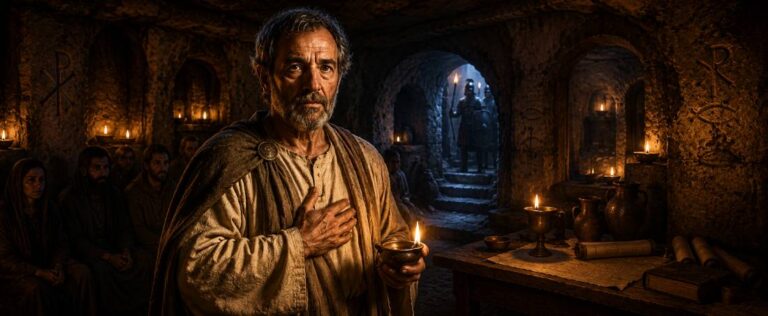
The Roman Empire continued to view Christians with distrust during Alexander’s papacy. Christians refused to worship pagan gods or offer sacrifices to the emperor, which led many Romans to accuse them of disloyalty.
Alexander guided the faithful with courage during this climate of fear. He encouraged believers to remain faithful to Christ despite threats of imprisonment or execution. The Pope’s role in this era was deeply pastoral:
- Strengthening persecuted Christians
- Preserving unity among churches
- Protecting apostolic doctrine
- Supporting clergy serving in secret
The witness of leaders like Alexander helped Christianity survive some of its most dangerous early decades.
Defender of Unity
As Christianity expanded geographically, maintaining unity became increasingly important. Alexander worked to preserve communion among believers and ensure that local Christian communities remained faithful to the teachings handed down from the Apostles.
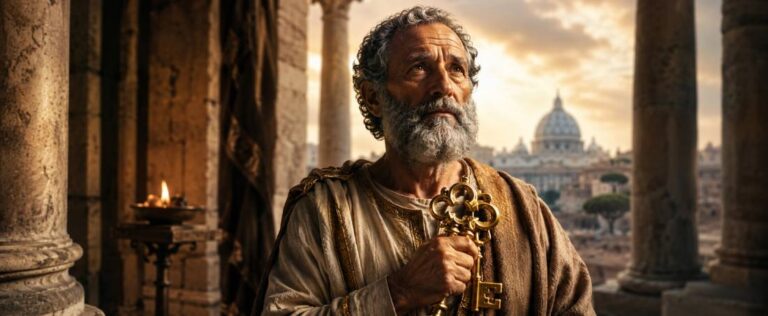
The early Popes served as visible signs of unity for Christians scattered throughout the empire. Saint Alexander I helped reinforce the authority and continuity of the Roman See as the Church continued growing beyond its earliest communities.
Prayer Life and Spirituality
The spirituality of Saint Alexander I reflected the intense faith of the early Christian martyrs. Christians during this period lived with constant awareness that following Christ could lead to suffering or death. As a result, prayer was not merely devotional—it was essential for survival and perseverance.
Alexander’s life likely revolved around:
- Daily Eucharistic worship
- Meditation on Sacred Scripture
- Fasting and penance
- Prayer with persecuted Christians
- Encouraging the faithful through pastoral care
The Eucharist stood at the center of early Christian spirituality. The first Christians believed profoundly in the real presence of Christ in the sacrament, and Alexander’s leadership emphasized reverence toward the sacred mysteries of the Church.
Tradition also associates him with promoting the use of blessed water as a sign of purification and protection. This reflected the Church’s growing sacramental understanding of how God’s grace works through sacred signs.
Saint Alexander I offers modern Catholics a powerful spiritual example:
- Courage rooted in prayer
- Fidelity during hardship
- Love for the sacraments
- Trust in Christ amid uncertainty
- Humility in leadership
His witness reminds believers that holiness is often forged quietly through perseverance, prayer, and steadfast faithfulness to God.
Challenges and Trials
Roman Hostility Toward Christianity
The greatest challenge of Alexander’s papacy was the ongoing persecution of Christians throughout the Roman Empire. Although empire-wide persecution varied in intensity, local authorities frequently targeted Christians for refusing pagan worship.
Christians risked:
- Arrest
- Torture
- Loss of property
- Public humiliation
- Execution
The Pope himself lived under constant danger.
Preserving Church Unity
The Church was still developing structures of leadership and communication. Maintaining doctrinal unity among scattered Christian communities required wisdom and vigilance.
Alexander worked to preserve:
- Apostolic teaching
- Liturgical consistency
- Ecclesial communion
- Moral discipline among believers
Martyrdom
Ancient Christian tradition honors Saint Alexander I as a martyr. While some historical details surrounding his death remain uncertain, the Church has long venerated him as one who suffered for the faith.
The witness of martyr popes carried enormous spiritual importance in the early Church. Their willingness to die for Christ strengthened persecuted Christians and demonstrated that the Gospel was worth every sacrifice.
Death and Legacy
Saint Alexander I died around 115 AD in Rome. According to longstanding Church tradition, he was martyred for his Christian faith during a period of Roman hostility toward the Church.
He was buried near Rome, and devotion to him spread among early Christians who honored his courage and fidelity. Over time, the Church formally recognized him among the saints and martyrs of the Catholic faith.
His legacy remains significant because he helped preserve the Church during one of its most vulnerable eras. He belonged to the generation of leaders closest to the Apostles themselves, serving as a bridge between the apostolic age and the growing institutional Church.
Saint Alexander I influenced future generations through:
- His witness of courage under persecution
- His commitment to sacramental reverence
- His defense of apostolic unity
- His example of pastoral leadership
Today, Catholics continue to honor him as one of the early successors of Saint Peter who faithfully carried forward the mission entrusted by Christ to His Church.
Lessons Catholics Can Learn Today
- Remain faithful to Christ even during cultural opposition
- Build daily life around prayer and the sacraments
- Preserve unity within the Church
- Practice courage rooted in trust in God
- Lead others with humility and service
- Stay committed to apostolic truth
- Remember that holiness often requires sacrifice
- Draw spiritual strength from the Eucharist
Conclusion
Saint Alexander I lived during one of the most dangerous periods in Christian history, yet he remained unwavering in his love for Christ and His Church. He shepherded believers through fear, persecution, and uncertainty while preserving the sacred traditions handed down from the Apostles.
His life continues to inspire Catholics because it reveals the true foundation of the Church: not political power or earthly influence, but faithfulness, holiness, prayer, and sacrificial love.
In remembering Saint Alexander I, Catholics are invited to renew their devotion to the Eucharist, strengthen their prayer lives, and stand courageously for Christ in every generation. His witness reminds the faithful that even in the darkest moments of history, God continues guiding His Church through holy shepherds who trust completely in Him.
Related Popes