
Babies Born Alive After Abortion: A Catholic Call to Prayer and Action
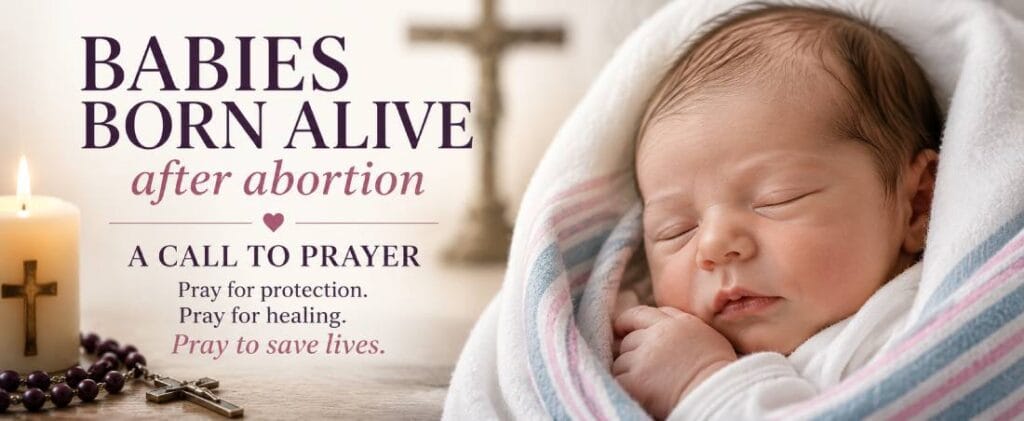
A troubling report from Alberta revealed that 17 infants were born alive following failed abortion procedures in that province alone in a single year. Across Canada, official health data confirms at least 129 infants survived abortion attempts during the same period. Pro-life advocates and healthcare observers warn that many of these vulnerable infants receive no medical intervention, resuscitation, or palliative care, effectively left to die.
This reality presents a urgent moral responsibility for the Church and all people of good will. Human life must be respected and protected absolutely from the moment of conception. When an abortion procedure fails and a child enters the world alive, that infant possesses an inviolable right to life and deserves immediate, compassionate medical care.
The Moral and Theological Reality of Abortion Survivors
The statistics from Alberta and across Canada are not abstract figures or rare anomalies. Each of the 129 surviving infants represents a unique human person endowed by God with an immortal soul from the moment of conception.
In many healthcare settings lacking explicit legal mandates, medical personnel face institutional pressure or legal ambiguity regarding surviving newborns. Rather than receiving standard neonatal care, infants who might otherwise survive with proper medical intervention are frequently subjected to lethal neglect.
“The direct and voluntary killing of an innocent human being is always gravely immoral…
No circumstance, no purpose, no law whatsoever can ever make licit an act which is intrinsically illicit.”
— Pope St. John Paul II, Evangelium Vitae, n. 57
Sacred Scripture affirms the profound personal dignity of the unborn child: “For you created my inmost being; you knit me together in my mother’s womb” (Psalm 139:13). From a theological standpoint, an infant born alive after a failed abortion is a complete human person under the law of God. The Catechism of the Catholic Church specifies that embryos and newborns must be defended in their integrity, cared for, and healed as far as possible, like any other human being (CCC 2274).
Comparative Framework: Catholic Teaching vs. Legal Realities
To understand the scope of this crisis, it is essential to examine how Church teaching directly addresses the protection of living infants compared to current statutory frameworks.
| Metric / Dimension | Authentic Catholic Teaching & Canon Law | Current Legal Reality (Canada & Unprotected Jurisdictions) |
| Status of Newborn | Complete human person endowed with inherent dignity and the right to life (CCC 2270). | Legal vacuum; lack of explicit federal legal protections for infants born post-abortion. |
| Medical Obligation | Mandatory provision of ordinary neonatal care and palliative comfort (CCC 2277–2279). | Standard medical protocols often allow withholding of resuscitation or care. |
| Sacramental Duty | Sacramental Baptism must be conferred if the infant is living (Canon 871 CIC). | Ignored or omitted entirely within secular medical institutions. |
| Moral Responsibility | Absolute rejection of lethal omission; obligation of conscientious objection (Evangelium Vitae, n. 73). | Institutional pressures placed upon medical staff to refrain from intervention. |
Catholic Moral Principles and the Duty of Care
The failure to provide medical treatment to an infant born alive constitutes a grave moral disorder. Catholic moral theology draws a clear distinction between extraordinary medical interventions and ordinary care. basic warmth, hydration, oxygen, and medical stabilization constitute ordinary care that can never be licitly withheld from a newborn (CCC 2277).
Canon Law also addresses the pastoral care of infants in critical conditions. Canon 871 of the Code of Canon Law mandates: “Aborted fetuses, if they are alive, are to be baptized in so far as this is possible.” This highlights the Church’s long-standing recognition that an infant delivered at any stage of gestation possesses an immortal soul and is capable of receiving the grace of salvation.
When infants die without Baptism due to failed medical intervention or abandonment, the Church instructs the faithful to entrust them entirely to the infinite mercy of God. As the Catechism explains, “The great mercy of God who desires that all men should be saved… allow us to hope that there is a way of salvation for children who have died without Baptism” (CCC 1261).
Four Concrete Steps for Catholics to Respond
Catholic social teaching requires the faithful to witness to the truth in the public square and protect the most vulnerable (James 1:27). Protecting abortion survivors requires spiritual, educational, and civic action.
1. Fervent Spiritual Intercession
Commit to regular prayer and Eucharistic Adoration for the protection of human life. Pray specifically for healthcare workers—nurses, physicians, and midwives—that they may be granted the moral courage to exercise conscientious objection and provide lifesaving care to surviving infants.
2. Education on Magisterial Teaching
Inform yourself and your parish community on authentic Catholic moral principles regarding bioethics and the sanctity of life. Utilizing resources such as Pope St. John Paul II’s encyclical Evangelium Vitae and the Catechism of the Catholic Church ensures that pro-life advocacy remains anchored in solid doctrine.
3. Support for Pro-Life Pregnancy and Healthcare Ministries
Direct financial support and volunteer effort toward Catholic pregnancy centers, pro-life legal defense funds, and organizations advocating for born-alive protection laws. These institutions provide vital alternatives to women in crisis and advocate for systemic legal protections.
4. Advocacy in the Public Square
Contact elected representatives to urge the passage and enforcement of explicit “Born-Alive Infant Protection” legislation. Catholic citizens have a duty to participate in public life and encourage legislators to enact laws that protect every human person from the moment of birth.
Focused Intentions for Pro-Life Prayer
- For Infant Survivors: We pray for all infants born alive following failed abortions. We entrust those who have lost their lives to the eternal mercy of God, and pray for the physical protection of those currently in danger.
- For Medical Professionals: We pray for physicians, nurses, and clinical staff. May the Holy Spirit grant them wisdom and fortitude to uphold their Hippocratic duty and refuse participation in lethal neglect.
- For Lawmakers and Judges: We pray for legislative leaders in Canada, the United States, and worldwide. May God enlighten their consciences to draft and enforce laws safeguarding every newborn child.
- For Mothers and Families: We pray for women experiencing unexpected or difficult pregnancies. May they receive compassionate support, material aid, and spiritual strength to choose life for their children.
Frequently Asked Questions (Catholic Bioethics & Born-Alive Protection)
The Church teaches that every human person possesses inherent dignity from conception to natural death (CCC 2270). If an infant survives an abortion attempt, that child is a living newborn person with an absolute right to life, ordinary medical treatment, and compassionate palliative care (Evangelium Vitae, n. 57).
Yes. Canon 871 of the Code of Canon Law stipulates that if an aborted fetus or infant is alive, they are to be baptized whenever possible. In emergency situations where a priest is unavailable, any person with the required intention can validly baptize the child using natural water and the Trinitarian formula (CCC 1256).
Catholic healthcare workers are strictly forbidden from participating in direct abortion or the lethal neglect of a newborn (CCC 2277). They are morally obligated to exercise conscientious objection against institutional policies that deny basic medical care to born-alive infants (Evangelium Vitae, n. 73).
Through steadfast prayer, clear public teaching, and active civic participation, the faithful fulfill Christ’s command to defend the least among us. By standing as a voice for abortion survivors, the Church continues her witness to the Gospel of Life.
Source: LifeSiteNews
Continue Your Faith Journey
Venerable Jérôme Lejeune, Pope Leo XIV, and the Inviolable Dignity of Human Life
Explore how Venerable Jérôme Lejeune's scientific witness and Catholic teaching defend the sacred dignity of human life against modern programmed death. Learn…
What the Catholic Church Teaches About Surrogacy: Dignity, Marriage, and the Gift of Life
Explore what the Catholic Church teaches about surrogacy, human dignity, and the sacred marital covenant. Learn why the Magisterium protects children as…
Catholic Church Teaching on IVF: Doctrine, Dignity, and Moral Alternatives
Explore the Catholic Church's official teaching on IVF, rooted in the dignity of human life and marital union. Learn about licit alternatives…