
Mobilizing the Faithful: How to Actively Support the Holy Father’s Monthly Prayer Intentions
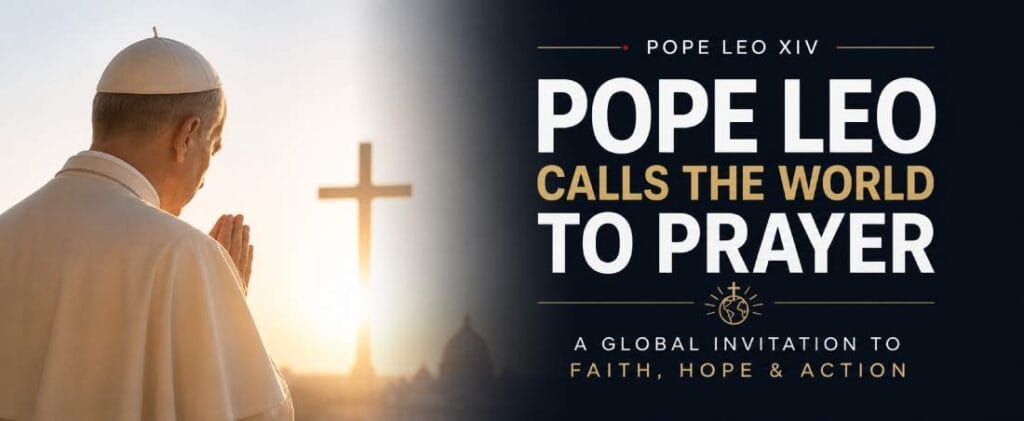
When the Supreme Pontiff issues a monthly prayer intention to the universal Church, it is not a mere suggestion or casual thought. It represents a targeted call to spiritual alignment for the Mystical Body of Christ. Surrendering private prayer intentions to join a unified global petition connects millions of Catholics across every continent, directing spiritual focus toward pressing needs in the Church and the world.
Throughout Church history—from the urgent decrees of Pope Leo XIII, who instituted the historic Leonine Prayers after Mass to defend against spiritual darkness, to the modern calls issued through the Pope’s Worldwide Prayer Network—uniting our petitions with the Successor of Peter carries profound ecclesial weight. By understanding the theological foundation of papal intercession and adopting concrete devotional practices, every Catholic household can actively answer the Holy Father’s call to prayer.
The Theological Foundation of Papal Intercession
To understand why praying for the Supreme Pontiff’s monthly intentions matters, one must examine the nature of ecclesial communion and the structure of Christian intercession.
1. Ecclesial Solidarity in the Mystical Body
The Catechism of the Catholic Church teaches that “the Church is a communion of saints” (CCC 946). Because all baptized believers form one body in Christ, the spiritual goods of each member benefit all others (CCC 947). When Catholics worldwide pray for the exact same monthly intention, they break out of individualist piety and participate directly in the universal Church’s mission. Saint Thomas Aquinas notes that unity in charity gives common prayer a distinct efficacy: “The prayer of one person can benefit another if done in charity, because all believers are one body in Christ” (Summa Theologiae, II-II, Q. 83, A. 7).
2. Participation in the Treasury of the Church (Ex Opere Operantis Ecclesiae)
While individual prayer relies on personal devotion, prayer offered in union with the Chief Pastor of the Church draws upon the spiritual treasury of the entire Mystical Body. This collective intercession (ex opere operantis Ecclesiae) strengthens individual petitions by aligning them with the prayer of Christ’s earthly representative (CCC 881–882).
3. Satisfaction for Sins and Indulgenced Works
Praying for the intentions of the Holy Father is not only a charitable work; it is also one of the mandatory conditions prescribed by the Church for gaining a plenary indulgence. As Pope Paul VI affirmed in the Apostolic Constitution Indulgenced Doctrine (Indulgentiarum Doctrina, 1967), an indulgence is the remission before God of the temporal punishment due to sins whose guilt has already been forgiven (CCC 1471). Offering these prayers fulfills our duty of reparation and allows us to assist the holy souls in Purgatory by way of suffrage (CCC 1479).
The Legacy of Papal Prayer Decrees: From Leo XIII to Today
The practice of mobilizing the entire Catholic world through targeted prayer has deep historical precedents. In 1884, Pope Leo XIII issued directives mandating specific prayers—including the Prayer to St. Michael the Archangel—to be recited at the foot of the altar after every Low Mass. Known as the Leonine Prayers, this papal initiative aimed directly at defending the universal Church against apostasy, moral confusion, and spiritual destruction.
Today, this legacy continues through the Pope’s Worldwide Prayer Network (originally founded as the Apostleship of Prayer in 1844). Each year, the reigning Pope entrusts to this network two main monthly intentions: one regarding universal challenges in society and evangelization, and another addressing specific pastoral concerns. By uniting our daily lives with these intentions, we participate in the modern continuation of Pope Leo XIII’s call to spiritual vigilance.
Four Concrete Steps to Put Papal Intentions into Daily Practice
Transforming a papal prayer request from a passive awareness into an active spiritual discipline requires daily structure. Below are four actionable ways to integrate the Holy Father’s intentions into your personal, family, and parish life.
1. Make the Daily Morning Offering
The traditional Morning Offering is the primary gateway to living out the Pope’s prayer intentions. By making an intentional act of consecration each morning, you offer all your daily actions, joys, works, and sufferings to God for the specific intentions of the Holy Father.
Daily Morning Offering Prayer:
“O Jesus, through the Immaculate Heart of Mary, I offer You my prayers, works, joys, and sufferings of this day, for all the intentions of Your Sacred Heart, in union with the Holy Sacrifice of the Mass throughout the world, for the salvation of souls, the reparation of sins, the reunion of all Christians, and in particular for the intentions of the Holy Father this month. Amen.”
2. Dedicate a Rosary Decade or Full Psalter
The Holy Rosary is an extraordinarily effective weapon of intercession. When praying your daily Rosary, explicitly state the monthly intention before starting a decade or the entire five-decade chaplet. Asking the Blessed Virgin Mary—Mother of the Church—to present these intentions before the throne of God ensures our petitions are purified through her perfect maternal mediation (CCC 2677).
3. Combine Intentions with Physical Penance and Fasting
Authentic intercession in Catholic tradition is always paired with mortification. Saint Augustine writes that “fasting cleanses the soul, raises the mind, subjects one’s flesh to the spirit, renders the heart contrite and humble, scatters the clouds of concupiscence, and enkindles the true light of chastity.”
- Fast from one meal a week or abstain from meat on Fridays specifically for the Pope’s intention.
- Practice digital mortification by fasting from social media or unnecessary media consumption for set periods during the month.
- Accept daily inconveniences, bodily pain, or difficult interactions without complaint, offering up the discomfort to God for the fulfillment of the papal request.
4. Mobilize Parish Life and Eucharistic Adoration
Do not isolate prayer within your personal sanctuary. Bring the Holy Father’s monthly intention into your parish ecosystem:
- Eucharistic Adoration: Spend an hour in silent adoration before the Most Blessed Sacrament, offering a Holy Hour explicitly for the universal needs outlined by the Pope.
- Family Rosary: Announce the Holy Father’s monthly intention at the beginning of family evening prayers so children learn the importance of global Catholic unity.
- Parish Bulletins and Groups: Request that parish leaders feature the monthly intention in the weekly bulletin or pray for it during the Universal Prayer (General Intercessions) at Holy Mass.
Essential Requirements for Gaining a Plenary Indulgence
Praying for the Holy Father’s intention is required to gain a plenary indulgence for an indulgenced act (such as spending 30 minutes in Eucharistic Adoration, reading Sacred Scripture for half an hour, or praying the Marian Rosary in a church or family group).
| Condition | Requirement Details | Magisterial Reference |
| Indulgenced Work | Perform the prescribed act of piety, charity, or penance with devotion. | Enchiridion Indulgentiarum, Norm 17 |
| Sacramental Confession | Make an individual sacramental confession within several days (roughly 20 days prior or after). | CCC 1477; Norm 20 §1 |
| Eucharistic Communion | Receive Holy Communion worthily for each plenary indulgence sought. | CCC 1388; Norm 20 §1 |
| Prayer for the Pope | Pray one Our Father and one Hail Mary (or any vocal prayer) for the Pope’s intentions. | Norm 20 §5 |
| Detachment from Sin | Possess an interior disposition of complete detachment from all sin, including venial sin. | CCC 1471; Norm 20 §1 |
Frequently Asked Questions (PAA)
Praying for the Pope’s intentions does not mean praying for the personal or political opinions of the individual man serving as Pope. Rather, it means praying for the objective spiritual needs of the universal Church as designated by the Supreme Pontiff, including the spread of the Gospel, the conversion of sinners, peace among nations, and specific monthly societal or pastoral concerns.
No. According to Canon Law and the Enchiridion Indulgentiarum (Norm 3), plenary and partial indulgences can always be applied to oneself or offered by way of suffrage for the souls of the deceased in Purgatory, but they cannot be transferred to another living person on earth.
Pope Leo XIII instituted the Leonine Prayers in 1884 to invoke divine protection for the Holy See and the Church against spiritual warfare, secular anti-clericalism, and moral decay. After the resolution of the Roman Question, Pope Pius XI requested in 1930 that these prayers be offered specifically for the conversion of Russia.
The Holy Father’s official prayer intentions are issued on a monthly basis through the Pope’s Worldwide Prayer Network. Each month highlights a specific global issue, ranging from medical ethics and humanitarian crises to deep theological and missionary renewals.
Conclusion: Living as Active Intercessors for the Universal Church
By aligning daily sacrifices, Holy Communions, Rosaries, and penances with the intentions of the Supreme Pontiff, Catholics fulfill their calling as active members of the Mystical Body of Christ. Taking up this monthly spiritual discipline ensures that personal piety remains oriented toward the building up of Christ’s Kingdom, supplying spiritual strength to the universal Church across the globe.
Continue Your Faith Journey
Catholic Prayer for Adult Child Who Left the Faith: Doctrinal & Intercessory Action Plan
Discover how Catholic parents can overcome grief and guilt when an adult child leaves the Church. Anchored in Scripture, Church teaching, and…

Why Do Catholics Have Statues? Church Teaching, Scripture, and Sacred Art
Do Catholics worship statues? Explore the biblical foundation, Church councils, and theological distinctions between latria and dulia that explain why sacred images…
What Is Eucharistic Adoration? A Catholic Guide to the Real Presence
Discover the rich Catholic tradition of Eucharistic adoration and the Real Presence of Christ. Learn how to make a transformative Holy Hour…