
Journey of Faith: The Resurgence of Traditional Catholic Pilgrimages
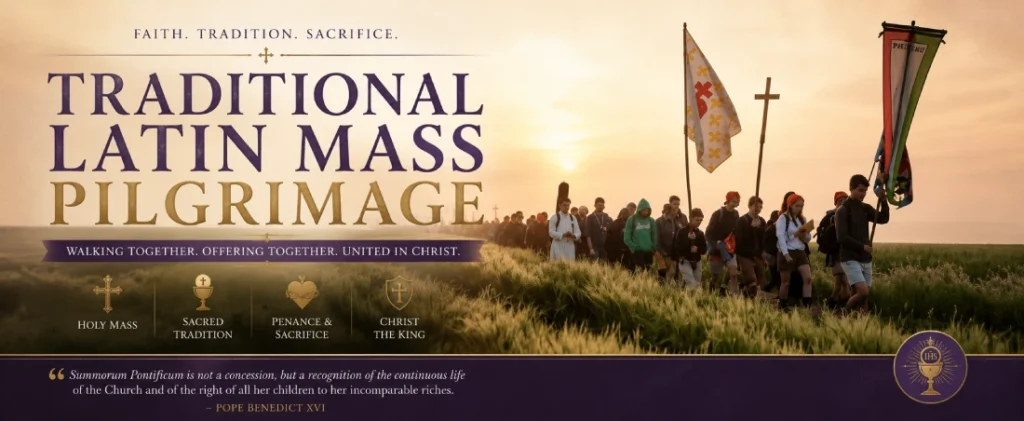
Across the countryside of Europe and North America, an unprecedented spiritual movement is underway. Thousands of young Catholics, carrying heavy wooden crosses and parish banners, are marching dozens of miles along dirt paths to ancient holy shrines.
Defying secular forecasts of religious decline, traditional walking pilgrimages are breaking historical attendance records. From the fields of France to the mountain passes of Spain and the valleys of New York, faithful of all ages are reclaiming the Church’s ancient heritage of penance, prayer, and Eucharistic devotion.
Why Gen Z and Millennials Are Flocking to Pilgrimages
The rapid growth of traditional pilgrimages is overwhelmingly driven by Gen Z and Millennials. In a culture saturated with constant digital noise and instant gratification, a physical pilgrimage offers a transformative alternative:
- Sacred Silence & Prayer: Stepping away from smartphones allows pilgrims to hear the “still, small voice” of God (1 Kings 19:12).
- Physical Penance & Reparation: Walking 20 to 30 miles daily with blisters and heavy packs transforms physical hardship into a spiritual offering for families and the Universal Church.
- Sacred Liturgical Reverence: The solemnity, Gregorian chant, and traditional form of the Mass—celebrated according to the 1962 Roman Missal with proper ecclesiastical authorization—draw souls deeply into the Eucharistic Sacrifice (CCC 1382).
- Authentic Catholic Fraternity: Walking in organized groups (“chapters”) creates enduring bonds of Catholic brotherhood and sisterhood rooted in shared virtue.
Global Overview: Major Traditional Walking Pilgrimages
| Pilgrimage | Location / Route | Distance | Timing | Destination Shrine |
| Chartres Pilgrimage | Paris to Chartres, France | 60 miles (3 days) | Pentecost Weekend | Cathedral of Notre-Dame de Chartres |
| Covadonga Pilgrimage | Oviedo to Covadonga, Spain | ~60 miles (3 days) | Late July | Holy Cave of Our Lady of Covadonga |
| Pilgrimage for Restoration | Adirondacks to Auriesville, NY | 65 miles (4 days) | Late September | Shrine of the North American Martyrs |
| Populus Summorum Pontificum | Rome, Italy | Processional Route | October | St. Peter’s Basilica |
1. The Chartres Pilgrimage (Notre-Dame de Chrétienté – France)
The undisputed flagship of traditional pilgrimages. Every Pentecost weekend, nearly 20,000 pilgrims walk 60 miles from Notre-Dame de Paris to the Gothic Cathedral of Notre-Dame de Chartres.
2. Covadonga Pilgrimage (Nuestra Señora de Cristiandad – Spain)
A challenging 3-day march through the mountain roads of Asturias, leading faithful from Oviedo to the cave shrine of Our Lady of Covadonga.
3. Populus Summorum Pontificum Pilgrimage (Rome, Italy)
An annual international gathering in the Holy City where pilgrims, religious, and clergy walk in solemn Eucharistic procession through Rome to St. Peter’s Basilica.
4. Pilgrimage for Restoration (Auriesville, New York)
North America’s premier traditional walk, guiding pilgrims through upstate New York to the site where St. Isaac Jogues and his companions gave their lives for Christ.
Sacramental Fruits on the March
A Catholic pilgrimage is a mobile retreat. Throughout the journey, priests walk alongside the marching columns, hearing confessions continuously for hours. Under Canon Law (CIC Can. 1230–1234), holy shrines and pilgrimages serve as vital instruments for interior conversion and sacramental renewal.
Each day culminates in a High Mass celebrated in open fields or historical basilicas, accompanied by Gregorian chant and sacred polyphony. Eucharistic Adoration under the stars gives weary pilgrims the grace to rise at dawn and march again.
4 Action Steps to Take Your Own Pilgrimage Journey
You do not need to cross an ocean to experience the grace of a pilgrimage. Here is how to begin:
- Join a Regional Pilgrimage: Search for local walking pilgrimages within your diocese or region. Many apostolates host single-day or weekend walks to cathedral sites or diocesan shrines.
- Offer Up Daily Penances: If physical travel is impossible, unite your daily trials, duties of state, and mortifications to the Suffering of Christ (Col. 1:24) for the intentions of the Church, participating spiritually through the Communion of Saints (CCC 946–953).
- Incorporate Penance into Prayer: Prepare your soul by offering daily mortifications—fasting, silent mental prayer, or making a Holy Hour before the Blessed Sacrament (CCC 1378).
- Form a Parish Chapter: Organize friends, family, or young adult groups to walk together to a nearby holy shrine or historic church.
Frequently Asked Questions (FAQ)
According to the Catechism of the Catholic Church (CCC 2691), pilgrimages are privileged steps for renewing prayer. They act as an outward act of piety (latria toward God and veneration toward the Saints), symbolizing the earthly Church’s journey toward Heaven.
St. Paul writes in Colossians 1:24, “I rejoice in my sufferings for your sake, and in my flesh I complete what is lacking in Christ’s afflictions for the sake of his body, that is, the church.” Through the doctrine of the Communion of Saints (CCC 1476–1477), Catholics can offer up physical fatigue and soreness as an act of vicarious satisfaction and intercession for souls.
Masses celebrated according to the 1962 Roman Missal on pilgrimages are conducted under the pastoral care of validly ordained Catholic priests with proper faculties from the local diocesan Bishop and Apostolic See, in compliance with Traditionis Custodes and Canon Law (CIC Can. 838).
Walking Toward Eternity
The surge in traditional Catholic pilgrimages demonstrates that authentic Catholic piety, sacred music, and physical penance continue to draw souls. As thousands of young faithful lace up their boots and raise their voices in ancient Latin hymns, they offer a radiant witness of hope to a world searching for eternal truth.
Photo credit: The pilgrims walk from dusk to dawn. (photo: Notre-Dame de Chrétienté)