
Vatican Marriage Summit: How Rome Is Mobilizing Bishops to Renew Sacramental Family Life
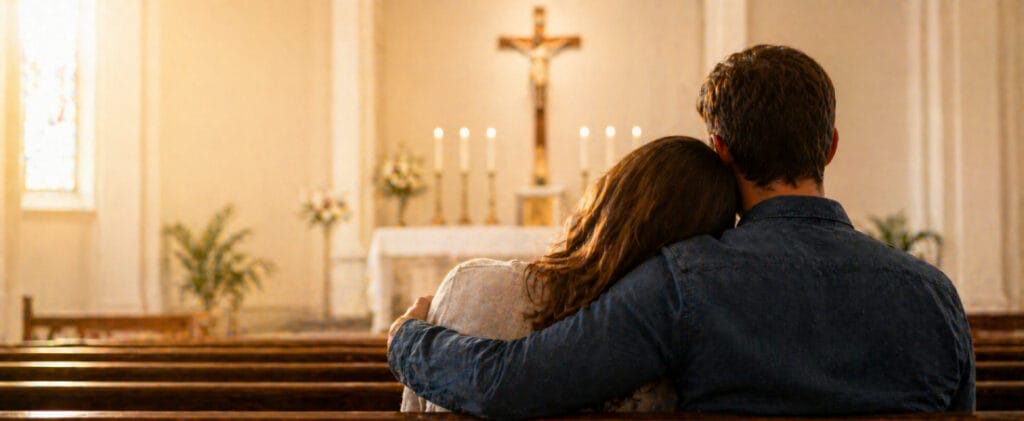
The Vatican has officially convened a global summit gathering the presidents of all Catholic bishops’ conferences in Rome. Directed by the Holy See, this high-level assembly addresses what Pope Leo XIV and church leaders identify as an unprecedented crisis facing the institution of holy matrimony. Across North America, Europe, and Latin America, declining marriage rates, rising cohabitation, and widespread marital breakdown present urgent challenges to the Church’s evangelical mission.
Far from being a mere administrative assembly, this October meeting signals a decisive pastoral effort to fortify Catholic families, reform marriage preparation, and restore a authentic understanding of the marriage covenant in a secular culture.
Understanding the Global Marriage Crisis: A Theological & Social Overview
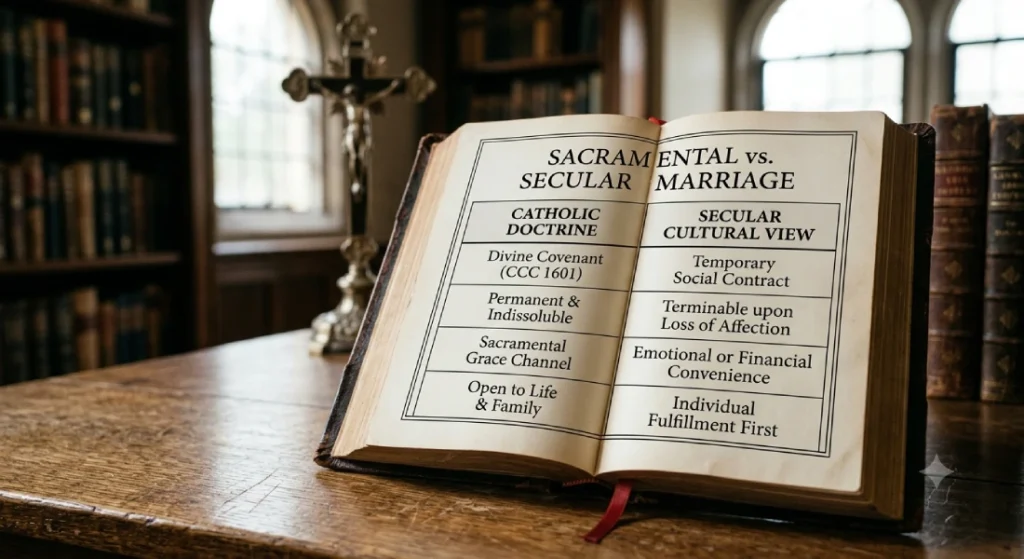
Catholic moral theology views Holy Matrimony not as a simple social contract or emotional arrangement, but as an indissoluble sacrament instituted by Jesus Christ (CCC 1601). In his Summa Theologiae, St. Thomas Aquinas teaches that marriage possesses a dual purpose: the good of the spouses (bonum fidei) and the procreation and education of children (bonum prolis).
Today, however, cultural forces frequently reduce marriage to a temporary, self-serving arrangement. The resulting crisis impacts both the Church and broader society:
- Declining Sacramental Nuptials: Over the past three decades, sacramental marriage rates in Catholic dioceses worldwide have fallen by over 50%.
- Rising Secular Cohabitation: Trial unions have increasingly replaced public, lifelong commitments, leaving couples without the sacramental grace necessary for long-term stability.
- Widespread Relational Breakdown: Even among baptized Catholics, divorce remains widespread, leaving many wounded, isolated, or alienated from active parish life.
Scriptural & Magisterial Foundations of Matrimony
To counter modern misconceptions, the upcoming Vatican summit grounds its deliberations in Sacred Scripture and authentic Magisterial teaching.
1. The Divine Design in Creation
In the Gospel of Matthew, Our Lord re-establishes the original design of marriage given in Genesis:
“Have you not read that he who created them from the beginning made them male and female, and said, ‘Therefore a man shall leave his father and his mother and hold fast to his wife, and the two shall become one flesh’? So they are no longer two but one flesh. What therefore God has joined together, let not man separate.”
— Matthew 19:4–6
This divine origin highlights that human authority cannot redefine marriage or alter its essential properties of unity and indissolubility (CCC 1614).
2. Sacramental & Sacrificial Love
Saint Paul explains the deeper, mystical reality of Holy Matrimony in his Letter to the Ephesians:
“Husbands, love your wives, as Christ loved the church and gave himself up for her, that he might sanctify her… ‘Therefore a man shall leave his father and mother and hold fast to his wife, and the two shall become one flesh.’ This mystery is profound, and I am saying that it refers to Christ and the church.”
— Ephesians 5:25, 31–32
By linking spousal love to Christ’s self-sacrifice on the Cross, Sacred Scripture reveals that Christian marriage requires continuous self-giving, forgiveness, and reliance on divine grace.
4 Strategic Priorities for the Vatican Summit
The bishops gathering in Rome are focused on developing concrete, adaptable pastoral strategies for local dioceses:
1. Reforming Pre-Cana & Marriage Formation
Current marriage preparation programs are often too brief to counter pervasive secular influences. The Vatican advocates for a extended, catechumenal model of marriage preparation that integrates spiritual accompaniment, moral formation, and practical life skills.
2. Post-Wedding Mentorship for Newlyweds
Research indicates that a significant percentage of marital breakdowns occur during the first five years of marriage. To address this, the summit highlights the need for parish-based mentorship programs pairing newly married couples with seasoned, faithful Catholic families.
3. Accompaniment for Couples in Crisis
The Church offers compassionate pastoral care to couples facing separation, civil divorce, or relational distress. Grounded in Familiaris Consortio (83–84) and CCC 1649, pastoral initiatives must support suffering spouses while upholding the absolute indissolubility of the valid sacramental bond.
4. Supporting the Domestica Ecclesia (The Domestic Church)
The Christian home is the primary sanctuary where children learn faith, prayer, and virtue (CCC 1656). Strengthening parish support for family prayer, family rosaries, and community engagement helps reinforce the domestic church against secular pressure.
Practical Action: How Faithful Catholics Can Respond
The success of this summit depends not only on hierarchical directives, but also on the prayers and active witness of the lay faithful.
- Commit to Daily Intercession: Pray the Holy Rosary daily for Pope Leo XIV, the attending bishops, and married couples facing trial.
- Engage in Parish Mentorship: Experienced married couples can volunteer in parish marriage preparation programs to share practical wisdom and faith.
- Frequent the Sacraments: Regular reception of Holy Mass and the Sacrament of Reconciliation provides the necessary grace to sustain marital fidelity and family unity.
- Build Local Support Networks: Establish parish small groups focused on Catholic parenting, spousal enrichment, and family prayer.
As the Psalmist writes: “Unless the Lord builds the house, those who build it labor in vain” (Psalm 127:1). Through prayer, sacramental grace, and faithful witness, the Catholic Church continues to defend and promote God’s plan for marriage.
Frequently Asked Questions (FAQ)
What is the primary purpose of the Vatican Marriage Summit?
The summit gathers presidents of global bishops’ conferences to address declining marriage rates, improve marriage preparation, and develop stronger pastoral support systems for Catholic families worldwide.
Does the Catholic Church allow divorce?
The Catholic Church teaches that a valid, consummated sacramental marriage cannot be dissolved by any human power or for any reason other than death (CCC 1640). While physical separation or civil divorce may be necessary in extreme cases for safety or legal protection, the sacramental bond itself remains intact before God.
What is the difference between a civil divorce and a Catholic declaration of nullity (annulment)?
A civil divorce is a secular decree claiming to end a legal marriage. A Catholic declaration of nullity is an official finding by an ecclesiastical tribunal that a valid sacramental marriage bond was never established from the beginning due to a lack of essential consent, psychological capacity, or canonical form.
How can parishes better help young people prepare for Catholic marriage?
Parishes can implement longer, catechumenal marriage preparation programs, provide mentorship from faithful married couples, and foster youth and young adult ministries that teach the theological and practical beauty of the marital vocation.
Source: EWTN News
Continue Your Faith Journey
Catholic Prayer for Husband Addicted to Porn: A Spiritual Warfare & Relational Healing Guide
Discover how Catholic spiritual warfare, Eucharistic grace, and deprecatory deliverance prayers can help free a husband from pornography addiction. Learn to combine…
What Is Natural Family Planning? Catholic Teaching, Theology, and Practice
Explore Catholic teaching on Natural Family Planning (NFP). Learn how Humanae Vitae, the Catechism, and modern fertility awareness methods protect the unitive…
Why Do Catholics Make the Sign of the Cross? Meaning, History, and Spiritual Power
Discover why Catholics make the sign of the cross. Explore its biblical origins, bodily symbolism, patristic history, and spiritual power as an…