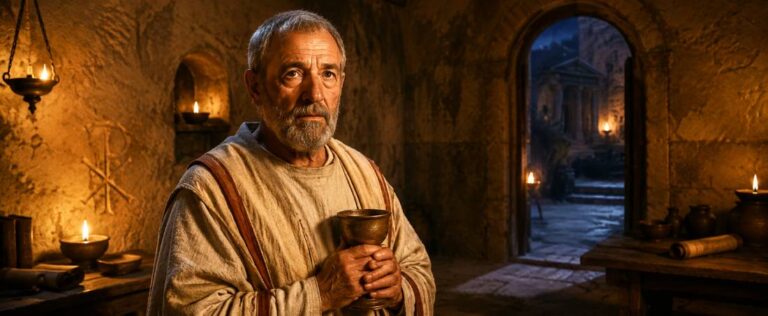
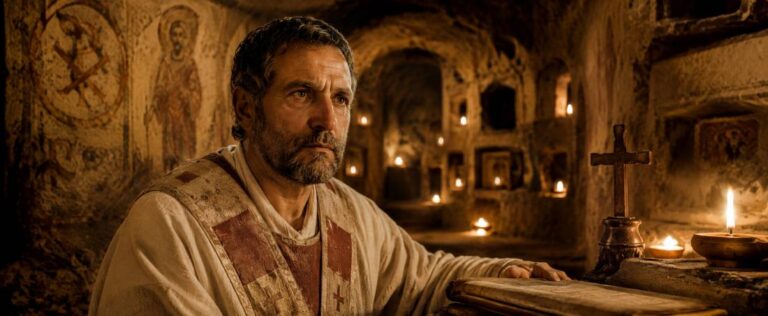
Pope Saint Sixtus II
Saint Sixtus II stands among the heroic shepherds of the early Church who remained faithful to Christ even in the face of death. Though his papacy lasted less than a year, his impact on Catholic history was profound. He guided the Church through persecution, promoted unity among divided Christians, and ultimately sealed his witness with martyrdom.
His life reminds Catholics that true leadership is measured not by power or prestige but by fidelity to Christ. More than seventeen centuries later, Saint Sixtus II remains an enduring example of courage, pastoral charity, and unwavering faith.
Early Life and Background
Very little is known with certainty about the early life of Saint Sixtus II. Ancient sources suggest he may have been of Greek origin, though modern historians recognize that this tradition cannot be confirmed with complete certainty.
Before becoming Bishop of Rome, Sixtus was known for his wisdom, moderation, and ability to foster peace. These qualities became especially important during a time when disputes among Christian communities threatened ecclesial unity.
As a priest and church leader, he developed a reputation for gentleness and sound judgment. His ministry reflected the spirit of a shepherd deeply committed to preserving both truth and charity within the Church.
The Christian community of Rome during the third century faced constant uncertainty. Believers often gathered secretly for worship, aware that public discovery could result in imprisonment or death. This environment shaped Sixtus’s spiritual formation and prepared him for the ultimate sacrifice he would later make.
Election to the Papacy
Saint Sixtus II was elected Bishop of Rome on August 31, 257.
The Church was emerging from a difficult period marked by disputes concerning the rebaptism of converts who had previously received baptism from heretical groups. His predecessor, Saint Stephen I, had strongly defended the Roman position, creating tensions with some churches in North Africa and the East.
At the same time, the Roman Empire was entering another phase of hostility toward Christianity. Emperor Valerian had begun implementing measures against Christians, creating fear and uncertainty throughout the Church.
Sixtus was chosen because of his reputation as a peaceful and prudent leader. His election brought hope that reconciliation could be achieved without compromising Catholic doctrine. His calm leadership quickly helped restore relations with several churches that had become estranged from Rome.
Papacy and Leadership
Restoring Ecclesial Unity
One of Saint Sixtus II’s most important accomplishments was healing divisions within the Church.
While maintaining Rome’s teaching regarding baptism, he adopted a more conciliatory pastoral approach than some had expected. His efforts helped restore communication and unity with churches in Africa and Asia Minor.
This achievement demonstrated an important principle of Catholic leadership: truth and charity must work together.
Shepherd During Persecution
The greatest challenge of his pontificate came from the growing persecution initiated by Emperor Valerian.
Imperial decrees increasingly targeted bishops, priests, and deacons. Christian worship became dangerous, and Church leaders were particularly vulnerable.
Despite these threats, Sixtus continued his pastoral ministry. He did not abandon the faithful or retreat from his responsibilities. Instead, he remained present among the Christian community, celebrating the Eucharist and strengthening believers through his example.
Witness of Courage
Saint Sixtus II understood that a bishop’s first duty is to remain with his flock.
His leadership was not expressed through political influence or grand administrative projects but through sacrificial service. He embodied Christ the Good Shepherd, willing to lay down his life for the people entrusted to his care.
Prayer Life and Spirituality
Although no personal writings from Saint Sixtus II survive, his actions reveal the depth of his spiritual life.
His commitment to celebrating the Eucharist despite grave danger demonstrates profound devotion to Christ’s Real Presence. At a time when gathering for Mass could cost one’s life, Sixtus continued to offer the sacred mysteries for the faithful.
His spirituality was rooted in:
- Deep trust in Divine Providence.
- Fidelity to the apostolic faith.
- Love for the Eucharist.
- Pastoral charity toward the Christian community.
- Courage strengthened through prayer.
As bishop, he understood that prayer was not merely a private practice but the source of strength for the entire Church.
His willingness to face martyrdom without abandoning his ministry suggests a life shaped by continual communion with Christ.
For modern Catholics, Saint Sixtus II offers a powerful example of Eucharistic devotion and steadfast faith. He reminds believers that authentic discipleship requires perseverance even when following Christ becomes costly.
Challenges and Trials
Persecution Under Emperor Valerian
The most significant trial of Saint Sixtus II’s papacy was the persecution ordered by Emperor Valerian.
In 258, imperial authorities issued stricter measures against Christian clergy. Bishops, priests, and deacons became direct targets.
Christian assemblies were forbidden, and Church leaders faced immediate execution.
Arrest in the Cemetery
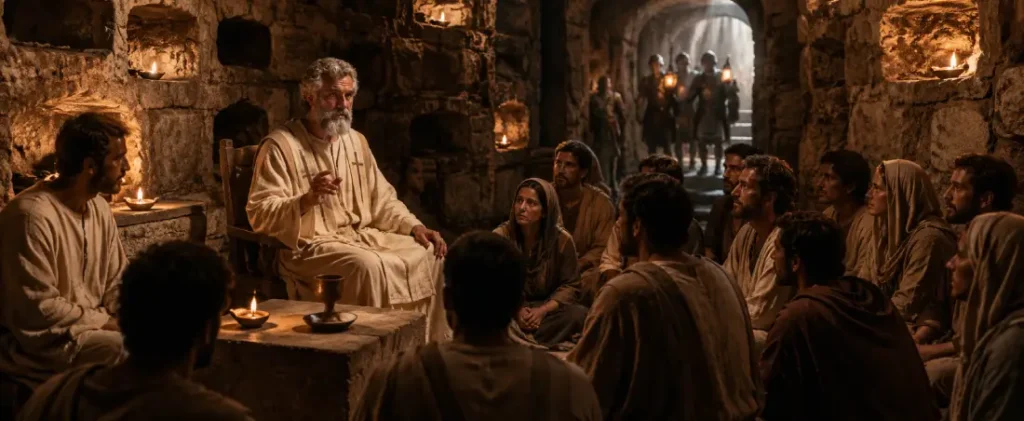
Knowing the danger, Sixtus gathered the faithful in the Cemetery of Praetextatus near the Appian Way.
While preaching and celebrating the sacred mysteries, soldiers suddenly arrived and arrested him along with several deacons.
Rather than flee or resist, he accepted his fate peacefully.
Martyrdom
On August 6, 258, Saint Sixtus II was executed for his faith.
Several of his deacons were martyred alongside him. Among those closely associated with him was Saint Lawrence, who would suffer martyrdom only a few days later.
The courage of Sixtus inspired Christians throughout the Roman Empire. His death became a testimony that no earthly power could separate believers from Christ.
Death and Legacy
Saint Sixtus II died as a martyr on August 6, 258.
He was buried in the Cemetery of Saint Callistus, one of the most important Christian burial sites in Rome. Early Christians quickly honored him as a saint and martyr.
His reputation for holiness spread throughout the Church. Pope Damasus I later commemorated his heroic witness with an inscription praising his courage and pastoral devotion.
Saint Sixtus II’s name remains permanently enshrined in the Roman Canon, the First Eucharistic Prayer of the Mass. This distinction reflects the deep reverence the Church has maintained for him through the centuries.
His legacy includes:
- Fidelity during persecution.
- Commitment to Church unity.
- Courageous episcopal leadership.
- Martyrdom for the Gospel.
- Lasting influence on Catholic liturgy.
Though his papacy was brief, his witness continues to inspire bishops, priests, and lay faithful alike.
Lessons Catholics Can Learn Today
- Remain faithful to Christ even when faith becomes difficult.
- Defend Church unity with both truth and charity.
- Place the Eucharist at the center of life.
- Lead through service rather than personal ambition.
- Trust God’s providence during times of suffering.
- Stay close to the Church during periods of confusion and trial.
- Remember that holiness often requires sacrifice.
Conclusion
Saint Sixtus II lived during one of the most dangerous periods in Christian history, yet he never allowed fear to overcome faith. As a shepherd of souls, he protected the unity of the Church, strengthened believers through his example, and ultimately offered his life for Christ.
His story challenges Catholics today to live with greater courage, deeper prayer, and stronger devotion to the Eucharist. In a world that often pressures believers to compromise, Saint Sixtus II reminds us that fidelity to Christ is always worth the cost.
May his witness inspire us to remain steadfast in faith, confident that the Lord who sustained the martyrs continues to guide His Church today.
Related Popes