
A Boy Called to Priesthood: Discernment, the Vocational Shortage, and the Domestic Church
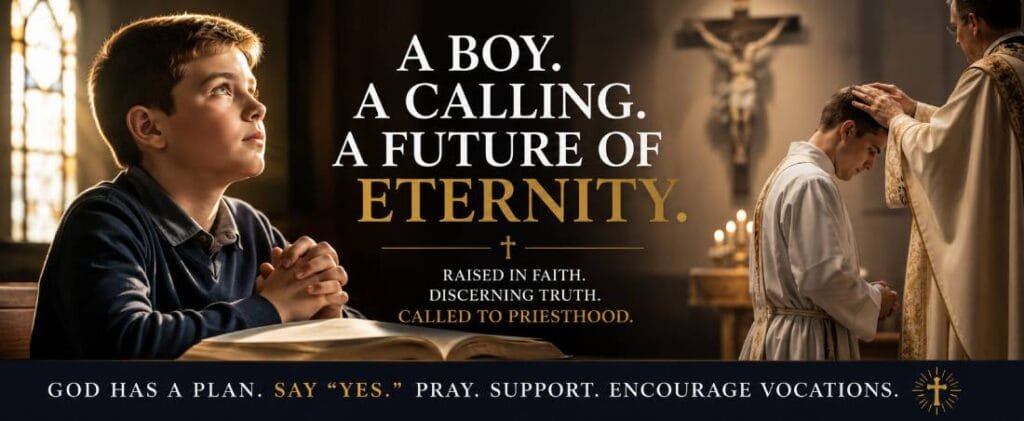
During a public forum hosted at Missouri State University, a ten-year-old boy named Bryce from Billings, Montana, stepped up to the microphone and shared a profound declaration that resonated far beyond the auditorium. When asked by commentator Matt Walsh why he aspired to enter the priesthood, the young boy did not hesitate or offer a complex political or theological thesis. He answered simply and directly: “Because God is calling me.”
This brief exchange highlighted a stark truth that often gets lost in modern discussions about religion: God continues to speak directly to young hearts. At a time when the Catholic Church faces a persistent shortage of ministerial priests across the Western world, Bryce’s confident witness offers both a beacon of supernatural hope and a vital reminder of where authentic vocations are born—in the heart of the domestic church.
The Power of Youthful Witness in a Secular Culture
The viral momentum surrounding Bryce’s testimony points to a widespread hunger for authentic spiritual clarity. In a culture dominated by secular individualism, where young people are routinely encouraged to construct their own identities based on personal ambition or emotional preference, a child seeking to align his life entirely with God’s divine plan stands out dramatically.
When commentator Michael Knowles noted during the event that “out of the mouth of babes” came the most profound wisdom of the entire evening, he echoed an enduring Catholic principle. As Jesus declared in the Gospel of Matthew, “Let the children come to me, and do not hinder them; for to such belongs the kingdom of heaven” (Matthew 19:14). Young people possess a natural receptivity to grace when their minds and hearts are guarded against worldliness and cynicism.
Bryce’s testimony challenges modern assumptions that children are incapable of understanding deep spiritual truths. His conviction demonstrates that when families prioritize the life of grace, children absorb the language of divine intimacy and learn to recognize the voice of the Good Shepherd early in life.
Understanding the Catholic Vocational Crisis Through a Magisterial Lens
The boy’s aspiration to serve at the altar arrives at a critical historical moment for the Catholic Church. For several decades, dioceses across North America and Europe have reported declining enrollment in major seminaries. Parishes are increasingly consolidated, forcing single priests to shepherd multiple congregations across expansive geographical territories.
While socio-cultural factors—such as declining birth rates, secularization, and hyper-materialism—contribute to this shortage, the Catholic Church views vocational discernment through a supernatural lens. A priestly vocation is not merely a career choice, a human preference, or a secular profession; it is an initiative originating from the Holy Spirit.
As the Catechism of the Catholic Church teaches:
“Holy Orders is the sacrament through which the mission entrusted by Christ to his apostles continues to be exercised in the Church until the end of time: it is thus the sacrament of apostolic ministry” (CCC 1536).
Furthermore, the ministerial priest acts in persona Christi Capitis (in the person of Christ the Head). Through the indelible spiritual character conferred by the Sacrament of Holy Orders, the priest offers the Holy Sacrifice of the Mass, absolves sins in the Sacrament of Penance, and administers the Sacraments that sustain the faithful. Because the priest plays an irreplaceable role in the economy of salvation, a deficit of priestly vocations impacts the health of the entire Mystical Body of Christ.
God has not stopped calling young men to the altar. Rather, the noise of contemporary culture often drowns out the quiet promptings of grace. Stories like Bryce’s demonstrate that when the call is heard and embraced, it retains the power to awaken the faith of millions.
The Domestic Church: The Primary Seedbed of Vocations
A child does not arrive at a conviction like Bryce’s in isolation. His family has clearly nurtured his spiritual development through sound Catholic catechesis, the regular reading of Sacred Scripture, and a vibrant domestic prayer life.
The Catholic Church explicitly identifies the Christian family as the primary environment where vocations are discovered and cultivated. Saint John Paul II wrote extensively on this reality, calling the family the “domestic church” (Ecclesia domestica). In his Apostolic Exhortation Pastores Dabo Vobis, he emphasized that parents are the first heralds of the Gospel for their children (CCC 1656).
Parents who read Sacred Scripture with their children, pray together daily, and faithfully fulfill the Lord’s Day Obligation at Holy Mass create environments where the Lord’s call to Holy Orders can be heard clearly (CCC 2042). Spiritual formation begins in the home long before a young man ever steps foot inside a seminary chapel.
Distinguishing Vocation from Secular Ambition
To help families understand how authentic discernment differs from worldly career planning, consider the following structural comparison:
| Aspect | Secular Career Selection | Catholic Vocational Discernment |
| Primary Goal | Personal fulfillment, financial security, and prestige | Eternal salvation, holiness, and obedience to God’s will |
| Core Question | “What do I want to do with my life?” | “What does God design and call me to do?” |
| Guiding Authority | Individual preference and market trends | Sacred Scripture, Magisterial teaching, and Church authority |
| Sustaining Force | Self-reliance and ambition | Sacramental grace, prayer, and Eucharistic devotion |
| Ecclesial Context | Independent of the Church | Rooted in the Mystical Body of Christ and local parish life |
Scriptural and Thomistic Foundations of Early Vocational Calls
The conviction of a ten-year-old child aligns perfectly with Sacred Scripture and Catholic Tradition. Throughout salvation history, God has frequently revealed His divine purpose to individuals during their youth:
- The Call of Samuel (1 Samuel 3): As a young boy serving in the sanctuary at Shiloh, Samuel heard the Lord calling his name in the night. Under the guidance of the priest Eli, Samuel learned to respond: “Speak, Lord, for your servant hears.”
- The Anointing of David (1 Samuel 16): When the prophet Samuel went to Jesse’s house to crown Israel’s next king, the Lord passed over the older brothers and selected David, the youngest boy who was out tending the sheep.
- The Formation of Saint Timothy (2 Timothy 1:5; 3:14–15): Saint Paul commends Timothy for his sincere faith, which was first nurtured by his grandmother Lois and his mother Eunice, noting that from childhood he had known the Sacred Scriptures.
Saint Thomas Aquinas, the Angelic Doctor of the Church, addressed the question of early vocational inclinations in his Summa Theologiae. Aquinas noted that the Holy Spirit operates freely within human souls regardless of biological age, instilling virtues and divine promptings whenever God wills (ST II-II, q. 189, a. 5). When a child experiences a genuine desire for the priesthood, it ought to be received with reverence, tested with prudent spiritual direction, and nourished by sacramental grace.
Practical Steps for Catholic Parents to Foster Vocations
If a child expresses an interest in Holy Orders or consecrated life, parents must respond with encouragement and spiritual prudence. Here are actionable steps families can take to cultivate vocational fruitfulness within the domestic church:
- Prioritize the Sacramental Life: Ensure regular family attendance at Sunday Mass and frequent reception of the Sacrament of Reconciliation. Sacramental grace cleanses the soul and heightens spiritual perception.
- Cultivate Eucharistic Adoration: Bring children before the Blessed Sacrament. Silent prayer in the presence of Christ allows young people to listen quietly to the Holy Spirit.
- Introduce Holy Role Models: Expose children to holy priests, consecrated religious, and faithful catechists who can witness to the beauty of a selfless vocation. Read the lives of the saints together at home.
- Pray the Rosary Daily: Entrust your family and your children’s futures to the Blessed Virgin Mary, the Mother of Priests, asking for her maternal protection over their vocations.
- Encourage Parish Altar Service: For young boys, serving at the altar during Holy Mass provides a close-up view of the mystery of the Eucharist and fosters deep reverence for the sacerdotal office.
Frequently Asked Questions (FAQ)
While a ten-year-old is too young to make a definitive or canonical commitment to Holy Orders, a child can genuinely experience initial vocational promptings. The Catholic Church recognizes that God often places the seeds of a priestly call in early childhood, which must then mature through years of prayer, sound catechesis, and eventual formal seminary discernment.
The Catholic priesthood is established through the Sacrament of Holy Orders and confers an indelible spiritual character upon the soul (CCC 1581). Unlike general Christian ministers or lay leaders, a Catholic priest acts in persona Christi Capitis, possessing the sacramental power conferred by Christ to consecrate the Holy Eucharist and forgive sins in the Sacrament of Reconciliation.
Parents should encourage the desire joyfully without placing undue pressure on the child. Foster his prayer life, support his involvement in parish service, provide access to solid Catholic teaching, and allow the Holy Spirit to guide his growth naturally over time.
A Sign of Renewal for the Church
As the Catholic Church continues to pray for an increase in laborers for the harvest (Matthew 9:38), the witness of young Bryce serves as a vivid reminder that God’s grace is never constrained by cultural resistance. When families reclaim their identity as domestic churches and build homes rooted in Eucharistic devotion and sound doctrine, the Lord continues to raise up courageous young men ready to answer His call. May this child’s simple answer inspire parents everywhere to invest deeply in their children’s spiritual formation, trusting that God still calls the young to accomplish His sacred purposes in the world.
Source: LifeSiteNews
Continue Your Faith Journey
What Is Eucharistic Adoration? A Catholic Guide to the Real Presence
Discover the rich Catholic tradition of Eucharistic adoration and the Real Presence of Christ. Learn how to make a transformative Holy Hour…
Catholic Prayer for Toxic Family Conflict: A Faithful Guide to Boundaries, Healing, and Charity
Navigating family conflict, estrangement, and narcissistic behavior requires balancing Christian charity with prudent boundaries. Discover how Catholic doctrine, Sacred Scripture, and daily…
The 7 Best Catholic Bibles for Beginners and Scholars: The Ultimate Guide to Faithful Scripture Study
Discover the best Catholic Bibles for beginners and scholars. Compare top translations like the RSV-2CE, NABRE, and Douay-Rheims to deepen your daily…