
Rededicate 250 and Civic Religion: A Catholic Perspective on National Prayer, Grace, and the Kingship of Christ
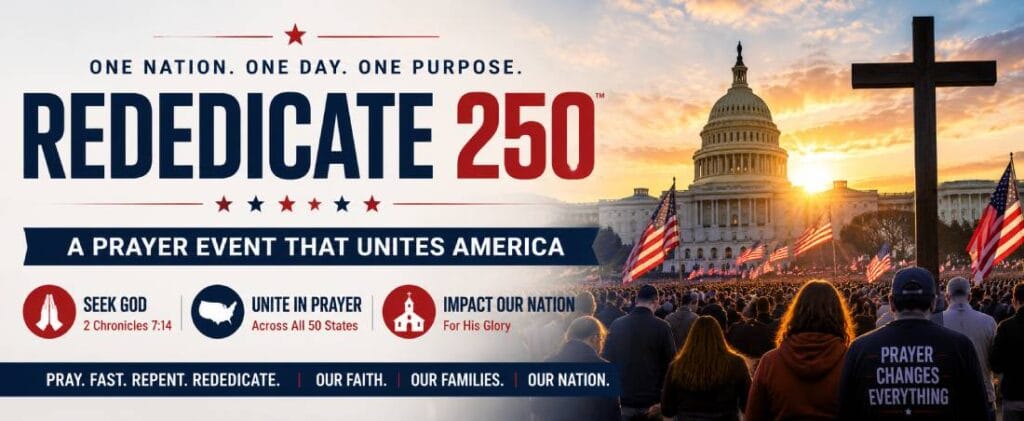
The upcoming 250th anniversary of the founding of the United States has sparked broad civic and religious mobilization across the nation. Among these initiatives, the “Rededicate 250” prayer gathering brought intercessors to the National Mall in Washington, D.C.. While public prayer for civil leaders aligns with traditional Christian duty, Catholics must evaluate non-denominational movements through the lens of authentic Magisterial teaching, Sacred Scripture, and the Sacramental order.
The Washington D.C. Assembly: Context and Civic Intercession
Organized by Freedom 250, the Rededicate 250 prayer event convened on the National Mall in Washington, D.C., drawing participants from across the country. The assembly offered corporate praise and intercession in anticipation of America’s sestercentennial anniversary. Promoters emphasized national repentance, spiritual awakening, and humble petition as essential responses to current moral and social challenges.
Civic calls for divine assistance are deeply embedded in American history. Historical figures such as George Washington and Abraham Lincoln regularly proclaimed national days of prayer during times of existential crisis. For journalistic coverage of Catholic participation and key theological reflections during the event, view the EWTN News Report on the Rededicate 250 Gathering.
While civic cooperation in temporal matters is commendable, Catholics must distinguish between patriotic civic devotion and divine worship. Civic prayer must never obscure the unique authority and Sacramental reality of the Church established by Jesus Christ.
Authentic Ecumenism vs. Religious Indifferentism
The Rededicate 250 gathering brought together faith leaders from diverse Christian backgrounds under a shared banner of public worship. While mutual goodwill among Christians is positive, non-denominational prayer events present theological risks when they promote religious indifferentism—the erroneous idea that all doctrines are equally valid or that dogmatic truth is secondary to civic unity.
In his landmark encyclical Mortalium Animos, Pope Pius XI warned against false ecumenical assemblies that reduce Christian unity to subjective sentimentality. Pius XI clarified that authentic unity cannot be achieved by compromising dogmatic truth or treating non-Catholic communities as equal expressions of Christ’s Church.
The Second Vatican Council, in its Decree on Ecumenism (Unitatis Redintegratio), outlined clear boundaries for Catholic ecumenical engagement. The Council affirmed that joint prayer is permissible under proper pastoral guidance for specific goals (Unitatis Redintegratio, 8). However, it reiterated that the sole Church of Christ subsists fully in the Catholic Church, governed by the successor of Peter (CCC 816). Catholics participating in civic assemblies must maintain total fidelity to Catholic doctrine, avoiding any implication of doctrinal compromise.
Exegesis of 2 Chronicles 7:14: Covenant Promises and the New Israel
A central biblical anchor for the Rededicate 250 event is 2 Chronicles 7:14: “If My people who are called by My name will humble themselves, and pray and seek My face, and turn from their wicked ways, then I will hear from heaven, and will forgive their sin and heal their land”. In civic Protestant contexts, this verse is frequently applied directly to modern geopolitical nations.
Catholic biblical exegesis requires a precise Christological interpretation. In its original context, 2 Chronicles 7:14 was a covenantal promise given to King Solomon for the Old Covenant nation of Israel following the dedication of the Temple. Under the New Covenant, the geopolitical nation of Israel is succeeded by the Church—the Mystical Body of Christ—which constitutes the New Israel (CCC 781–782).
St. Thomas Aquinas explains in the Summa Theologiae (ST I-II, q. 103, a. 3) that Old Covenant judicial and ceremonial laws prefigured spiritual realities fulfilled in Jesus Christ. Therefore, 2 Chronicles 7:14 cannot be claimed as a literal temporal guarantee for modern secular republics. National healing does not result from civic agreements, but from personal interior conversion, obedience to the moral law (CCC 1886), and the reception of divine grace through the Sacrament of Penance and Reconciliation (CCC 1422).
Theological Comparative Matrix: Civic Faith vs. Catholic Magisterium
The following comparative table illustrates the fundamental differences between civic Christian assemblies and authentic Catholic doctrine:
| Theological Dimension | Civic / Non-Denominational Perspective | Catholic Magisterial Teaching |
| National Consecration | Informal public commitment by citizens to dedicate a nation’s future to God. | Formal liturgical act performed by authorized bishops, ordering society to Christ’s Kingship (CCC 1672, 2105). |
| Exegesis of 2 Chronicles 7:14 | Direct transactional promise of land healing for modern secular nations. | Covenantal promise fulfilled spiritually in Christ’s Mystical Body, the Church (CCC 781; Aquinas, ST I-II, q. 103). |
| Ecumenical Prayer | Unfiltered pan-Christian worship prioritizing shared civic values over doctrine. | Prudent ecumenism preserving dogmatic truth and Catholic identity (Unitatis Redintegratio, 8; CCC 816). |
| Means of Renewal | Public prayer rallies, civic activism, and collective emotional worship. | Interior conversion, natural moral law, and Sacramental grace—especially Mass and Confession (CCC 1324, 1422). |
True Consecration and the Social Kingship of Christ
Promotional communications for the National Mall assembly framed the gathering as an opportunity to “consecrate America’s future to the Lord”. In Catholic theology, however, consecration carries a strict definition. Consecration is a sacramental act by which persons, places, or things are permanently set apart for divine worship through the authority of the Church’s pastors (CCC 1672).
A secular nation or mixed civic assembly cannot consecrate itself through a public rally. Authentic public consecration requires legitimate ecclesial ministers acting in union with the Magisterium. Furthermore, true social renewal requires recognizing the Social Kingship of Jesus Christ over all human societies, as articulated by Pope Pius XI in Quas Primas.
Pius XI emphasized that genuine peace and moral order can only exist when civil laws align with natural law and the divine law of Christ (Quas Primas, 18–20; CCC 2105). Civic assemblies that seek divine favor while ignoring Christ’s established moral order fall short of true spiritual consecration. Catholics should also remember that the United States was formally consecrated to the Blessed Virgin Mary under her title of the Immaculate Conception at the Sixth Provincial Council of Baltimore in 1846. Seeking national restoration requires turning to Our Lady’s powerful intercession.
The Sacramental Path to National Renewal
While corporate prayer on the National Mall demonstrates concern for the nation’s spiritual health, emotional assemblies are insufficient for genuine spiritual revival. Human effort and political solutions cannot replace divine grace. The primary engine of spiritual renewal given by Christ is the Sacramental life of the Catholic Church.
The Second Vatican Council affirmed in Lumen Gentium that the Holy Sacrifice of the Mass is the “source and summit of the Christian life” (Lumen Gentium, 11; CCC 1324). No intercessory rally possesses the spiritual efficacy of a single Holy Mass, wherein the unbloody sacrifice of Christ on Calvary is made present on the altar for the redemption of the world.
Catholics seeking the spiritual transformation of America must move beyond temporary civic gatherings and embrace a deep Sacramental life. True intercession for the nation requires concrete actions:
- Frequent Reception of Sacraments: Participating regularly in Holy Mass and weekly Sacrament of Reconciliation to remain in a state of sanctifying grace (CCC 1422).
- Eucharistic Adoration: Spending dedicated hours before the Blessed Sacrament, making reparation for national sins against human life, family, and religious liberty.
- Devotion to the Holy Rosary: Reciting the Rosary daily for civil leaders and the conversion of hearts, fulfilling Our Lady’s requests at Fatima.
- Living Catholic Social Doctrine: Applying Catholic moral principles to personal, professional, and civic responsibilities (CCC 1886).
By anchoring national intercession in the Eucharist and Catholic moral truth, the faithful cooperate with divine grace to foster authentic moral transformation across society.
Frequently Asked Questions
Catholics may participate in civic prayer events under pastoral prudence if the gathering focuses on common temporal goods like peace or civic virtue (Unitatis Redintegratio, 8). However, Catholics must avoid active participation in joint worship that compromises Catholic dogmatic truth or promotes religious indifferentism (CCC 816; Mortalium Animos).
Catholic theology interprets 2 Chronicles 7:14 Christologically. Originally given to Solomon for Old Covenant Israel, its promises are fulfilled in the New Covenant through Christ’s Church, the New Israel (CCC 781). National healing occurs through personal repentance, moral conversion (CCC 1886), and Sacramental Reconciliation (CCC 1422), not geopolitical guarantees.
In Catholic theology, consecration is a formal sacramental act performed by legitimate ecclesial authority—such as bishops—setting persons, places, or nations apart for God (CCC 1672). A civic assembly cannot self-consecrate a nation; true social consecration orders society to the Social Kingship of Christ (Quas Primas; CCC 2105).
The most powerful intercession for national renewal is the Holy Sacrifice of the Mass, the source and summit of Christian life (CCC 1324). Eucharistic Adoration, frequent Confession, and the daily Rosary offered for Our Lady’s intercession—Patroness of the United States—far exceed informal prayer rallies in spiritual efficacy.
Source: CharismaNews
Continue Your Faith Journey
Catholic Prayer for Toxic Family Conflict: A Faithful Guide to Boundaries, Healing, and Charity
Navigating family conflict, estrangement, and narcissistic behavior requires balancing Christian charity with prudent boundaries. Discover how Catholic doctrine, Sacred Scripture, and daily…
The 7 Best Catholic Bibles for Beginners and Scholars: The Ultimate Guide to Faithful Scripture Study
Discover the best Catholic Bibles for beginners and scholars. Compare top translations like the RSV-2CE, NABRE, and Douay-Rheims to deepen your daily…
What Is a Novena? The Biblical Meaning and How to Pray It
Discover the biblical origins of the Catholic nine-day prayer tradition and learn how to pray a novena effectively. Transform your prayer routine…