
What Is a Novena? The Biblical Meaning and How to Pray It
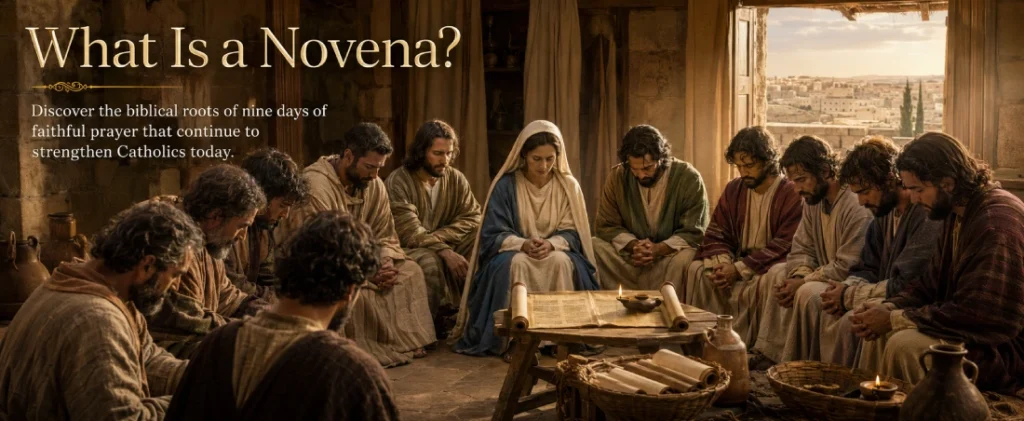
A Catholic novena is an ancient devotional prayer repeated for nine consecutive days to request a particular grace, seek intercession, or prepare for a major liturgical feast. Derived from the Latin novem (meaning “nine”), the novena is an established form of persevering prayer grounded in Sacred Scripture and Catholic tradition.
Far from being a superstitious formula or a spiritual transaction, the novena is a disciplined exercise in theological hope, trust, and surrender to God’s providence.
The Biblical Foundation of the Nine-Day Prayer
The Church’s nine-day pattern of prayer originates directly from the events following the Ascension of Jesus Christ.
The Upper Room: The Original Novena
Before ascending into Heaven, Jesus commanded His Apostles not to leave Jerusalem, but to wait for the promise of the Father (Acts 1:4). The Apostles, obedient to this command, returned to Jerusalem and entered the Upper Room.
“All these with one accord devoted themselves to prayer, together with the women and Mary the mother of Jesus, and with his brethren.” (Acts 1:14, RSV-CE)
Between the Ascension of the Lord (traditionally celebrated on a Thursday, the fortieth day after the Resurrection) and the descent of the Holy Spirit on Pentecost (the fiftieth day), nine full days elapsed. During this interval, the nascent Church remained gathered with the Blessed Virgin Mary in continuous, unceasing supplication. This biblical gathering is the historical and spiritual archetype for every novena prayed in the Catholic Church.
Christ’s Command: Persistent Petition
Jesus Christ explicitly instructed His disciples on the necessity of sustained, enduring petition in the spiritual life. In the Gospel of Luke, He delivers the Parable of the Persistent Widow:
“And he told them a parable, to the effect that they ought always to pray and not lose heart.” (Luke 18:1, RSV-CE)
The discipline of praying for nine consecutive days trains the soul in spiritual stamina. It reflects the reality that God often delays an answer not out of reluctance, but to expand the petitioner’s heart, purify their desires, and cultivate genuine reliance upon His grace.
The Catechism on Spiritual Rhythms and the “Battle of Prayer”
The Catechism of the Catholic Church emphasizes that prayer requires interior discipline, structured routine, and sustained effort against distraction and weariness.
According to the Catechism:
“The Church proposes to the faithful certain rhythms of praying intended to nourish continual prayer. Some are daily… others weekly… still others, such as the Rosary and certain novenas, are repeated at fixed intervals.” (CCC 2688)
Prayer is an interior battle against our own human fragility, doubt, and impatience. Novenas establish a dependable framework that carries the soul through seasons of spiritual dryness. By adhering to a fixed, structured interval of nine days, Catholics participate in the liturgical life of the universal Church and unite their personal petitions to the ongoing prayer of the communion of saints.
How to Pray a Novena: Step-by-Step Guide
Praying a novena is an accessible practice that fits easily into a daily routine. Follow this simple, step-by-step method:
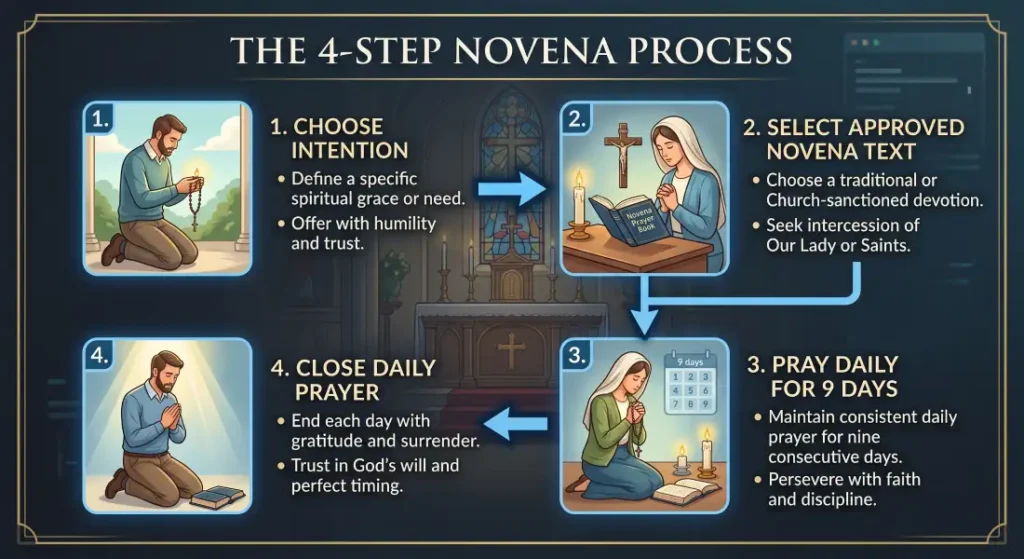
1. Formulate a Specific Intention
Identify the specific grace or need you wish to bring before the Lord. Common intentions include:
- Discernment of a vocation or major life decision.
- Physical, emotional, or spiritual healing for oneself or a loved one.
- The spiritual conversion or return to the Sacraments of family members.
- Suffrage for the holy souls in Purgatory.
- Intercession for the Church, clergy, or societal issues.
2. Select a Church-Approved Novena
Select a novena text dedicated to a title of Christ, a mystery of the Faith, the Holy Spirit, the Blessed Virgin Mary, or an intercessory patron saint. Approved texts can be found in traditional Catholic prayer books or through reputable diocesan and parish resources.
3. Maintain the Daily Schedule
Set aside a dedicated, quiet time each day for nine consecutive days. A standard daily novena structure includes:
- Opening Prayer: Invocation of the Holy Spirit or an Act of Contrition.
- Scripture / Meditation: A brief biblical passage or theological reflection.
- The Novena Petition: The specific prayers and daily intentions designated for that day.
- Closing Prayer: Traditional prayers such as the Our Father, Hail Mary, and Glory Be, followed by a prayer of thanksgiving.
4. Conclude with Trust and Surrender
Upon concluding the ninth day, place the outcome fully in the hands of God. True Catholic prayer always includes the disposition of Christ in the Garden of Gethsemane: “Not my will, but yours, be done” (Luke 22:42).
Popular Catholic Novenas and Their Traditional Intentions
| Novena Title | Traditional Timing / Feast Day | Primary Patronage & Intentions |
| Novena to the Holy Spirit | Nine days between Ascension and Pentecost | The Seven Gifts of the Holy Spirit; renewal of the Church. |
| Divine Mercy Novena | Begins Good Friday; concludes on Divine Mercy Sunday | Mercy for sinners, conversion, trust in Christ’s Passion. |
| Novena to St. Jude Thaddeus | October 19–27 (Feast Day: October 28) | Desperate situations, grave illnesses, impossible causes. |
| Novena to St. Joseph | March 10–18 (Solemnity: March 19) | Employment, fathers, families, purity, and a happy death. |
| Novena to Our Lady of Perpetual Help | Often prayed as a weekly perpetual novena (Wednesdays) | Urgent family needs, maternal protection, difficult trials. |
| Surrender Novena (Fr. Dolindo) | Any time of spiritual anxiety or distress | Abandonment to Divine Providence, interior peace. |
Avoiding Superstition: The Correct Catholic Disposition
The Catholic Church explicitly teaches that devotions must never decline into superstition (CCC 2111). A novena is not a mechanical guarantee or a spiritual transaction where God is forced to grant a specific outcome in exchange for nine recitations.
- Faithfulness Over Mechanical Exactness: The value of a novena lies in the interior disposition of humility, trust, and obedience, not in the mere repetition of words.
- Handling Missed Days: If you inadvertently miss a day, do not abandon the prayer or fall into scrupulosity. Simply recite the missed prayer when you remember and continue the novena to its completion.
- Spiritual Transformation: Even when God’s answer to a petition differs from our initial expectations, the sustained practice of prayer softens the heart, deepens faith, and brings peace.
Practical Steps to Begin Your Novena Today
- Start Small: Select one specific intention and choose an approved novena.
- Anchor the Routine: Tie the prayer to an established daily habit, such as morning offering, family dinner, or the evening examination of conscience.
- Unite with the Sacraments: Deepen your prayer by attending Holy Mass and receiving the Sacrament of Reconciliation during the course of the nine days.
- Pray for the Universal Church: Broaden your personal petitions to include the needs of your local parish, your bishop, and the wider Body of Christ.
Frequently Asked Questions
Missing a day of a novena does not invalidate your prayer or nullify its graces. Simply resume where you left off, pray two days’ prayers together, or start over if you prefer. Catholic prayer relies on God’s mercy, not scrupulous adherence to a mechanism.
Yes, Catholics may pray multiple novenas concurrently for different intentions. However, maintaining focus, interior silence, and genuine devotion is more spiritually fruitful than taking on too many vocal prayers simultaneously.
The nine-day timeframe is modeled after the nine days of unceasing prayer made by the Apostles and the Blessed Virgin Mary in the Upper Room between Christ’s Ascension and the descent of the Holy Spirit at Pentecost (Acts 1:14).
A novena is not a magical formula that guarantees a predetermined outcome. It is an act of persistent trust (Luke 18:1) that conforms our will to God’s providence, ensuring that He grants what is ultimately best for our salvation.
Continue Your Faith Journey
Catholic Prayer for Toxic Family Conflict: A Faithful Guide to Boundaries, Healing, and Charity
Navigating family conflict, estrangement, and narcissistic behavior requires balancing Christian charity with prudent boundaries. Discover how Catholic doctrine, Sacred Scripture, and daily…
The 7 Best Catholic Bibles for Beginners and Scholars: The Ultimate Guide to Faithful Scripture Study
Discover the best Catholic Bibles for beginners and scholars. Compare top translations like the RSV-2CE, NABRE, and Douay-Rheims to deepen your daily…
Why Do Catholics Pray to Mary? Church Teaching, Scripture, and Tradition
Explore why Catholics pray to Mary, the biblical roots of Marian intercession, and the vital theological distinction between the adoration due to…