
Bible Verses About Children Being a Blessing: A Catholic Guide to God’s Gift of Family
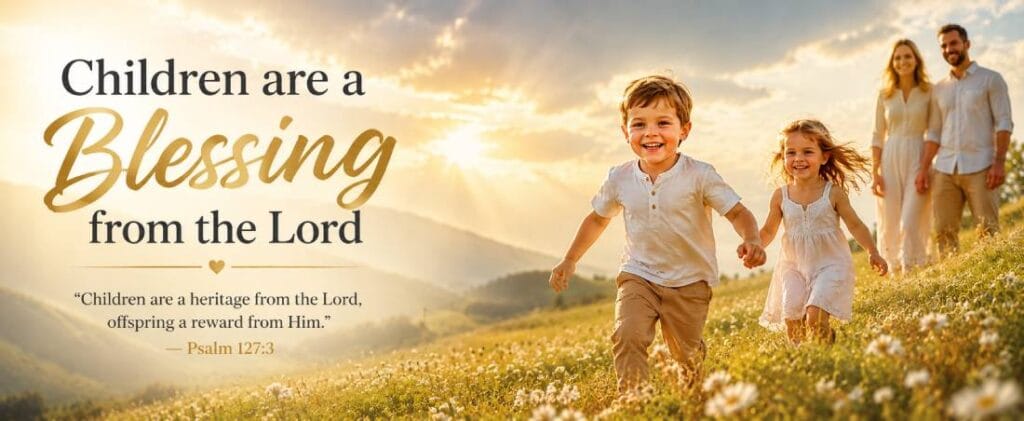
Sacred Scripture reveals that children are neither accidental burdens nor optional lifestyle accessories. They are supreme gifts of God’s divine design, possessing eternal dignity from the very moment of conception. The Catholic Church affirms that offspring are the supreme gift of marriage (CCC 2378) and central to God’s providential plan for the family and society.
This curated collection of Scripture passages demonstrates God’s unwavering truth regarding children, family life, and the sacredness of preborn life. Whether you are discerning family growth, seeking encouragement in parenting, or defending human life, these texts offer an enduring spiritual foundation.
Quick Reference: Scripture on Children by Theme
| Pastoral Theme | Primary Scripture References | Magisterial / Theological Anchor |
| Sanctity of Preborn Life | Jeremiah 1:5, Psalm 139:13–16, Psalm 22:9 | Soul created at conception (CCC 366; Evangelium Vitae, 60) |
| Children as Divine Heritage | Psalm 127:3–5, Psalm 113:9, Psalm 128:3 | Openness to procreation as supreme gift (CCC 2378; Humanae Vitae, 11) |
| Christ’s Elevation of Youth | Matthew 18:1–10, Mark 10:13–16, Luke 18:16 | Childlike humility and Guardian Angels (CCC 336, 544) |
| Parental Duties & Catechesis | Deuteronomy 6:6–7, Proverbs 22:6, Ephesians 6:4 | Parents as primary educators in faith (Gravissimum Educationis, 3) |
The Sanctity of Life and Divine Creation in the Womb
1. Jeremiah 1:5
“Before I formed you in the womb I knew you, and before you were born I consecrated you.” (RSV-2CE)
God’s eternal foreknowledge and divine design for every human being precede time itself. While individual human existence and the immediate creation of the immortal soul begin at conception (CCC 366), God knows, wills, and loves each person in His divine mind from all eternity (St. Thomas Aquinas, Summa Theologiae I, q. 14, a. 8). Because God holds us in His intellect before forming us, every human life possesses inviolable dignity.
2. Psalm 139:13
“For thou didst form my inward parts, thou didst knit me together in my mother’s womb.” (RSV-2CE)
The image of knitting signifies deliberate divine craftsmanship. God does not mass-produce human beings; He directly creates each person’s soul at conception (Evangelium Vitae, 60). Every child is custom-designed by the Creator.
3. Psalm 139:14
“I praise thee, for thou art fearful and wonderful. Wonderful are thy works; thou knowest me right well.” (RSV-2CE)
Even in the earliest stages of embryonic development, God’s creative power is at work. Human life is wonderfully made, demanding awe, reverence, and absolute moral protection from conception onward.
4. Psalm 139:16
“Thine eyes beheld my unformed substance; in thy book were written, every one of them, the days that were formed for me, when as yet there was none of them.” (RSV-2CE)
God holds a providential plan for every child before they take their first breath. No human being is an accident or mistake; every child carries a divine purpose written by God.
5. Psalm 22:9
“Yet thou art he who took me from the womb; thou didst keep me safe upon my mother’s breasts.” (RSV-2CE)
God’s loving care begins at the very start of life outside the womb. From birth and infancy, God sustains human existence and invites us into relationship.
6. 1 Samuel 1:27
“For this child I prayed; and the Lord has granted me my petition which I made to him.” (RSV-2CE)
Hannah’s prayer reminds us that children are direct answers to human longing and gifts granted by divine generosity.
Children as Divine Blessings and Family Heritage
7. Psalm 127:3
“Lo, sons are a heritage from the Lord, the fruit of the womb a reward.” (RSV-2CE)
Children are not financial liabilities or lifestyle choices; they are a sacred heritage. As Pope Paul VI taught in Humanae Vitae, marriage is ordered toward procreation, and children are its greatest crown.
8. Psalm 127:4
“Like arrows in the hand of a warrior are the sons of one’s youth.” (RSV-2CE)
Arrows possess purpose, direction, and strength. Children are not burdens weighing down parents; they represent a family’s strength, future, and holy impact on the world.
9. Psalm 127:5
“Happy is the man who has his quiver full of them! He shall not be put to shame when he speaks with his enemies in the gate.” (RSV-2CE)
Scripture presents large families as a visible sign of divine favor. Generous openness to life brings strength, joy, and a lasting spiritual legacy (CCC 2373).
10. Psalm 113:9
“He gives the barren woman a home, making her the joyous mother of children. Praise the Lord!” (RSV-2CE)
God transforms longing into spiritual and physical fulfillment. Motherhood is presented here as a sacred elevation and a source of profound joy.
11. Psalm 115:14
“May the Lord give you increase, you and your children!” (RSV-2CE)
Generational expansion is a biblical blessing to be prayed for, reflecting God’s original mandate to be fruitful and multiply.
12. Psalm 128:3
“Your wife will be like a fruitful vine within your house; your children will be like olive shoots around your table.” (RSV-2CE)
Olive shoots represent new life and long-term vitality. A home filled with children gathering around the family table offers a picture of divine harmony.
13. Proverbs 17:6
“Grandchildren are the crown of the aged, and the glory of sons is their fathers.” (RSV-2CE)
Catholic social teaching emphasizes the dignity of multi-generational continuity. Children and grandchildren bring honor, fulfillment, and joy to elders.
14. Malachi 4:6
“And he will turn the hearts of fathers to their children and the hearts of children to their fathers.” (RSV-2CE)
Family unity is central to God’s covenantal plan. True spiritual renewal heals and aligns parent-child relationships.
Christ’s Elevation of Children and Kingdom Virtues
15. Matthew 18:1–2
“At that time the disciples came to Jesus, saying, ‘Who is the greatest in the kingdom of heaven?’ And calling to him a child, he put him in the midst of them.” (RSV-2CE)
Jesus radically elevated children in a society that often overlooked them. He established the child as a living model of heavenly greatness.
16. Matthew 18:3
“Truly, I say to you, unless you turn and become like children, you will never enter the kingdom of heaven.” (RSV-2CE)
Childlike trust, humility, and spiritual dependence are dispositions required to enter the Kingdom of God (CCC 544).
17. Matthew 18:4
“Whoever humbles himself like this child, he is the greatest in the kingdom of heaven.” (RSV-2CE)
True spiritual greatness consists in lowliness, docility, and total reliance on God our Father.
18. Matthew 18:5
“Whoever receives one such child in my name receives me.” (RSV-2CE)
Welcoming a child is welcoming Christ Himself. How society treats its youngest members reflects how it treats the Redeemer.
19. Matthew 18:6
“But whoever causes one of these little ones who believe in me to sin, it would be better for him to have a great millstone fastened round his neck and to be drowned in the depth of the sea.” (RSV-2CE)
Christ delivers a grave warning against scandalizing or harming children. The Catholic Church emphasizes that leading the young into sin is a severe moral offense (CCC 2285).
20. Matthew 18:10
“See that you do not despise one of these little ones; for I tell you that in heaven their angels always behold the face of my Father who is in heaven.” (RSV-2CE)
This passage grounds the Catholic doctrine of Guardian Angels (CCC 336). Children possess direct heavenly advocates before the throne of God.
21. Matthew 19:14 / Luke 18:16
“Jesus said, ‘Let the children come to me, and do not hinder them; for to such belongs the kingdom of heaven.’” (RSV-2CE)
Christ rebuked those who sought to keep children at a distance. Children have immediate access to the Lord’s mercy and love.
22. Mark 10:13–14
“And they were bringing children to him… But when Jesus saw it, he was indignant, and said to them, ‘Let the children come to me…’” (RSV-2CE)
Jesus expressed righteous anger when children were pushed aside. Scripture demands that children be prioritized, welcomed, and protected.
23. Mark 10:16
“And he took them in his arms and blessed them, laying his hands upon them.” (RSV-2CE)
Christ demonstrated physical, loving pastoral care by embracing and blessing the young.
24. Psalm 8:2
“By the mouth of babes and infants, thou hast founded a bulwark because of thy foes.” (RSV-2CE)
Even infants offer praise to God. Their very existence glorifies the Creator and confounds spiritual opposition.
25. Acts 2:39
“For the promise is to you and to your children and to all that are far off, every one whom the Lord our God calls to him.” (RSV-2CE)
God calls children into His New Covenant. Through Holy Baptism, children are cleansed of original sin and incorporated into Christ’s Church as adopted sons and daughters of God (CCC 1250).
Parental Duties, Moral Discipline, and Catechesis
26. Deuteronomy 6:6–7
“And these words which I command you this day shall be upon your heart; you shall teach them diligently to your children…” (RSV-2CE)
Parents are the primary educators of their children in faith and virtue (Gravissimum Educationis, 3; CCC 2221). Catechesis must be a continuous, daily living reality within the home.
27. Proverbs 22:6
“Train up a child in the way he should go, and when he is old he will not depart from it.” (RSV-2CE)
Spiritual and moral formation in early childhood creates habits of virtue that shape a person’s character for life.
28. Ephesians 6:4
“Fathers, do not provoke your children to anger, but bring them up in the discipline and instruction of the Lord.” (RSV-2CE)
Catholic fatherhood requires patient, charitable governance. Discipline must always serve the child’s spiritual maturity (Familiaris Consortio, 36).
29. Proverbs 29:17
“Discipline your son, and he will give you rest; he will give delight to your heart.” (RSV-2CE)
Loving correction fosters peace within the domestic church and forms self-governing adults.
30. Proverbs 1:8
“Hear, my son, your father’s instruction, and forsake not your mother’s teaching.” (RSV-2CE)
Children are called to honor and obey their parents, fulfilling the Fourth Commandment and receiving wisdom passed down through generations (CCC 2197).
31. Psalm 103:17
“But the steadfast love of the Lord is from everlasting to everlasting upon those who fear him, and his righteousness to children’s children.” (RSV-2CE)
God’s covenantal mercy extends across generations, rewarding families that live in holy fear and obedience.
Embracing God’s Vision for the Family
Sacred Scripture reveals an unwavering Catholic truth: children are gifts, heritage, and blessings from God. In a modern world often indifferent to human life, Catholic parents are called to embrace generous openness to procreation (Humanae Vitae, 11) and raise children in the light of the Gospel. By recognizing the innate dignity of every child—from the preborn in the womb to the youth in our homes—we align our hearts with Christ and build up the Kingdom of God.
Frequently Asked Questions
The Catholic Church teaches that children are a supreme gift of marriage and a manifestation of God’s creative love. Openness to life is essential to marital love, affirming that every child—born or preborn—possesses inherent dignity and eternal worth from the moment of conception.
Psalm 127:3 states, “Children are a heritage from the Lord, offspring a reward from him”. Sacred Scripture consistently affirms that children are not burdens or inconveniences, but rewards, arrows, and precious gifts from God.
Sacred Scripture demonstrates that God knows, forms, and loves every person before birth. Passages like Jeremiah 1:5 and Psalm 139:13–16 emphasize that God custom-designs each child in their mother’s womb and ordains their purpose before they take their first breath.
Scripture instructs parents to be the primary guides in passing on faith and truth to the next generation. Passages like Deuteronomy 6:6–7, Proverbs 22:6, and Ephesians 6:4 teach parents to diligently instruct, lovingly discipline, and bring up their children in the instruction of the Lord.
Continue Your Faith Journey
Catholic Church Teaching on IVF: Doctrine, Dignity, and Moral Alternatives
Explore the Catholic Church's official teaching on IVF, rooted in the dignity of human life and marital union. Learn about licit alternatives…
What the Catholic Church Teaches About Surrogacy: Dignity, Marriage, and the Gift of Life
Explore what the Catholic Church teaches about surrogacy, human dignity, and the sacred marital covenant. Learn why the Magisterium protects children as…
Venerable Jérôme Lejeune, Pope Leo XIV, and the Inviolable Dignity of Human Life
Explore how Venerable Jérôme Lejeune's scientific witness and Catholic teaching defend the sacred dignity of human life against modern programmed death. Learn…