
Evangelium Vitae Explained: The Catholic Church’s Teaching on the Gospel of Life
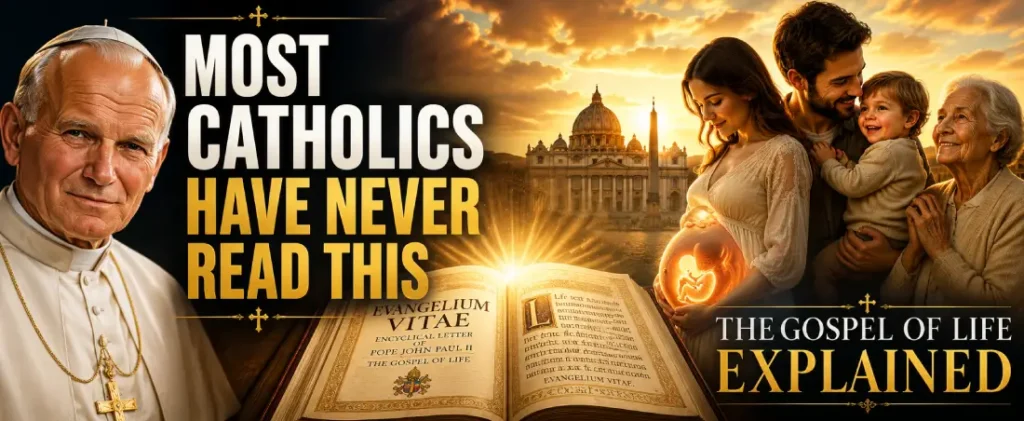
Promulgated on March 25, 1995, by Pope St. John Paul II, the encyclical Evangelium Vitae (The Gospel of Life) stands as one of the most authoritative statements in Catholic moral theology. Addressing the inviolable value of human life, this landmark document confronts modern ethical challenges, including direct abortion, euthanasia, and capital punishment.
This guide provides a comprehensive breakdown of Evangelium Vitae, grounding its core doctrines in Sacred Scripture, the Catechism of the Catholic Church (CCC), and Catholic Sacred Tradition.
Executive Summary: Core Teachings of Evangelium Vitae
| Core Topic | Evangelium Vitae Citation | Catechism Ref (CCC) | Magisterial & Moral Principle |
| Sanctity of Human Life | EV 2, 28, 53 | CCC 2258 | Human life is sacred because it involves the creative action of God from its inception. |
| Direct Abortion | EV 57, 62 | CCC 2271 | Direct abortion, willed as an end or a means, is always a grave moral disorder. |
| Euthanasia | EV 65 | CCC 2277 | Deliberately ending the life of the sick, disabled, or dying is intrinsically evil. |
| Capital Punishment | EV 56 | CCC 2267 | Cases requiring the execution of an offender to defend society are practically non-existent. |
| Culture of Life | EV 77, 92 | CCC 1700–1709 | Every Christian is called to build a “civilization of love” through personal and social witness. |
1. Sacred Origin and the Imago Dei
The foundation of Catholic moral teaching rests on the truth that God created man in His own image and likeness (Genesis 1:27). Every human being possesses an inherent, inviolable dignity that is conferred by God, not by human recognition, social utility, or government decree.
“Before I formed you in the womb I knew you, and before you were born I consecrated you.” — Jeremiah 1:5
As Pope St. John Paul II explains, God’s personal love for each individual precedes biological existence. Human life is not a simple biological accident; it is a personal gift from the Father.
The Theological Anchor: Imago Dei
- Created by God: The Catechism of the Catholic Church highlights that man alone is called to share, by knowledge and love, in God’s own life (CCC 356).
- Inherent Value: Because the human person bears the Imago Dei (Image of God), attacking an innocent human life constitutes an assault on the sovereignty of the Creator.
- Equal Personhood: Scripture attests to the equality of all human beings fashioned by God (Job 31:15). There is no sliding scale of human value based on developmental stage or cognitive ability.
2. The Intrinsic Evil of Direct Abortion
Evangelium Vitae provides an uncompromised defense of the unborn child, identifying direct abortion as a grave violation of the Moral Law and the Fifth Commandment.
“You shall not kill.” — Exodus 20:13
Pope St. John Paul II notes that the prohibition against killing innocent human beings is a universal law written on the human heart and confirmed by Sacred Scripture.
Doctrinal Declaration on Abortion
Direct abortion, willed as an end or as a means, constitutes a grave moral disorder and a direct offense against God. As Pope St. John Paul II authoritatively declared by virtue of the authority entrusted to Peter’s successors:
“Direct abortion, that is, abortion willed as an end or as a means, always constitutes a grave moral disorder.” — Evangelium Vitae, 62 (cf. CCC 2271)
Biblical Witness to the Unborn
- Providential Care: Psalm 139:13–16 reveals that God’s providence extends to the hidden sanctuary of the womb.
- Recognition of Personhood: Luke 1:41 records John the Baptist leaping in St. Elizabeth’s womb upon hearing Mary’s greeting, testifying to the personhood of the unborn child.
- Moral Accountability: The Church calls all believers to actively defend vulnerable unborn lives rather than remaining silent in the face of legal injustices (Proverbs 24:11; Acts 20:26).
3. Euthanasia and Moral Suffering
In Chapter III of Evangelium Vitae, the Church addresses the growing modern acceptance of assisted suicide and euthanasia. The encyclical rejects the secular belief that suffering deprives life of its value.
Doctrinal Definition of Euthanasia
Euthanasia, in its proper sense, is an act or omission which of itself or by intention causes death, in order to eliminate all suffering. In agreement with the Magisterium, Pope St. John Paul II reaffirmed:
“Euthanasia is a grave violation of the Law of God, since it is the deliberate and morally unacceptable killing of a human person.” — Evangelium Vitae, 65 (cf. CCC 2277)
Redemptive Suffering vs. False Mercy
- True Compassion: Authentic love (caritas) seeks to bear another’s burdens (Galatians 6:2) and relieve pain through palliative care, whereas euthanasia eliminates the sufferer rather than the suffering.
- The Value of Life in Old Age: Society must honor the elderly and infirm rather than abandoning them to social isolation or economic pressures (James 1:27).
- Redemptive Purpose: United with the Cross of Jesus Christ, human suffering can possess profound spiritual value, participating in Christ’s redeeming work (John 15:13).
4. The Moral Use of Capital Punishment
A central contribution of Evangelium Vitae is its qualification of the state’s recourse to capital punishment.
In Evangelium Vitae 56, Pope St. John Paul II taught that while the traditional teaching of the Church does not exclude recourse to the death penalty if it is the only way to defend human lives, non-lethal means are preferred because they better correspond to the dignity of the human person.
“Cases in which the execution of the offender is an absolute necessity ‘are very rare, if not practically non-existent.'” — Evangelium Vitae, 56
This teaching was further developed under Pope Francis with the 2018 revision to CCC 2267, which states that the death penalty is “inadmissible because it is an attack on the inviolability and dignity of the person,” given modern penal systems capable of protecting public safety.
5. The Culture of Life vs. The Culture of Death
Pope St. John Paul II frames the central modern moral struggle as a choice between two opposing worldviews: the Culture of Life and the Culture of Death.
“I have set before you life and death, blessing and curse;
therefore choose life, that you and your descendants may live.”
— Deuteronomy 30:19
Distinguishing the Two Cultures
The Culture of Death
- Grounded in an exaggerated individualism that treats personal autonomy as an absolute right.
- Views the weak, elderly, disabled, or unborn as burdens when they impede efficiency, convenience, or economic progress.
- Normalizes moral evils under the guise of individual liberty or mercy (Mark 8:36).
The Culture of Life
- Rooted in the self-giving love (caritas) modeled by Jesus Christ (John 10:10; Romans 13:10).
- Recognizes that individual rights are inextricably linked to moral duties toward one’s neighbor.
- Measures the moral integrity of a society by how it treats its most vulnerable members (Matthew 25:40).
6. Building a Civilization of Love: The Christian Mandate
Evangelium Vitae is not merely a theoretical commentary; it is a practical roadmap for Catholic discipleship. Pope St. John Paul II calls all baptized Catholics to participate in building a “civilization of love” through concrete personal and political action.
Pastoral Priorities for Faithful Action
- Direct Assistance: Supporting crisis pregnancy centers, adoption networks, foster care initiatives, and hospice care providers (James 2:15–16).
- Legal and Civic Action: Advocating for laws that protect the right to life from conception to natural death and promoting economic policies that assist struggling families.
- Gentle Evangelization: Witnessing to the truth of human dignity with charity, gentleness, and perseverance, avoiding violence or hatred (1 Timothy 6:11).
- Spiritual Warfare: Engaging in regular prayer, fasting, and sacramental life to overcome systemic structures of sin (Deuteronomy 30:19).
“For we are his workmanship, created in Christ Jesus for good works, which God prepared beforehand, that we should walk in them.” — Ephesians 2:10
Ultimately, Evangelium Vitae points beyond temporal victories to eternal hope. Grounded in the resurrection of Jesus Christ, Catholics work to protect human life with the absolute confidence that life, truth, and love will triumph (Revelation 21:3–4).
Frequently Asked Questions
The primary message of Evangelium Vitae (The Gospel of Life) is that human life is sacred, inviolable, and possesses innate dignity from conception to natural death. Promulgated by Pope St. John Paul II in 1995, it calls all Christians to defend life against modern ethical threats.
Evangelium Vitae reaffirms that direct abortion is always a grave moral disorder. In paragraph 62, Pope St. John Paul II uses his full apostolic authority to declare that deliberate abortion—whether willed as an end or a means—violates God’s law and the Fifth Commandment.
In paragraph 65, Evangelium Vitae defines euthanasia as an act or omission that causes death to eliminate suffering. The encyclical teaches that euthanasia is intrinsically evil and a grave violation of divine law, contrasting false mercy with true compassionate care.
The Culture of Death prioritizes absolute individualism, efficiency, and autonomy, treating vulnerable lives as burdens. The Culture of Life is rooted in Christ’s self-giving love, upholding the inviolable dignity of every human person and protecting the weak, elderly, and unborn.
Continue Your Faith Journey
Venerable Jérôme Lejeune, Pope Leo XIV, and the Inviolable Dignity of Human Life
Explore how Venerable Jérôme Lejeune's scientific witness and Catholic teaching defend the sacred dignity of human life against modern programmed death. Learn…
Dobbs Decision Anniversary: Why the Battle for Life Has Moved from the Courts to the Heart
On the Dobbs decision anniversary, the pro-life mission shifts from courtrooms to human hearts. Discover how Catholic teaching and Evangelium Vitae call…
What the Catholic Church Teaches About Surrogacy: Dignity, Marriage, and the Gift of Life
Explore what the Catholic Church teaches about surrogacy, human dignity, and the sacred marital covenant. Learn why the Magisterium protects children as…