
Bishop Marc Aillet’s Urgent Call: Pray and Mobilize Against Assisted Suicide
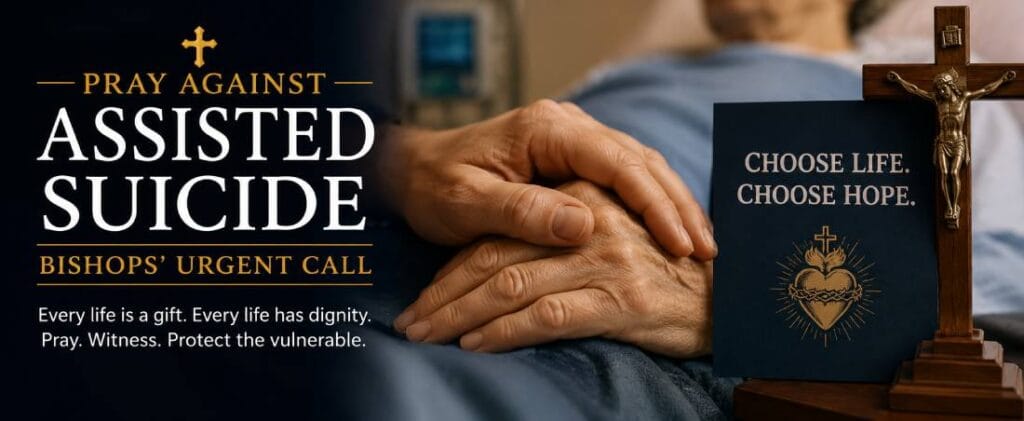
A watershed legislative decision in France has placed the nation at a critical moral crossroads. As French lawmakers push to legalize assisted suicide and euthanasia—euphemistically termed “assisted dying”—Bishop Marc Aillet of the Diocese of Bayonne, Lescar, and Oloron has issued an urgent appeal to the faithful. Warning of an “extreme gravity” that threatens the foundational moral prohibition against taking innocent human life, Bishop Aillet calls for an immediate mobilization of prayer, fasting, and civic advocacy.
This legislative struggle is not merely a localized political dispute; it represents a critical battle in the global defense of human life and natural law. When a nation enshrines the deliberate ending of life into its legal code, the Church must respond with absolute moral clarity, spiritual penance, and uncompromising charity.
Magisterial Summary: Catholic Doctrine on End-of-Life Care
| Category | False Mercy (Euthanasia & Assisted Suicide) | Authentic Compassion (Palliative Care & Accompaniment) |
| Moral Status | Intrinsically Evil (Intrinsece Malum) | Morally Licit & Highly Praiseworthy |
| Authority over Life | Usurps God’s sovereign dominium over human life | Respects man as a faithful steward under God’s sovereignty |
| Action / Intent | Direct, intentional causation of death | Alleviation of pain while allowing natural death |
| Primary References | CCC 2277–2280; Evangelium Vitae, 65; Samaritanus Bonus | CCC 2278–2279; CDF Iura et Bona; St. Thomas Aquinas (ST II-II, q. 64, a. 5) |
The Crisis in France: A Turning Point for Human Life
Bishop Marc Aillet’s pastoral intervention addresses the profound erosion of basic ethical guarantees in the proposed French legislation. During parliamentary debates, proposed amendments intended to protect vulnerable populations, ensure rigorous consent, safeguard conscience rights for healthcare workers, and allow Catholic care facilities to opt out were systematically rejected.
Bishop Aillet warned that legalizing assisted suicide creates systemic cultural and economic pressures that inevitably target the most defenseless. Elderly citizens, individuals with chronic disabilities, and those undergoing severe depression face subtle or explicit social pressure to end their lives. What secular society frames as a “compassionate option” rapidly shifts into an expected obligation when healthcare resources become strained or families feel financially and emotionally burdened.
Furthermore, Bishop Aillet issued a crucial warning regarding sacramental discipline and public witness: Catholic parliamentarians who knowingly vote in favor of legalizing the direct termination of human life act in profound contradiction to their faith and objectively place themselves in opposition to the constant teaching of the Magisterium. Consequently, such lawmakers must refrain from receiving Holy Communion until they are reconciled with the Church through sincere repentance and sacramental confession (Samaritanus Bonus, V).
Theological Foundation: Why Assisted Suicide Violates Divine and Natural Law
The absolute prohibition against the direct killing of innocent human life is rooted in both divine revelation and the natural law written upon the human heart.
1. Absolute Sovereignty of God (Dominium)
Human life is a sacred trust from God over which man is granted stewardship, not absolute ownership (dominium). As St. Thomas Aquinas teaches in the Summa Theologiae (II-II, q. 64, a. 5), suicide is a grave sin against God because it usurps the divine authority to give and take life. The Scriptures echo this eternal truth: “The Lord gave, and the Lord has taken away; blessed be the name of the Lord” (Job 1:21). Man does not possess the moral right to schedule or cause his own death or the death of another.
2. Intrinsic Evil of Euthanasia
The Catechism of the Catholic Church plainly states: “Whatever its motives and means, direct euthanasia consists in putting an end to the lives of handicapped, sick, or dying persons. It is morally unacceptable” (CCC 2277). Pope St. John Paul II reaffirmed in Evangelium Vitae (no. 65) that euthanasia is a grave violation of the Law of God, as it involves the deliberate, morally unacceptable killing of a human person.
3. Distortion of Authentic Compassion
True compassion consists in suffering with the person (cum-passio), alleviating physical pain, and offering a loving presence until natural death. Euthanasia offers a “false mercy” that replaces genuine care with elimination. The Vatican document Samaritanus Bonus (2020) emphasizes that a society that chooses death as a medical solution suffers a degradation of its moral and legal foundation.
4. Direct Intent vs. Overzealous Treatment
Catholic moral theology carefully distinguishes between direct killing and the decision to forgo extraordinary or disproportionate medical procedures. CCC 2278 clarifies that discontinuing medical procedures that are burdensome, dangerous, extraordinary, or disproportionate to the expected outcome is not equivalent to suicide or euthanasia; rather, it represents the acceptance of the human condition and the refusal of overzealous medical treatment (l’acharnement thérapeutique).
Catholic Action Plan: Prayer, Fasting, and Civic Mobilization
Spiritual battles require spiritual weapons paired with concrete civic responsibility. Bishop Aillet has called upon the faithful to engage in a three-fold response:
1. Fervent Intercession and Eucharistic Adoration
Believers worldwide must intercede for political leaders and lawmakers. Ask the Holy Spirit to grant them wisdom and conviction to reject laws that devalue human life. Pray for healthcare workers who face increasing coercion to participate in acts that violate their Hippocratic Oath and Christian conscience.
2. Penance and Fasting
Grounding his call in biblical practice, Bishop Aillet urges the faithful to offer intentional fasting alongside prayer. Jesus taught His disciples that certain evil strongholds can only be overcome “by prayer and fasting” (Mark 9:29; cf. Matthew 17:21 Vulgate). Dedicating traditional penitential days, particularly Wednesdays and Fridays, to fasting creates a sustained spiritual shield for the vulnerable (Code of Canon Law, Canons 1249–1253).
3. Support for Palliative Care and Conscience Rights
Catholics must actively champion authentic palliative care initiatives and support organizations providing hospice care. Furthermore, Catholic healthcare facilities and medical workers must receive robust legal protections for conscientious objection, ensuring that institutions founded on unconditional respect for life are never forced to administer death.
4. Ecumenical Solidarity for the Defense of Life
In defending natural law and the sanctity of life, separated Christian brethren are invited to join in this rhythm of intercession and social action. As noted in Evangelium Vitae (no. 91) and Vatican II’s Unitatis Redintegratio (no. 8), common witness to the inviolable dignity of the human person serves as a vital bond of ecumenical cooperation.
Frequently Asked Questions
The Catholic Church teaches that direct euthanasia and assisted suicide are intrinsically evil acts that gravely violate the Fifth Commandment (“Thou shalt not kill”). CCC 2277 states that regardless of motives or means, putting an end to the life of a sick, handicapped, or dying person is morally unacceptable and contrary to the dignity of the human person and respect for the Creator.
No. Catholic moral theology draws a clear distinction between intentionally causing death and refusing or withholding extraordinary, burdensome, or disproportionate medical treatment (CCC 2278). Forgoing disproportionate interventions simply allows the natural dying process to take its course and is morally licit.
Receiving Holy Communion requires objective communion with the faith and moral teachings of the Church. As Bishop Marc Aillet and the Vatican instruction Samaritanus Bonus affirm, supporting legislation that permits the deliberate termination of innocent human life constitutes a grave, public contradiction of Catholic doctrine. Lawmakers who knowingly vote for such laws place themselves out of full communion and must refrain from Holy Communion until reconciled through the Sacrament of Penance.
Authentic palliative care seeks to manage pain, relieve physical distress, and provide emotional and spiritual accompaniment to patients approaching natural death without accelerating or postponing death. In contrast, “assisted dying” intentionally causes or facilitates the patient’s death through lethal substances, treating human elimination as a substitute for care.
Source: LifeSiteNews
Continue Your Faith Journey
Venerable Jérôme Lejeune, Pope Leo XIV, and the Inviolable Dignity of Human Life
Explore how Venerable Jérôme Lejeune's scientific witness and Catholic teaching defend the sacred dignity of human life against modern programmed death. Learn…
What the Catholic Church Teaches About Surrogacy: Dignity, Marriage, and the Gift of Life
Explore what the Catholic Church teaches about surrogacy, human dignity, and the sacred marital covenant. Learn why the Magisterium protects children as…
Dobbs Decision Anniversary: Why the Battle for Life Has Moved from the Courts to the Heart
On the Dobbs decision anniversary, the pro-life mission shifts from courtrooms to human hearts. Discover how Catholic teaching and Evangelium Vitae call…