
Sanctity of Human Life: Pope Benedict XVI at Pavia
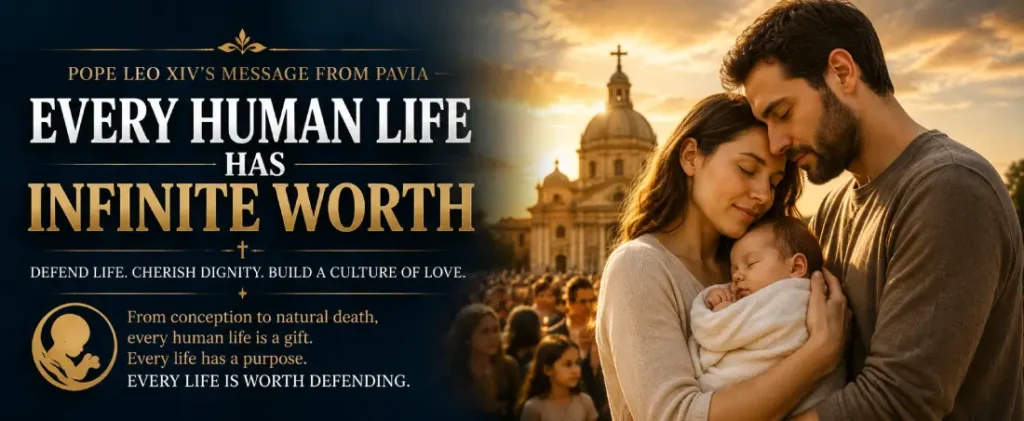
When Pope Benedict XVI knelt at the tomb of St. Augustine in Pavia, he was not simply honoring a Doctor of the Church. He reaffirmed a timeless Catholic truth: that every human life possesses inviolable dignity from the moment of conception until natural death.
This sanctity of human life is not a political opinion or a cultural preference. It is the unchanging teaching of the Catholic Church, rooted in two thousand years of Sacred Tradition and anchored in the nature of God, who creates every soul in His image.
QUICK SUMMARY
• Location: Tomb of St. Augustine, Pavia, Italy
• Primary Magisterial Sources: Evangelium Vitae, Catechism (CCC 2270)
• Core Message: Inviolable right to life from conception to natural death
• Scriptural Foundation: Jeremiah 1:5, Psalm 139:13–14
Pope Benedict XVI’s Pro-Life Message at St. Augustine’s Tomb
The Holy Father’s visit to Pavia carried a message that echoes across the globe to every Catholic family. We live in a secular culture that has grown comfortable disposing of the inconvenient—the unborn child, the frail elderly parent, and the disabled neighbor.
Pope Benedict XVI’s words at Augustine’s tomb remind us that the Church has never wavered on human dignity. Human worth is not assigned based on utility, developmental stage, or economic contribution. It is written into our very being by our Creator.
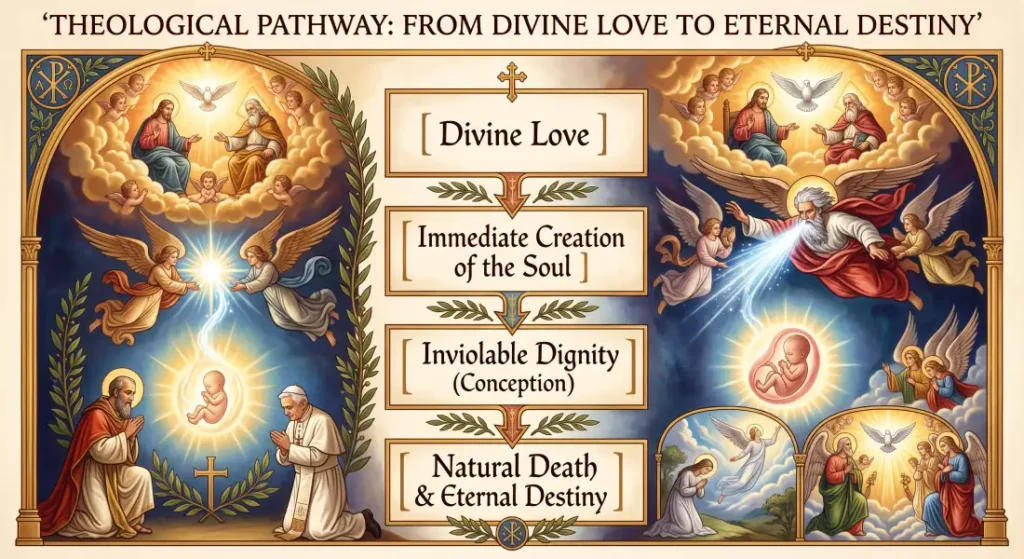
What Evangelium Vitae Teaches About Human Dignity and Life
The choice of location at Pavia matters profoundly. St. Augustine understood that human dignity flows from divine love, not human merit. He knew what it meant to be searching and unworthy—and he recognized that God’s grace transforms every human life into something sacred.
When Pope Benedict XVI urged the faithful to honor every human life, he called the world back to this foundational reality. St. Augustine famously wrote that God loves each of us as if there were only one of us to love. That same Doctor of the Church understood the sanctity of human life as a non-negotiable principle.
During his pastoral visit, the Pope spent time with young cancer patients and their families. He did not offer empty platitudes. He offered presence, prayer, and the witness of a Church that sees every suffering child as Christ Himself.
Authentic pro-life witness cannot remain an abstract political philosophy shouted from a distance. It must be concrete love offered to real people bearing heavy crosses.
Scriptural Foundations for the Sanctity of Life
Sacred Scripture grounds the pro-life message in divine revelation. In the Old Testament, the prophet Jeremiah records God’s direct personal care before birth:
“Before I formed you in the womb I knew you, and before you were born I consecrated you; I appointed you a prophet to the nations.”
— Jeremiah 1:5 (RSV-CE)
God does not wait until birth to know, love, or call the human person. His relationship with each individual begins at conception. This passage refutes any reductionist view that treats unborn life as mere tissue or potential humanity. The unborn child is known by God, loved, and given a unique mission.
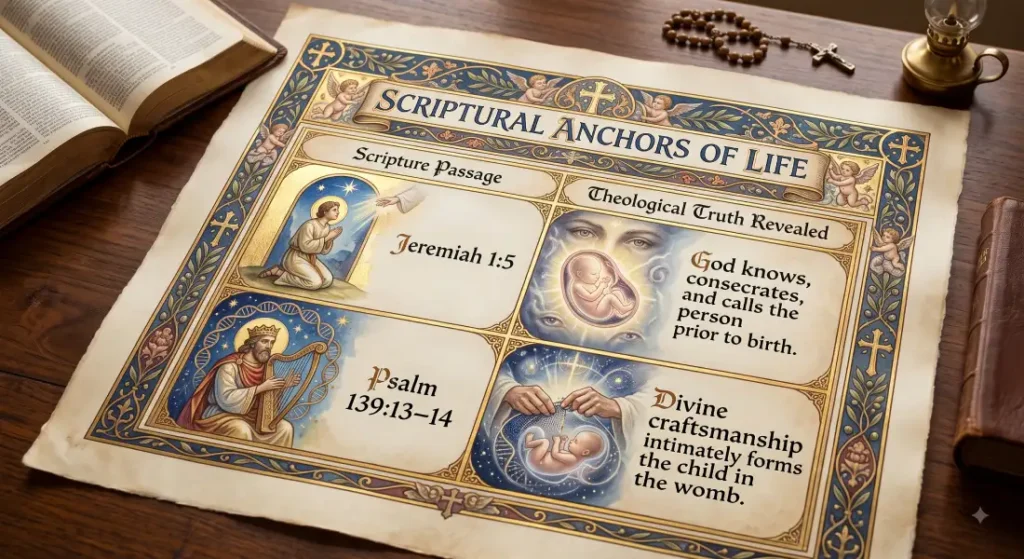
King David echoes this truth with profound intimacy in the Psalms:
“For thou didst form my inward parts, thou didst knit me together in my mother’s womb. I praise thee, for thou art fearful and wonderful. Wonderful are thy works!”
— Psalm 139:13–14 (RSV-CE)
The psalmist portrays God as a master craftsman at work in the womb, knitting together each child with deliberate care. We are not the accidents of unguided chance or mere material forces. We are God’s deliberate handiwork—each human soul immediately created by God, known by His heart, and destined for eternal communion with Him.
- Abortion: Ends a human life that God was actively forming.
- Euthanasia: Artificially cuts short a human story that God is still guiding.
Papal Encyclicals and the Catechism on Sacred Life
Pope St. John Paul II made this doctrine explicit in his landmark encyclical Evangelium Vitae. This text serves as the magisterial bedrock for contemporary pro-life teaching:
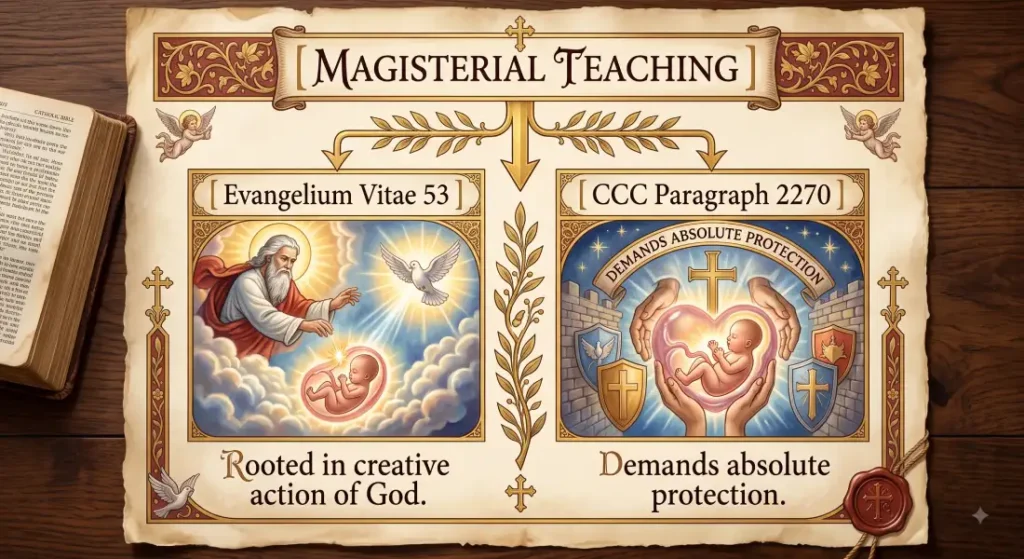
“Human life is sacred because from its beginning it involves the creative action of God and it remains for ever in a special relationship with the Creator, who is its sole end.”
— Evangelium Vitae, 53
Human existence is sacred not because of human declarations, but because God claims it from the first moment of existence. St. John Paul II further emphasizes that this message sits at the center of the Gospel:
“The Gospel of life is at the heart of Jesus’ message. Lovingly received day after day by the Church, it is to be preached with dauntless fidelity as good news to the people of every age and culture.”
— Evangelium Vitae, 1
This teaching is not an optional opinion or open to cultural compromise. The Gospel of life is central to the mission of Jesus Christ, and all believers are called to proclaim it faithfully.
The Catechism of the Catholic Church reinforces this duty with canonical precision:
“Human life must be respected and protected absolutely from the moment of conception. From the first moment of his existence, a human being must be recognized as having the rights of a person—among which is the inviolable right of every innocent being to life.”
— CCC 2270
The Church’s magisterial language leaves no room for ambiguity. The protection of innocent human life from conception is absolute and binding.
Essential Catholic Pro-Life Anchors
| Magisterial Source | Sacred Reference | Core Theological Principle |
| Sacred Scripture | Jeremiah 1:5 | Personal identity and divine vocation begin before birth. |
| Sacred Scripture | Psalm 139:13–14 | God intimately fashions human life within the mother’s womb. |
| Magisterium | CCC 2270 | Absolute right to life guaranteed from the moment of conception. |
| Papal Encyclical | Evangelium Vitae 53 | Life is sacred due to the direct creative involvement of God. |
| Doctors of the Church | St. Augustine | Human dignity stems from God’s unearned love and grace. |
What This Demands of Faithful Catholics
Pope Benedict XVI’s address at St. Augustine’s tomb requires three clear responses from every Catholic believer:
1. Unwavering Moral Clarity
Catholic teaching on life cannot be treated as one opinion among many. Defense of the unborn is Magisterial doctrine that binds the Catholic conscience. Whether in public voting, private discussions, or social engagement, Catholics must stand firm as defenders of the vulnerable.
2. Concrete Works of Mercy
Pro-life conviction requires active, sacrificial love. A mother facing a crisis pregnancy requires tangible material help, housing, and ongoing support. Families caring for elderly parents with dementia need community care, respite, and presence. True pro-life witness must bend down to serve those in need.
3. Persistent Intercessory Prayer
Defending human life requires spiritual warfare. Faithful Catholics must offer targeted prayers for:
- Medical professionals, that they uphold the Hippocratic oath and respect life.
- Pregnant women in difficult circumstances, that they find support and courage.
- Legislators and judges, that they protect the vulnerable under the law.
- Workers in the abortion industry, that they receive the grace of conversion.
A Catholic Prayer for the Culture of Life
Lord Jesus Christ, give us courage to defend those who cannot speak for themselves—the unborn, the frail elderly, and the disabled. Make our voices clear and our charity real.
Holy Spirit, touch the hearts of all who promote or perform abortions. Grant them the grace of repentance and bring them into the fullness of Your truth.
Blessed Virgin Mary, Mother of the Church, comfort every woman who carries the grief of a past abortion. Lead her to the Sacrament of Reconciliation and surround her with genuine Catholic love.
St. Augustine of Hippo, intercede for our culture. You who searched for truth and found your rest in God, pray that our society recognizes the sacred dignity of every human person. Amen.
Frequently Asked Questions
No. Catholic dogma teaches that human life must be protected absolutely from conception (CCC 2270). Direct abortion is gravely contrary to the moral law. Supporting or promoting abortion violates formal Magisterial teaching and severs full communion with the Catholic Church.
At the tomb of St. Augustine in Pavia, Pope Benedict XVI affirmed that every human life possesses intrinsic dignity given by God. He emphasized that human worth cannot be measured by utility, age, health, or economic status, calling for absolute protection of all life.
St. Augustine taught that human dignity relies entirely on God’s unmerited love and creative power, rather than human achievement or social utility[cite: 1]. Because God creates every human soul in His image, every life remains sacred from its origin.
Jeremiah 1:5 demonstrates that God knows, consecrates, and assigns a divine purpose to the human person before birth[cite: 1]. This Scripture verse confirms that human personhood and divine relationship begin at conception rather than at birth.
Continue Your Faith Journey
Catholic Church Teaching on IVF: Doctrine, Dignity, and Moral Alternatives
Explore the Catholic Church's official teaching on IVF, rooted in the dignity of human life and marital union. Learn about licit alternatives…
Venerable Jérôme Lejeune, Pope Leo XIV, and the Inviolable Dignity of Human Life
Explore how Venerable Jérôme Lejeune's scientific witness and Catholic teaching defend the sacred dignity of human life against modern programmed death. Learn…
Dobbs Decision Anniversary: Why the Battle for Life Has Moved from the Courts to the Heart
On the Dobbs decision anniversary, the pro-life mission shifts from courtrooms to human hearts. Discover how Catholic teaching and Evangelium Vitae call…