
What Does the Bible Say About Life From Conception? A Catholic Theological Guide
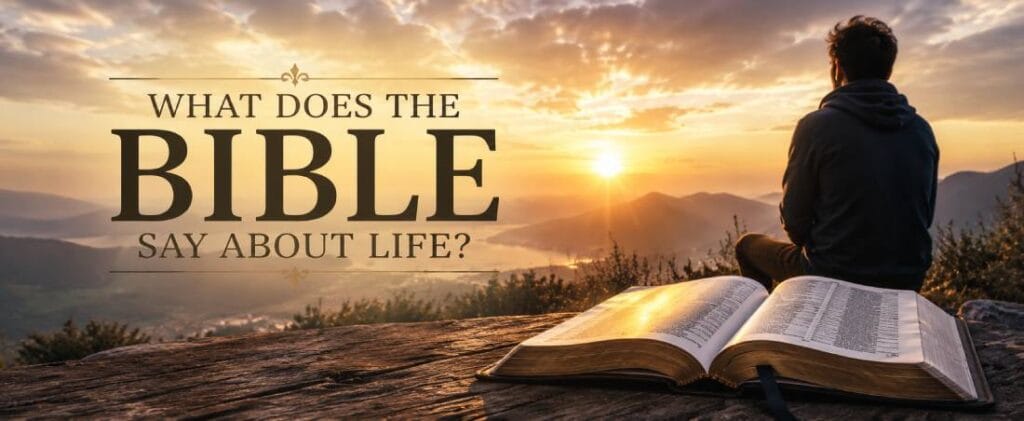
Scripture and Sacred Tradition affirm that human life begins at the exact moment of conception (CCC 2270). From fertilization onward, God creates a unique human person endowed with an immortal rational soul. The Word of God reveals that human life in the womb is not a potential person, but a living human subject possessing sacred dignity, an inviolable right to life, and eternal divine purpose.
Biblical and Magisterial Summary on Preborn Life
Catholic doctrine rests upon the harmonious synthesis of Sacred Scripture, Sacred Tradition, and the authoritative Magisterium. The table below outlines how key scriptural passages align with official Church teaching regarding life in the womb.
| Life Concept / Stage | Key Scripture Passage | Catholic Magisterium / CCC Reference |
| Creation at Conception | Psalm 139:13–16; Isaiah 44:24 | CCC 2270; Evangelium Vitae 44 |
| Divine Foreknowledge | Jeremiah 1:5 | CCC 2270; Aquinas, ST I, q. 14, a. 8 |
| Preborn Personhood | Luke 1:41–44 | CCC 2271; Evangelium Vitae 45 |
| Moral & Legal Protection | Exodus 21:22–25; Proverbs 31:8–9 | CCC 2273; Didache 2, 2 |
Biblical Proofs for Human Personhood in the Womb
Psalm 139: God’s Direct Craftsmanship
In Psalm 139:13–16, King David expresses profound awe at God’s personal involvement in human creation: “For you created my inmost being; you knit me together in my mother’s womb”. The Hebrew verb used for “knit together” (sākak) depicts an intricate, deliberate weaving process. Biological development in the womb is not a blind mechanical process, but an ongoing act of divine craftsmanship.
St. Thomas Aquinas explains that while biological parents provide the material cause of human generation, God directly creates and infuses the rational soul (Summa Theologiae I, q. 118, a. 2). David recognizes that divine providence oversees every stage of fetal development: “Your eyes saw my unformed body; all the days ordained for me were written in your book before one of them came to be” (Psalm 139:16). Every embryonic stage carries total value under God’s watchful care.
Jeremiah 1:5: Divine Foreknowledge vs. Creation at Conception
God’s declaration to the prophet Jeremiah reveals the eternal scope of divine providence: “Before I formed you in the womb I knew you, before you were born I set you apart” (Jeremiah 1:5). In Catholic dogmatic theology, this passage highlights God’s eternal foreknowledge (praescientia) rather than a pre-existence of human souls (ST I, q. 14, a. 8).
Condemning the ancient heresy of soul pre-existence (Second Council of Constantinople, 553 AD), the Church teaches that individual human existence begins strictly at conception (CCC 2270). While God knew Jeremiah in His divine eternity before time began, Jeremiah’s physical and personal life began when God formed him in the womb. From that precise moment, he was endowed with personhood and set apart for a prophetic vocation.
Luke 1:41–44: The Spiritual Sensitivity of the Unborn
The Gospel of Luke presents one of the clearest biblical proofs of preborn personhood during the Visitation. When the Blessed Virgin Mary, newly pregnant with Jesus, greeted her cousin Elizabeth, St. John the Baptist leaped in Elizabeth’s womb (Luke 1:41). Elizabeth, filled with the Holy Spirit, declared, “The baby in my womb leaped for joy” (Luke 1:44).
Sacred Scripture utilizes the identical Greek word (brephos) to describe both the unborn St. John the Baptist in the womb (Luke 1:41) and the newborn Infant Jesus in the manger (Luke 2:12). Scripture makes no moral or linguistic distinction between a child before birth and a child after birth. John the Baptist, while still developing in the womb, possessed spiritual responsiveness to the presence of the Incarnate Lord (Evangelium Vitae 45).
Sacred Tradition and the Constant Magisterium
The Didache and the Early Church
Catholic doctrine does not rely on Scripture in isolation (Sola Scriptura), but receives Divine Revelation through the lived Tradition of the Church. From the apostolic era, Christians unanimously defended unborn life against surrounding pagan practices.
The Didache (Teaching of the Twelve Apostles), written in the first century AD, explicitly commands: “You shall not procure abortion, nor destroy a newborn child” (Didache 2, 2). Early Church Fathers such as Tertullian affirmed that destroying an embryo in the womb constitutes a grave sin, as it destroys a human being in the process of development.
Evangelium Vitae and Dogmatic Declarations
In his 1995 encyclical Evangelium Vitae (The Gospel of Life), Pope St. John Paul II formally reiterated the Church’s infallible moral teaching on the sanctity of life. He declared that “direct abortion, that is, willed as an end or as a means, always constitutes a grave moral disorder, since it is the deliberate killing of an innocent human being” (Evangelium Vitae 57).
The Catechism of the Catholic Church summarizes this unbroken moral tradition: “Human life must be respected and protected absolutely from the moment of conception. From the first moment of his existence, a human being must be recognized as having the rights of a person—among which is the inviolable right of every innocent being to life” (CCC 2270).
Justice, Law, and Old Testament Protections
Exodus 21:22–25: Legal Safeguards for the Unborn
The Mosaic Law in Exodus 21:22–25 establishes legal sanctions regarding physical harm inflicted upon a pregnant mother and her child. If men fight and cause injury to a pregnant woman resulting in harm to her preborn child, strict justice applies. Ancient Israelite jurisprudence recognized the unborn child as a vulnerable human subject protected by divine law.
Job 31:15 and Isaiah 44:24: Equal Dignity in Creation
In Job 31:15, Job grounds human equality in our common creation in the womb: “Did not he who made me in the womb make them? Did not the same one form us both within our mothers?” Job recognizes that developmental stage, social status, and physical ability do not determine human worth. Every human being shares the same divine Creator who forms us in the womb.
Furthermore, the prophet Isaiah proclaims: “This is what the LORD says—your Redeemer, who formed you in the womb: I am the LORD, the Maker of all things” (Isaiah 44:24). Creating life in the womb is an expression of God’s redemptive authority over creation.
Moral Duty and Practical Pastoral Action
Genesis 1:27 and Proverbs 31:8–9: The Imago Dei
Genesis 1:27 establishes that God created humanity in His own image (Imago Dei). Because the rational soul is created and infused by God at conception, this image-bearing status begins immediately at fertilization. Every preborn child possesses intrinsic dignity and an unalienable right to life granted by the Creator (CCC 2273).
Proverbs 31:8–9 commands the faithful: “Speak up for those who cannot speak for themselves… defend the rights of the poor and needy”. Unborn children represent the most defenseless members of the human family, entirely reliant on others to advocate for their survival.
Living Out the Gospel of Life
Living out biblical truth requires tangible witness and active charity:
- Supporting Pregnant Mothers: Providing direct financial, material, and spiritual support to women in difficult pregnancies through parish ministries like Walking with Moms in Need and local crisis pregnancy centers.
- Fostering Post-Abortion Healing: Offering Christ’s infinite divine mercy and sacramental reconciliation to those suffering post-abortive trauma through ministries such as Project Rachel.
- Advocating for Moral Laws: Exercising civic duties to uphold legal protections for all human beings from conception to natural death.
- Committing to Prayer: Regularly interceding for mothers, unborn infants, medical professionals, and lawmakers to build a culture that honors human dignity.
Frequently Asked Questions
No. Genesis 2:7 describes the unique creation of Adam from the dust. For Adam’s descendants, Scripture explicitly identifies the womb as the place where God forms human life (Psalm 139:13; Isaiah 44:24). Catholic theology teaches that personhood begins at conception when God infuses the rational soul (CCC 2270).
Paragraph 2270 of the Catechism of the Catholic Church states that “human life must be respected and protected absolutely from the moment of conception.” From fertilization onward, a human being must be recognized as having the rights of a person, including the inviolable right to life.
Luke 1:41–44 depicts the unborn St. John the Baptist leaping for joy in Elizabeth’s womb at the presence of the unborn Jesus. Scripture uses the same Greek word (brephos) for children before and after birth, demonstrating continuous personhood and spiritual sensitivity in the womb (Evangelium Vitae 45).
Direct abortion is the deliberate killing of an innocent human being, violating the Fifth Commandment and natural law. As Pope St. John Paul II declared in Evangelium Vitae 57, direct abortion constitutes a grave moral disorder because human life bears the image of God (Imago Dei) from conception.
Source: FocusOnTheFamily
Continue Your Faith Journey
Catholic Church Teaching on IVF: Doctrine, Dignity, and Moral Alternatives
Explore the Catholic Church's official teaching on IVF, rooted in the dignity of human life and marital union. Learn about licit alternatives…
Venerable Jérôme Lejeune, Pope Leo XIV, and the Inviolable Dignity of Human Life
Explore how Venerable Jérôme Lejeune's scientific witness and Catholic teaching defend the sacred dignity of human life against modern programmed death. Learn…
Dobbs Decision Anniversary: Why the Battle for Life Has Moved from the Courts to the Heart
On the Dobbs decision anniversary, the pro-life mission shifts from courtrooms to human hearts. Discover how Catholic teaching and Evangelium Vitae call…