Pope Saint Stephen I
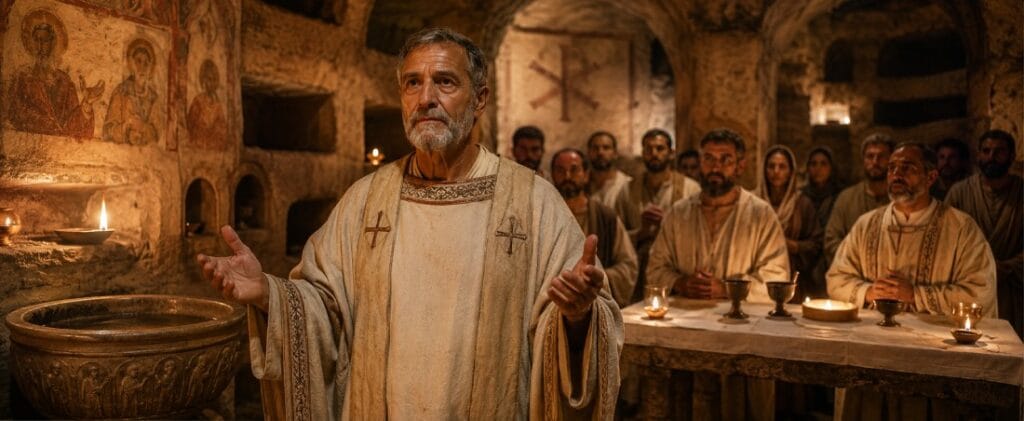
Saint Stephen I stands among the great early popes who helped shape Catholic teaching during one of the most difficult periods in Church history. Serving as Bishop of Rome from 254 to 257, he led the faithful through theological disputes, internal divisions, and the looming threat of persecution. Though his papacy lasted only a few years, his defense of Church unity and sacramental integrity left a lasting mark on Catholic tradition.
Today, Catholics remember Saint Stephen I not merely as a historical figure but as a shepherd who sought to preserve communion within the Church while remaining faithful to the Gospel entrusted to the Apostles.
Early Life and Background
Much about Stephen’s early life has been lost to history. Ancient traditions identify him as a Roman by birth and a member of a Christian family living during a period when the Church was still emerging from waves of persecution.
Before becoming pope, Stephen served the Church in Rome with distinction. Historical sources indicate that he was closely associated with Pope Lucius I and likely served as a leading cleric within the Roman Church. His formation would have included deep knowledge of apostolic teaching, liturgical life, and pastoral care.
The Church of Stephen’s youth was a Church of courage. Christians faced social suspicion, legal uncertainty, and periodic persecution. Such an environment helped form leaders who valued fidelity, sacrifice, and unity above personal comfort.
His spiritual development occurred within the living tradition of the early Christian community, where prayer, the Eucharist, and devotion to Christ were central to daily life.
Election to the Papacy
Stephen was elected Bishop of Rome on 12 May 254, succeeding Pope Saint Lucius I.
His election came during a turbulent period. The Church was still dealing with the aftermath of the Decian persecution, one of the most severe persecutions Christians had yet endured. Many believers had abandoned the faith under pressure, while others remained steadfast.
A major question confronted Church leaders: How should those who had fallen away during persecution be treated if they sincerely repented?
At the same time, divisions caused by the Novatianist movement threatened ecclesial unity. Novatianists argued for a much harsher approach toward repentant sinners and challenged the Church’s authority to reconcile certain grave sins.
Stephen was elected because the Church needed a leader capable of preserving unity while defending authentic Catholic teaching.
Papacy and Leadership
Defender of Sacramental Unity
The defining issue of Stephen’s pontificate concerned the validity of baptisms performed by schismatic or heretical groups.
Several bishops, most notably Saint Cyprian of Carthage, believed converts from these groups should be rebaptized before entering full communion with the Church.
Stephen firmly opposed this position.
He taught that baptism administered with water and the Trinitarian formula remained valid regardless of the minister’s personal orthodoxy. Therefore, converts who had already received such baptism should not be baptized again.
This position ultimately became the enduring practice of the Catholic Church and remains Church teaching today.
Relations with Saint Cyprian
The disagreement with Saint Cyprian was intense but did not result in permanent schism.
Stephen defended the ancient Roman tradition while Cyprian advocated the practice common in parts of North Africa.
Although tensions rose significantly, Stephen’s commitment to preserving ecclesial communion helped prevent a deeper fracture within the Church.
Pastoral Governance
Stephen also became involved in disputes concerning bishops who had lapsed during persecution and later sought restoration.
His decisions reflected a balance between mercy and discipline. He believed sincere repentance should open the door to reconciliation, reflecting Christ’s mercy toward sinners.
Strengthening Papal Authority
His interventions in churches beyond Rome demonstrated the growing recognition of the Roman See’s responsibility for safeguarding unity and orthodoxy throughout the universal Church.
Prayer Life and Spirituality
Although no personal spiritual writings from Saint Stephen I survive, his actions reveal a deeply sacramental and Christ-centered spirituality.
The central focus of his ministry was preserving the unity Christ desired for His Church.
Stephen’s defense of baptism reflected more than theological precision. It demonstrated profound reverence for God’s action in the sacraments. He recognized that the grace of baptism belongs to Christ, not merely to the minister administering it.
His spirituality was rooted in:
- Faithfulness to apostolic tradition
- Reverence for the sacraments
- Commitment to ecclesial unity
- Pastoral mercy toward repentant sinners
- Courage in the face of persecution
As Bishop of Rome, he would have celebrated the Eucharist regularly with the Christian community and encouraged believers to remain steadfast despite external threats.
His witness reminds Catholics today that authentic holiness often involves preserving unity, defending truth, and exercising charity even amid disagreement.
Stephen’s life illustrates that fidelity to Christ requires both conviction and humility. He defended doctrine firmly while continuing to labor for communion within the Church.
Challenges and Trials
The Rebaptism Controversy
The greatest challenge of Stephen’s papacy was the dispute over rebaptism.
The disagreement involved some of the most respected bishops of the era and threatened the unity of the Church.
Stephen remained unwavering in his defense of apostolic tradition, convinced that the Church could not alter the essential nature of baptism.
The Novatianist Schism
The Novatianist movement continued to divide Christian communities.
Stephen worked to preserve Catholic unity while encouraging reconciliation for those who genuinely repented after periods of weakness and failure.
Persecution Under Valerian
Toward the end of his pontificate, Emperor Valerian began renewed persecution against Christians.
Ancient tradition holds that Stephen was martyred while celebrating Mass, though modern historians note that historical evidence for this specific account is uncertain.
Regardless of the exact circumstances, he ministered during a period when Christian leaders lived under the constant threat of arrest and death.
Death and Legacy
Saint Stephen I died on 2 August 257 in Rome.
The exact circumstances of his death remain debated. Medieval tradition honored him as a martyr who was killed while seated on his episcopal chair during the celebration of the sacred mysteries. Modern scholarship suggests the evidence for this account is inconclusive.
What is beyond dispute is the enduring importance of his pontificate.
Stephen’s defense of the validity of Trinitarian baptism profoundly influenced later Catholic doctrine. His insistence on sacramental unity became a foundational principle that continues to shape Church teaching.
He was venerated as a saint by the early Church, and his feast is celebrated on August 2.
Future generations of popes inherited a stronger understanding of the Roman See’s role in preserving unity and resolving doctrinal disputes.
His legacy continues wherever Catholics celebrate the sacraments and profess one faith united throughout the world.
Lessons Catholics Can Learn Today
- Defend truth while preserving charity.
- Seek unity within the Church whenever possible.
- Trust in the power and grace of the sacraments.
- Practice mercy toward those who sincerely repent.
- Remain faithful during times of confusion and division.
- Allow Christ, rather than personal preferences, to guide decisions.
- Persevere courageously when facing opposition.
Conclusion
Saint Stephen I served the Church during a critical moment in Christian history. Through controversy, division, and persecution, he remained committed to preserving the unity of Christ’s Church and safeguarding the integrity of the sacraments.
His life reminds Catholics that true leadership requires courage, wisdom, and unwavering fidelity to apostolic tradition. As we honor Saint Stephen I, may we imitate his devotion to truth, his love for the Church, and his confidence in God’s grace working through the sacraments.
May his example inspire us to remain faithful disciples of Jesus Christ and steadfast members of His Church.
Related Popes